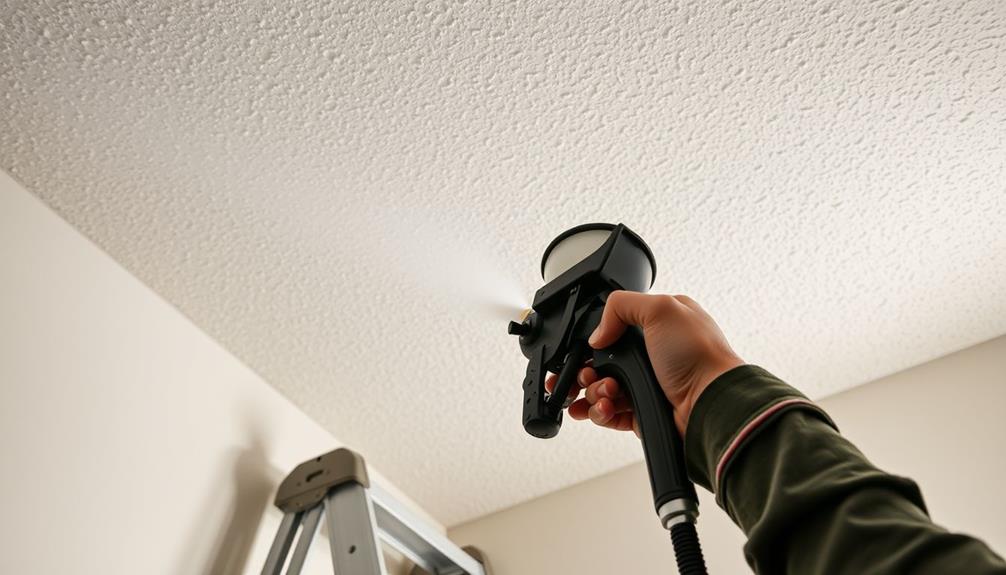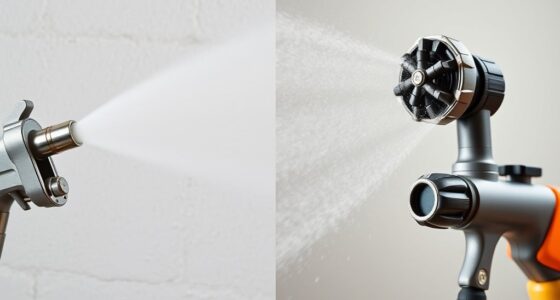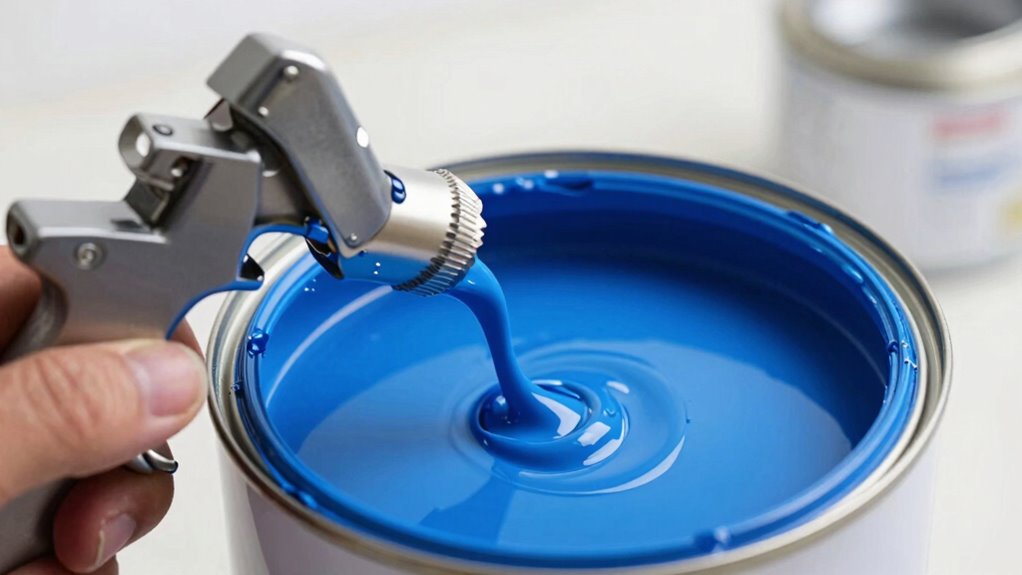
To know if your paint will spray well, check its viscosity by dipping a stir stick and lifting it out; if the paint drips slowly and evenly, it’s ready. If it beads up or drips too fast, you need to thin or thicken it accordingly. Using a spray gauge or timing how long a sample takes to drip helps guarantee the right flow. Keep experimenting until you achieve the perfect consistency—there’s more to discover for a flawless finish.

Get business pricing on tools and workshop supplies
- Business-only prices and quantity discounts
- Tax-exempt purchasing
- Multiple users, one account, clear invoices
Key Takeaways
- Test paint by dipping a stir stick and observing drip speed; slow, even drips indicate proper viscosity.
- Adjust viscosity gradually with compatible thinner, mixing thoroughly before retesting.
- Use a Zahn cup to measure viscosity, aiming for the recommended seconds (e.g., 20-30 seconds).
- Ensure paint flows smoothly without beading, dripping, or clogging sprayer nozzles during testing.
- Consider paint type and equipment specs to determine ideal viscosity for optimal sprayability.
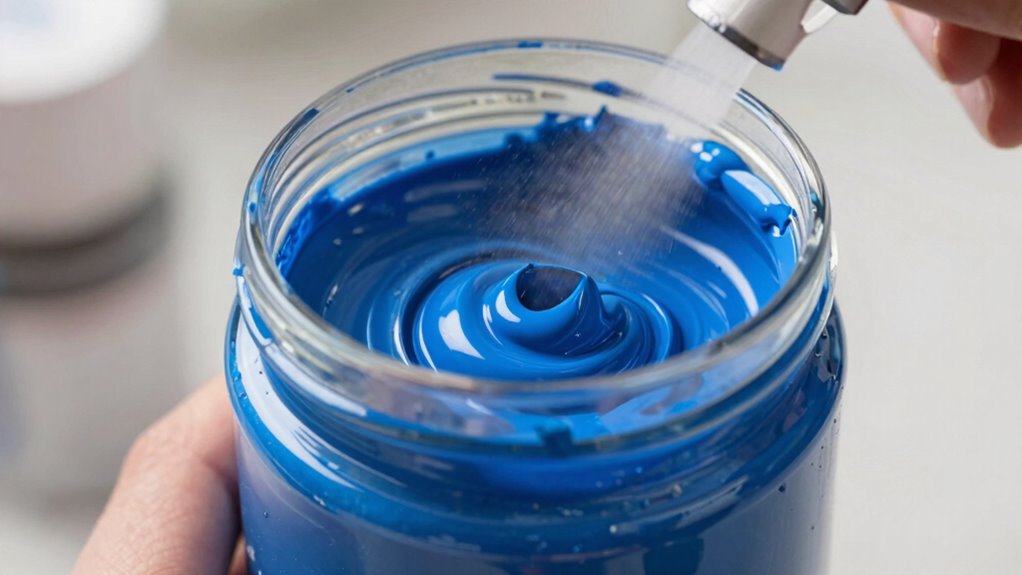
Ever wondered why some paints spread smoothly while others bead up or drip? It all comes down to paint viscosity—the thickness or thinness of the paint. When you’re preparing to spray paint, understanding viscosity helps you predict how well it’ll flow through your sprayer. If the paint’s too thick, it may clog the nozzle or produce uneven coverage. If it’s too thin, it might run or drip, wasting material and ruining your finish. Achieving the right viscosity ensures a smooth, even spray, so your project looks professional. To determine if your paint is ready for spraying, you can perform a simple test—dip a stir stick into the paint and lift it out. If the paint drips off slowly and evenly, it’s likely at a good consistency. If it clumps or drips in thick globs, it needs thinning. Adjusting viscosity often involves adding a compatible thinner or water, but do so gradually, mixing thoroughly and checking consistency along the way. Understanding paint viscosity and its effects on sprayability can help you better control your results. Additionally, proper mixing and thorough agitation are crucial to maintaining the correct consistency during your project.
Your approach to brush techniques also influences how paint behaves, especially when switching from brush to spray. For example, if your brush strokes leave thick, uneven textures, your paint may be too viscous for smooth spraying. Conversely, if your brush techniques are delicate and controlled, you’ll better gauge how the paint flows—this understanding guides you in adjusting viscosity for spray applications. Proper color matching plays a role here too; certain colors or finishes may require different thinning levels to achieve the same sprayability. For instance, metallic or fluorescent paints often have higher viscosity and may need more thinning to spray evenly. Recognizing these nuances helps you fine-tune your paint’s consistency, ensuring excellent color matching and uniform coverage. Being aware of paint consistency helps prevent issues like orange peel or uneven textures.
When you’re ready to spray, the key is to balance viscosity with your equipment’s specifications. Most spray guns operate best within a particular viscosity range, often around 20-30 seconds in a Zahn cup. Regularly testing your paint with this method guarantees consistency. If it’s too thick, thin it slightly; if it’s too thin, add a bit more paint or reduce thinning. Remember, the goal is to create a paint that flows smoothly through the sprayer, adheres evenly to the surface, and produces a polished finish. By paying attention to your brush techniques, adjusting viscosity properly, and considering color matching needs, you set yourself up for success. Mastering these basics means fewer drips, less overspray, and a flawless final look—making your painting projects more enjoyable and professional-looking.
As an affiliate, we earn on qualifying purchases.
Frequently Asked Questions
How Often Should I Check Paint Viscosity During a Project?
You should check the paint viscosity regularly, ideally every 15 to 20 minutes during your project. This helps maintain proper paint consistency and guarantees it sprays evenly. Use good mixing techniques each time you check, stirring thoroughly before testing. Frequent checks prevent issues like dripping or uneven coverage, allowing you to adjust the paint’s viscosity as needed for a smooth, professional finish.
Can Viscosity Affect Paint Drying Time?
Yes, viscosity can affect the paint drying time. When paint has the right consistency, it spreads evenly and dries uniformly. If the paint is too thick due to high viscosity, it takes longer to dry because excess solvent or thinner isn’t properly mixed in. Conversely, if it’s too thin, it may dry faster but could result in uneven coverage. Maintaining the proper viscosity guarantees ideal drying and a smooth finish.
What Tools Are Best for Measuring Viscosity Accurately?
To measure paint viscosity accurately, you should select the right tools for precise measurement techniques. A cup or a viscosity cup, like the Ford or Zahn cup, helps you quickly gauge paint consistency by timing how long it flows. A viscometer offers detailed, dependable data for expert evaluation. Using these tools, you can confidently determine if your paint is the perfect consistency for a smooth spray, saving time and ensuring quality.
Does Temperature Influence Paint Viscosity and Sprayability?
Yes, temperature effects can considerably influence paint viscosity and sprayability. When it’s cold, the paint’s viscosity rises, making it thicker and harder to spray evenly. Conversely, higher temperatures lower viscosity, making the paint thinner and easier to atomize. To guarantee consistent results, always check the paint’s viscosity at the working temperature, and adjust with thinning agents if necessary to maintain ideal sprayability.
How Do I Adjust Viscosity if the Paint Is Too Thick?
Think of your paint as a river needing gentle flow. To adjust viscosity if it’s too thick, you’ll want to thin it out. Add a small amount of the appropriate thinner gradually, stirring consistently to achieve a thinner application. This guarantees smooth, even coverage. Keep mixing until the paint’s consistency is uniform, preventing clogs or uneven spray. Remember, patience and consistent mixing help you find that perfect, flowing balance.
Conclusion
Understanding paint viscosity is key to achieving a perfect spray every time. By checking the flow before you start, you guarantee smoother application and better results. Did you know that studies show improper viscosity accounts for nearly 30% of spray paint failures? So, take a moment to test your paint’s thickness—your project will turn out cleaner and more professional. Mastering this simple step can save you time, money, and frustration in the long run.
Halloween Picks
halloween
As an affiliate, we earn on qualifying purchases.