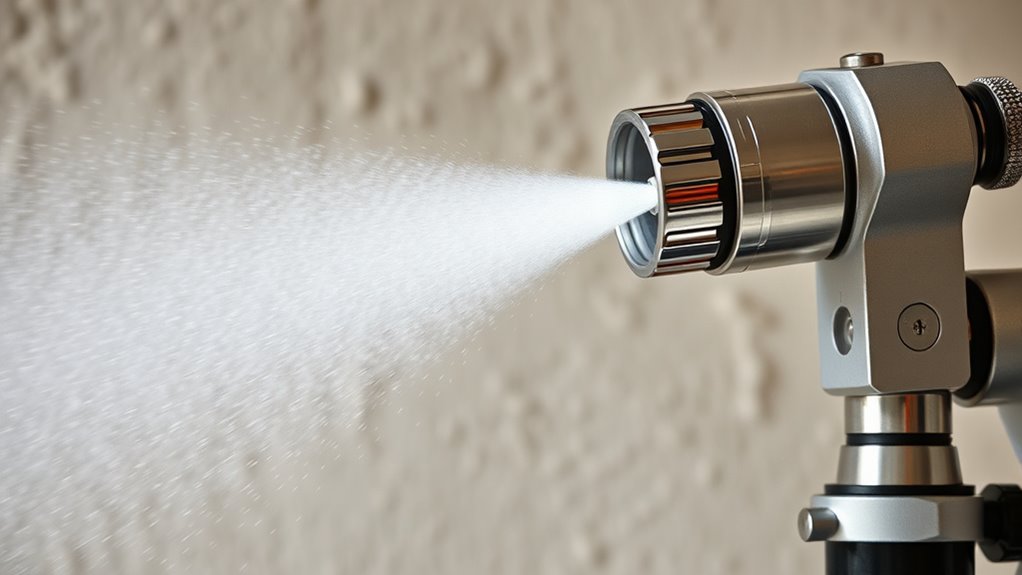

An airless paint sprayer works by forcefully pumping paint at high pressure through a small spray nozzle, creating a fine atomized spray that coats surfaces evenly. It relies on a hydraulic or piston-driven pump to push paint through a hose to the spray tip. The spray pattern and coverage depend on the nozzle design and pressure setting, helping you achieve smooth, professional results quickly. Keep exploring to understand how to optimize your spray technique effectively.

Get business pricing on tools and workshop supplies
- Business-only prices and quantity discounts
- Tax-exempt purchasing
- Multiple users, one account, clear invoices
Key Takeaways
- An airless paint sprayer uses a high-pressure pump to force paint through a small nozzle, creating a fine spray.
- It relies on hydraulic or piston-driven mechanisms to push paint from the reservoir through a flexible hose.
- The spray tip’s design, including orifice size and shape, controls the spray pattern and coverage area.
- Adjusting pressure settings ensures proper atomization and prevents overspray or uneven coverage.
- Regular maintenance and cleaning keep the system functioning smoothly and maintain consistent spray quality.
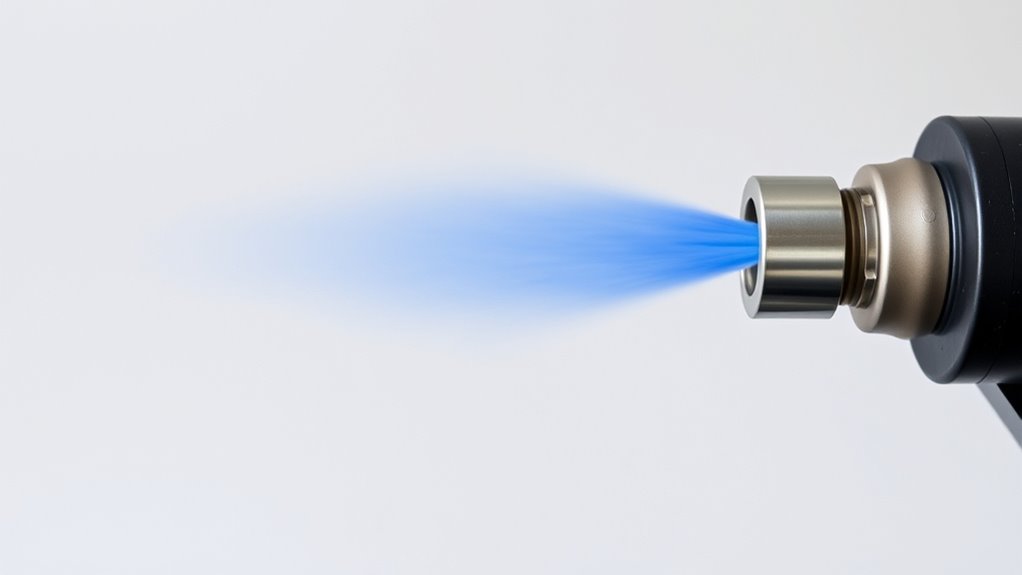
An airless paint sprayer works by forcefully pumping paint at high pressure through a small nozzle, creating a fine spray that covers surfaces smoothly and evenly. This process relies on the consistent flow of paint—known as paint flow—which is controlled by a combination of the pump’s pressure and the spray tip design. When you activate the sprayer, a hydraulic or piston-driven pump pushes paint through a flexible hose towards the spray tip, where the magic happens. The high-pressure flow ensures the paint exits the nozzle in a fine, atomized mist, allowing you to cover large areas quickly and with minimal overspray.
The spray tip design plays a critical role in how the paint is delivered and how evenly it coats the surface. Different spray tips have varying orifice sizes and fan widths, which influence the amount of paint and the spray pattern you get. For example, a smaller orifice produces a finer spray suitable for detail work, while a larger one covers broader areas more rapidly. The shape and size of the tip determine the fan pattern—whether it’s narrow, wide, or adjustable—giving you control over how much surface area is covered with each pass. When you choose the right spray tip for your project, you optimize paint flow for a smooth, even application, reducing issues like drips or uneven coverage.
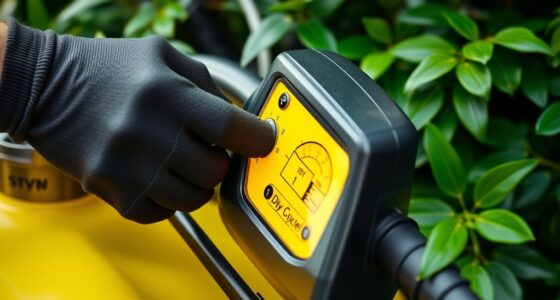
As you operate the sprayer, you’ll notice that maintaining consistent paint flow is essential for a professional finish. The pressure setting on your sprayer controls how forcefully the paint is pushed through the nozzle, affecting both the spray pattern and the atomization quality. Too much pressure can cause overspray and waste, while too little may result in uneven coverage. The key is to adjust the pressure to match your spray tip’s design and the type of paint you’re using. Proper maintenance and cleaning of the sprayer are also crucial to ensure consistent performance and prevent clogs that can disrupt paint flow.
The spray tip’s design also influences how much control you have over the spray pattern, which is crucial when working on different surfaces. For intricate corners or tight spaces, you might opt for a narrower fan or a smaller tip; for large, flat surfaces, a wider fan and larger tip are more efficient. Understanding how the paint flow interacts with the spray tip design helps you master the tool, ensuring a smooth, uniform coat every time. With proper adjustments and knowledge of these features, your airless sprayer becomes a powerful, efficient device capable of delivering professional results.
airless paint sprayer nozzle tips
As an affiliate, we earn on qualifying purchases.
As an affiliate, we earn on qualifying purchases.
Frequently Asked Questions
Can Airless Paint Sprayers Be Used for Outdoor Projects?
Yes, you can definitely use an airless paint sprayer for outdoor projects. It provides excellent outdoor durability and weather resistance, ensuring your paint job withstands rain, sun, and wind. With its high-pressure spray, you get a smooth, even coat quickly, making it ideal for large surfaces like fences, decks, and siding. Just make sure to choose the right paint and prep your surfaces properly for the best outdoor results.
What Types of Paints Are Compatible With Airless Sprayers?
Think of your airless sprayer as a chameleon, adapting to various paints with ease. You can confidently use latex, acrylic, oil-based, and elastomeric paints, but always verify for the right paint compatibility to prevent clogs or uneven application. Proper surface preparation ensures smooth operation, so clean and prime surfaces first. By matching the paint type and prepping well, your sprayer will deliver flawless, professional results every time.
How Long Does It Typically Take to Clean an Airless Sprayer?
It usually takes about 15 to 30 minutes to clean your airless paint sprayer thoroughly. To make maintenance easier, follow simple tips like flushing the system with water or solvent immediately after use. Store your sprayer properly in a dry place, using appropriate storage solutions to prevent damage. Regular cleaning ensures peak performance, extends your sprayer’s lifespan, and keeps it ready for your next project.
Are Airless Paint Sprayers Suitable for Detailed or Small-Area Work?
Airless paint sprayers are generally not ideal for detailed work or small surfaces, as their high pressure and wide spray pattern make precision difficult. You might find them better suited for large, flat areas where speed matters. For intricate detail work or small surfaces, consider using a brush or a spray gun designed for fine control. This way, you guarantee a smooth, even finish without overspray or missed spots.
What Safety Precautions Should I Follow When Operating an Airless Sprayer?
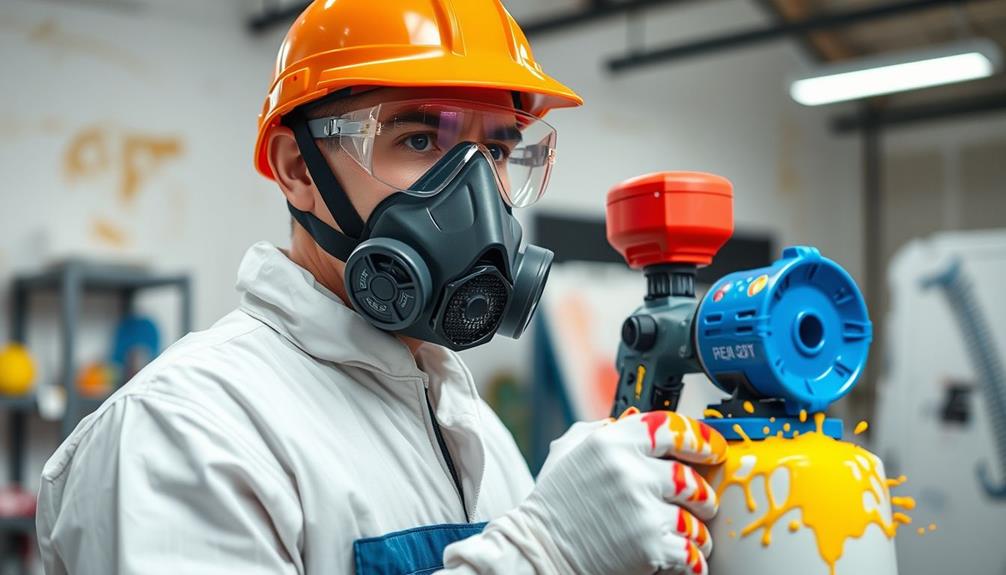
Imagine wielding a powerful brush, but safety comes first. Always wear protective gear—gloves, goggles, and masks—to shield yourself from airborne paint particles. Guarantee proper ventilation to clear fumes and keep the air fresh, like opening windows to invite a breeze. Follow manufacturer instructions carefully, and stay alert. These precautions turn a potential hazard into a safe, satisfying painting experience, letting you create without worry.
Conclusion
Now you see, an airless paint sprayer is like a powerful tornado, whipping paint out with force and precision. It pushes paint through a high-pressure hose, turning a simple liquid into a fine spray that covers surfaces smoothly and quickly. By understanding how it works, you can harness its strength to transform your space effortlessly. Think of it as a magic wand, turning dull walls into dazzling masterpieces with just the press of a trigger.
Fall yard work Picks
leaf blowers
As an affiliate, we earn on qualifying purchases.