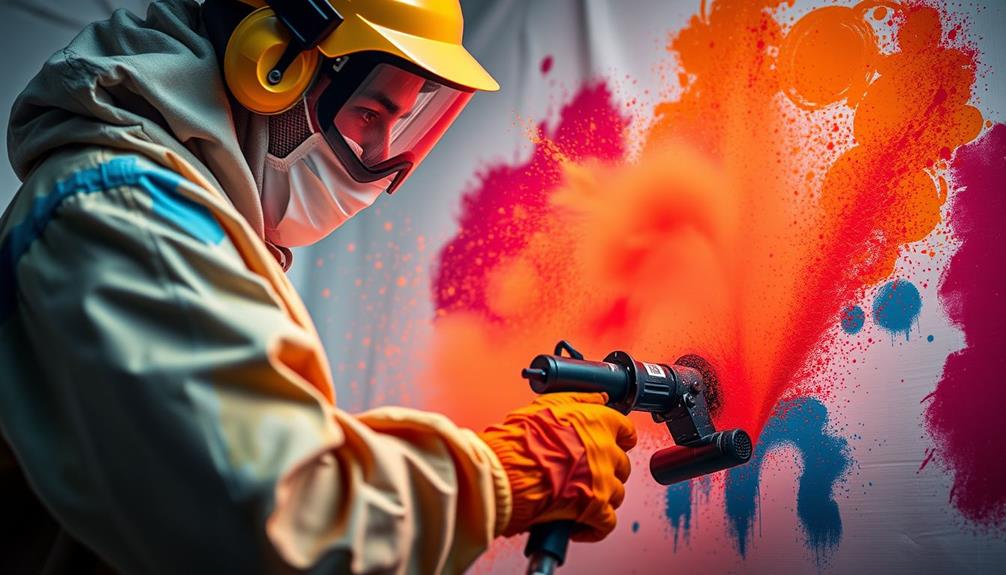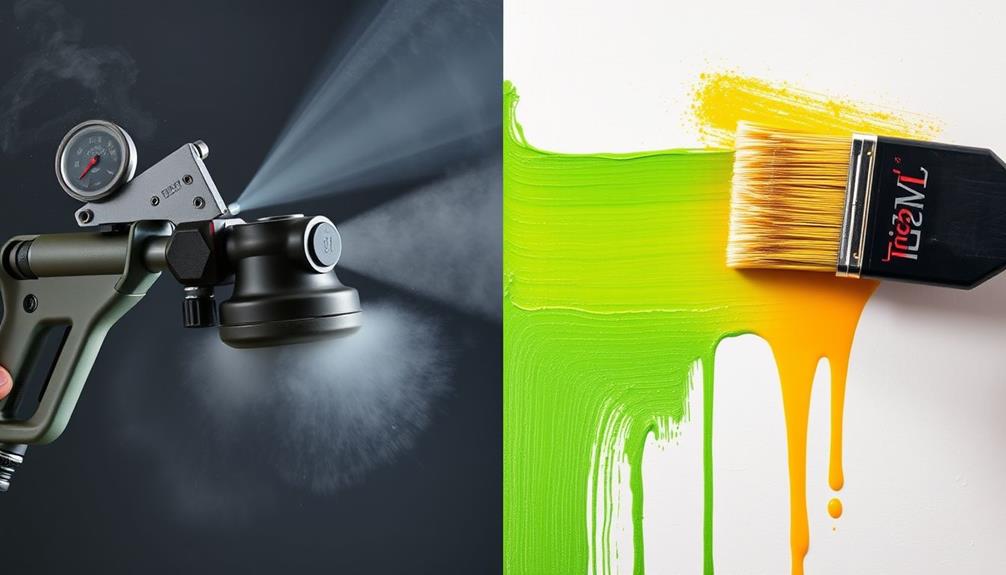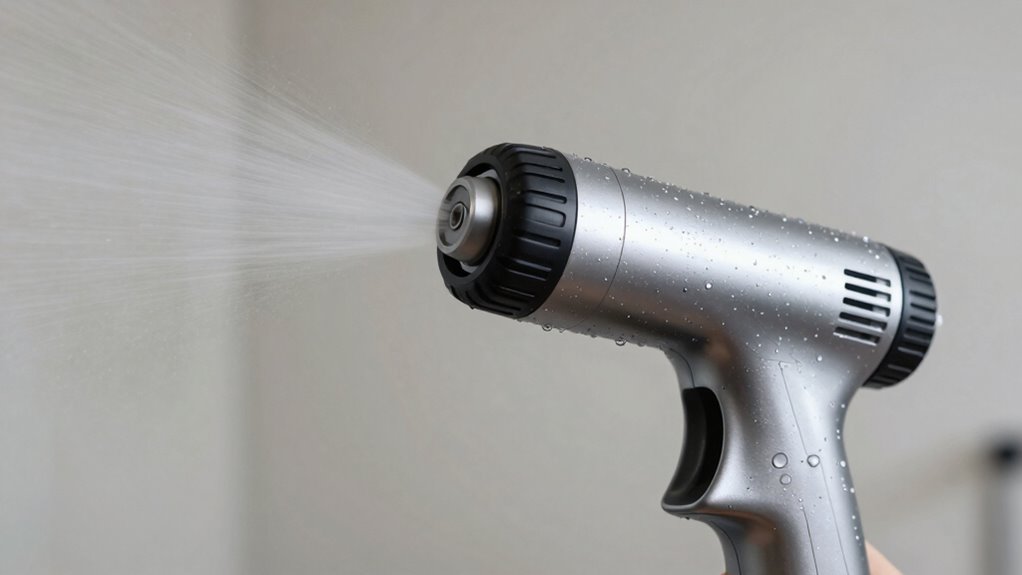
Airless sprayers don’t need compressed air because they use hydraulic pressure to atomize paint, making the process more efficient and consistent. Instead of relying on compressed air tanks, they push paint directly through a pump, resulting in smoother finishes and less overspray. This setup simplifies the equipment, reducing noise and maintenance. If you want to understand how this technology improves your painting projects and discover tips for ideal use, keep exploring further.

Get business pricing on tools and workshop supplies
- Business-only prices and quantity discounts
- Tax-exempt purchasing
- Multiple users, one account, clear invoices
Key Takeaways
- Airless sprayers use hydraulic pressure, not compressed air, to atomize paint for a smooth finish.
- They generate high pressure internally, eliminating the need for external air compressors.
- This system provides consistent spray patterns and reduces overspray compared to traditional air sprayers.
- Using hydraulic pressure allows for easier maintenance and quieter operation.
- They are ideal for large projects, offering efficient and uniform application without compressed air.
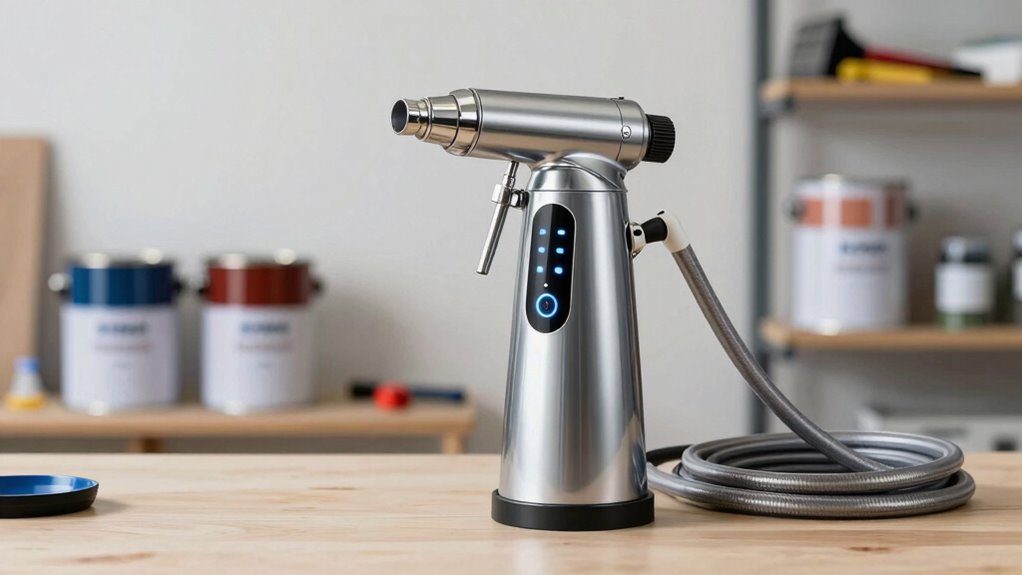
Have you ever wondered how professional painters achieve smooth, even coats in less time? The secret often lies in using an airless sprayer, a tool that doesn’t rely on compressed air like traditional spray guns. Instead, it uses hydraulic pressure to atomize paint, resulting in a more efficient and consistent application. This design means you don’t have to worry about maintaining an air compressor or adjusting pressure regulators—airless sprayers are straightforward and powerful. They’re especially effective for large projects, where speed and uniformity are essential.
One key to making the most of an airless sprayer is understanding sprayer maintenance**. Regular upkeep guarantees the device operates smoothly and delivers a flawless finish. After each use, you should clean the spray tip, nozzle, and filters thoroughly to prevent clogs. Checking hoses and seals for wear keeps leaks at bay and maintains proper pressure. Proper maintenance minimizes downtime and extends the lifespan of your equipment, so your projects stay on schedule. It’s also worth inspecting paint lines and connections for any damage before starting, as this helps avoid interruptions during application. Additionally, understanding paint viscosity and its impact on spray quality can save you time and paint in the long run. Properly adjusting equipment and understanding pressure settings can significantly improve your spraying results, ensuring a professional finish. Being aware of equipment safety** procedures is crucial to prevent accidents and ensure safe operation of powerful sprayers.
Regular cleaning and inspection ensure smooth operation and professional results with your airless sprayer.
Another vital factor for successful spraying is managing paint viscosity. The viscosity, or thickness, of your paint directly impacts how well it atomizes and sprays. Too thick, and the paint can clog the nozzle or cause uneven spray patterns; too thin, and you might end up with runs or drips. Most airless sprayers have adjustable pressure settings, allowing you to fine-tune the spray based on the paint’s viscosity. If your paint is too thick, consider thinning it slightly with water or a compatible thinner, but always follow the manufacturer’s recommendations. Properly adjusted viscosity guarantees a smooth spray, reduces overspray, and results in a more even coat. Using appropriate equipment and techniques tailored to your project can also enhance the overall finish and efficiency.
Unlike traditional compressed air sprayers, airless systems don’t produce a pulsating spray or require high-pressure air tanks. This means you get a more consistent spray pattern and less overspray, saving you paint and time. The absence of compressed air also reduces noise and maintenance needs, making it a more user-friendly option. When you understand how to maintain your sprayer and adjust for paint viscosity, you’ll find painting faster, cleaner, and more professional-looking. Whether tackling walls, fences, or furniture, airless sprayers give you the power to achieve high-quality results efficiently, all without the hassle of compressed air systems.
As an affiliate, we earn on qualifying purchases.
Frequently Asked Questions
Can Airless Sprayers Be Used for Outdoor Painting Projects?
Yes, you can use airless sprayers for outdoor painting projects. They’re portable, making it easy to move around your workspace, and their design minimizes noise levels, so you won’t disturb neighbors. With their powerful spray capabilities, they efficiently cover large outdoor surfaces like fences, decks, or siding. Just make certain you choose a model suitable for outdoor use and consider weather conditions to get the best results.
What Types of Paints Are Compatible With Airless Sprayers?
Think of your airless sprayer as a versatile artist’s brush—it’s compatible with a wide range of paints, from thick latex to thin stains. You’ll want to consider paint texture and spray patterns to guarantee a smooth finish. Thicker paints may need thinning for ideal flow, while thinner paints produce finer spray patterns. Always check the manufacturer’s recommendations for compatibility, and you’ll achieve professional results every time.
How Do I Maintain and Clean an Airless Sprayer Properly?
To maintain and clean your airless sprayer properly, follow these cleaning techniques and maintenance tips. After each use, flush the system with solvent or water, depending on your paint type. Regularly inspect and replace worn parts, like gaskets and filters. Keep the spray tip clean by removing paint buildup. Store the sprayer in a dry, protected area. These steps guarantee your sprayer stays in top shape, ready for your next project.
Are Airless Sprayers Suitable for Detailed or Small-Scale Work?
Imagine gently spraying a delicate pattern onto a surface—airless sprayers excel at fine detail work for small projects. Their powerful, even spray helps you achieve smooth finishes in tight spots, making them ideal for intricate paint jobs or small areas. While they might be overkill for tiny, precision tasks, they certainly handle detailed work well enough, giving you control and a professional look on your small-scale projects.
What Safety Precautions Should I Follow When Using an Airless Sprayer?
When using an airless sprayer, you should always wear safety gear like goggles, gloves, and a mask to protect yourself from overspray and fumes. Make certain to regulate the pressure properly to prevent accidental bursts or leaks. Also, read the manufacturer’s instructions carefully, check hoses for damage, and keep the spray tip covered when not in use. These precautions help guarantee safe, efficient operation.
Conclusion
So, now you see why airless sprayers are the savvy choice for your painting projects—they don’t rely on compressed air, making them simpler and safer to use. With their modern design, you won’t be stuck fiddling with hoses or worrying about leaks like in the days of the old horse-drawn wagons. Embrace this innovative tool, and you’ll be painting like a pro in no time—no need to call on a wizard from the wizarding world.
Fall yard work Picks
leaf blowers
As an affiliate, we earn on qualifying purchases.