If you’re choosing between airless and air-assisted sprayers, consider your project’s needs. Airless sprayers cover large areas quickly and are great for exterior siding or fences, but can produce overspray and waste paint. Air-assisted sprayers provide a finer, controlled finish ideal for detailed work like cabinetry or trim, though they are slower and more complex. To find out which suits your project best, explore the key differences and benefits further.
Key Takeaways
- Airless sprayers provide a broad, even spray ideal for large surfaces, while air-assisted sprayers offer finer, more controlled finishes.
- Airless systems are faster and better suited for big projects but can cause overspray and material waste.
- Air-assisted sprayers excel in detailed work, offering smoother finishes and less overspray, but are slower to operate.
- Maintenance for both involves regular cleaning; airless sprayers need seal inspections, while air-assisted require air cap and filter cleaning.
- Choose based on project scope: large areas favor airless, while detailed, high-quality finishes benefit from air-assisted sprayers.
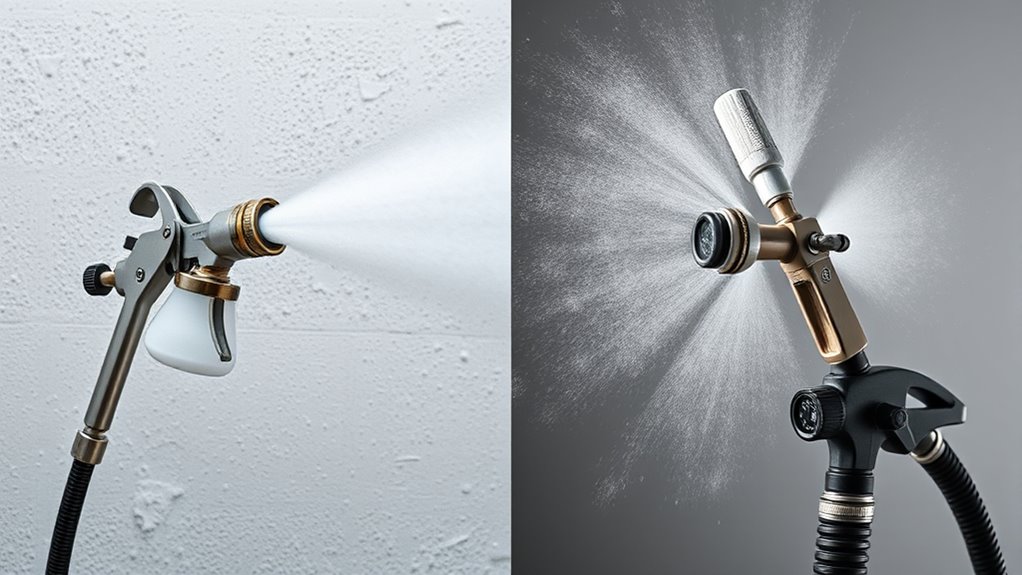
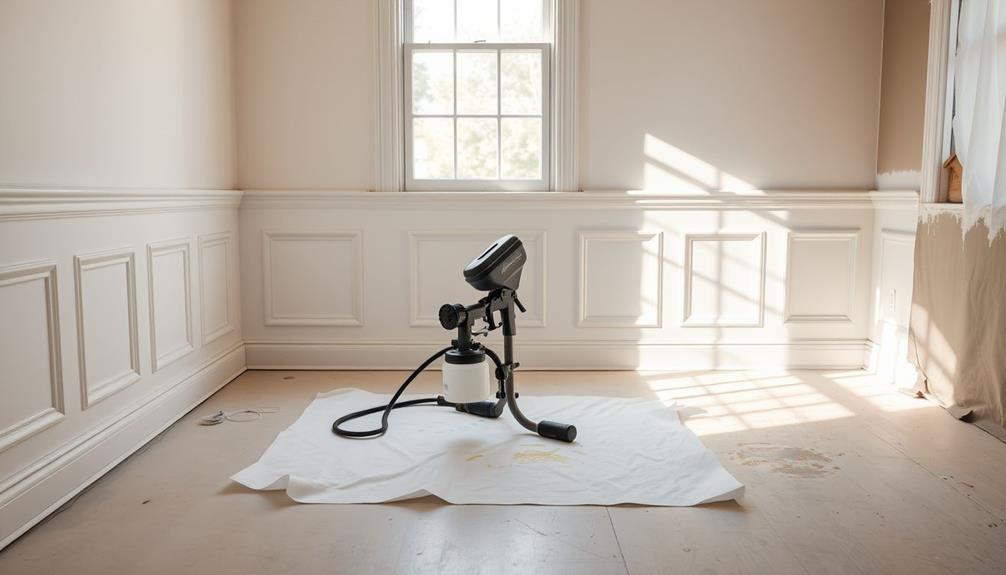
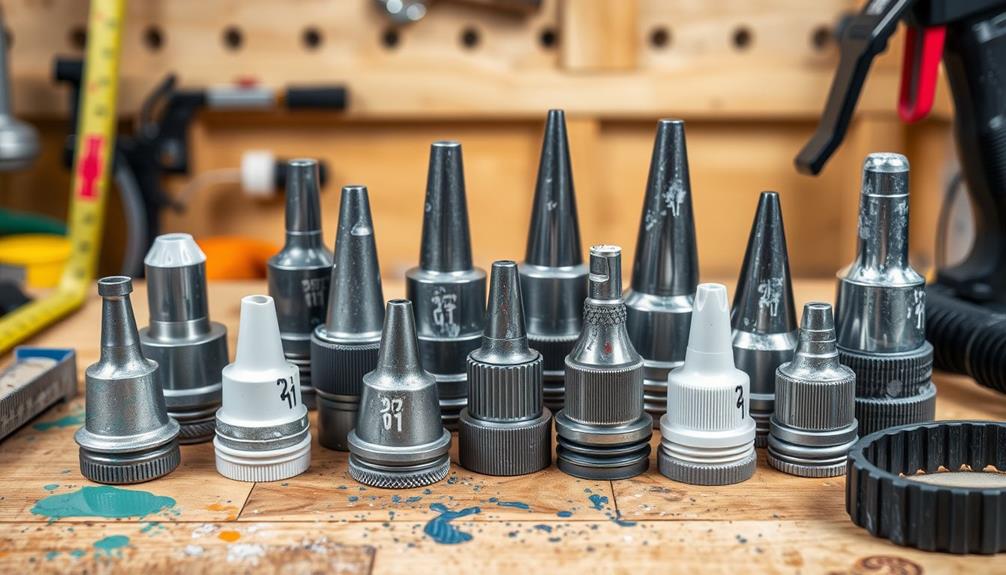
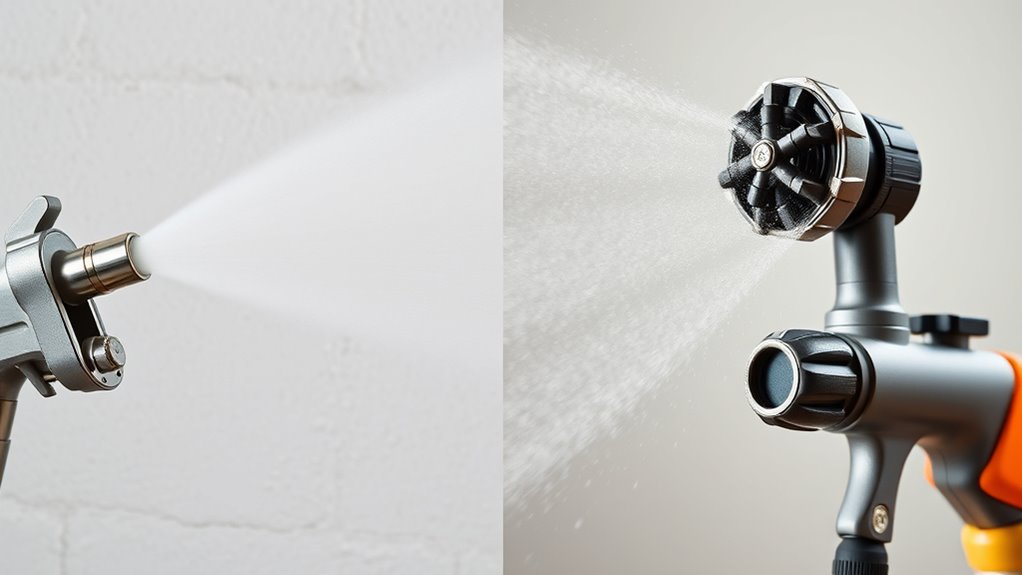
When choosing a sprayer for your painting projects, understanding the differences between airless and air-assisted systems is crucial. Both options serve specific needs, and your choice will impact your spray pattern, finish quality, and overall workflow. Airless sprayers operate by forcing paint through a small tip at high pressure, creating a broad, even spray pattern that covers large areas quickly. This makes them ideal for projects like exterior siding, fences, or substantial interior walls. They deliver a thicker coat in fewer passes, saving time. However, because of their high pressure, controlling overspray can be a challenge, and you’ll need to be mindful of equipment maintenance to keep the spray tip clean and functioning properly. Regular cleaning prevents clogs and ensures a consistent spray pattern. Additionally, inspecting seals and replacing worn parts helps maintain superior performance.
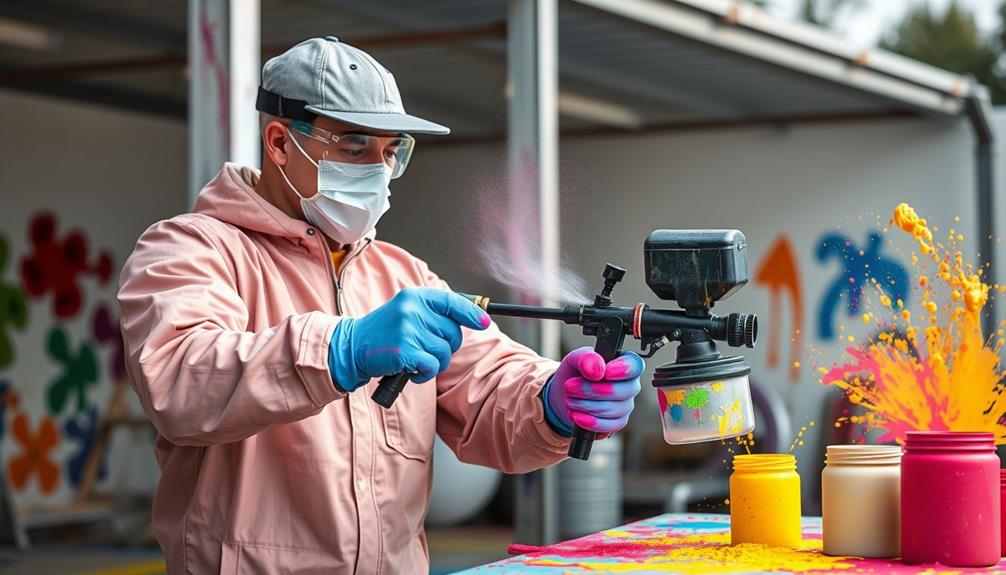
On the other hand, air-assisted sprayers use compressed air to atomize the paint, combining air and fluid to produce a finer, more controlled spray pattern. This results in a smoother finish, especially on detailed surfaces or trim work. These sprayers are more versatile for projects requiring precision and quality, such as cabinetry or furniture. Since the spray pattern is more refined and controllable, you’ll find it easier to manage overspray and achieve a professional look with less paint wastage. Equipment maintenance is equally important here; the air-assisted system involves more components like air caps and filters that need regular cleaning and adjustments. Proper maintenance ensures a consistent spray pattern and prevents issues like uneven coverage or clogging.
While airless sprayers excel at covering large areas quickly, their spray pattern can sometimes be too broad for detailed work, and overspray may lead to material waste or a messy workspace. Conversely, air-assisted systems provide better control and a finer finish but are generally slower and more complex to operate. Both require diligent equipment maintenance—cleaning nozzles, replacing worn parts, and checking for leaks—to keep the spray pattern consistent and attain the best results. Your choice depends on your project scope, desired finish quality, and willingness to perform routine upkeep. If speed and coverage are your priorities, an airless sprayer might be the best fit. If you need precision and a smooth finish, an air-assisted sprayer offers those advantages, provided you’re prepared for more detailed equipment care.
Frequently Asked Questions
What Are the Maintenance Requirements for Each Sprayer Type?
You should clean your sprayer after each use to prevent clogs and guarantee maximum performance. Regularly inspect and replace parts like tips, seals, and filters as needed, especially if you notice reduced spray quality or leaks. For airless sprayers, cleaning the pump and hose is essential, while air-assisted models need routine checks on the air cap and nozzle. Proper maintenance keeps your sprayers working smoothly and extends their lifespan.
Which Sprayer Type Is Better for Outdoor Use?
Imagine painting your outdoor fence on a breezy day; an airless sprayer is your best choice. It offers high power, fast coverage, and excellent portability, making it ideal for outdoor projects. Plus, its noise level is manageable, so you won’t disturb neighbors. While air-assisted airless sprayers are quieter, they’re less portable. For outdoor use, go with the airless sprayer for efficiency and ease.
How Do Costs Compare Over the Lifespan of Each Sprayer?
You’ll find that airless sprayers generally have higher initial costs but offer better cost efficiency over time due to their durability and faster application. Air-assisted airless sprayers tend to be less expensive upfront but may require more maintenance and part replacements, reducing their longevity. When comparing longevity, airless sprayers often last longer, making them more cost-effective in the long run if you’re planning ongoing projects.
Are There Specific Paint Types Suited for Each Sprayer?
You’ll find that airless sprayers work best with thicker paints like latex or enamel, offering great paint coverage. Air-assisted airless sprayers handle thinner paints and stains, providing smoother finishes. Consider paint compatibility and your user experience; thicker paints may clog air-assisted sprayers, making them less ideal. Choose based on your project needs, paint types, and comfort level with handling different sprayers for the best results.
Can Both Sprayers Be Used for Detailed or Intricate Work?
Yes, you can use both sprayers for detailed or intricate work, but your results depend on achieving precision detail and a controlled spray pattern. Air-assisted airless sprayers excel at fine finishes due to their adjustable spray pattern, offering better control for intricate work. Airless sprayers are more suited for larger surfaces, but with proper adjustments, you can still attain the precision detail needed for more delicate projects.
Conclusion
So, which sprayer suits your needs best? Airless sprayers cover large areas quickly and efficiently, perfect for big projects. Air-assisted sprayers offer more control and precision, ideal for detailed work. Consider your project size, surface, and desired finish. Don’t you want to select the tool that makes your job easier and results better? Making the right choice guarantees you get professional-quality results without unnecessary hassle.