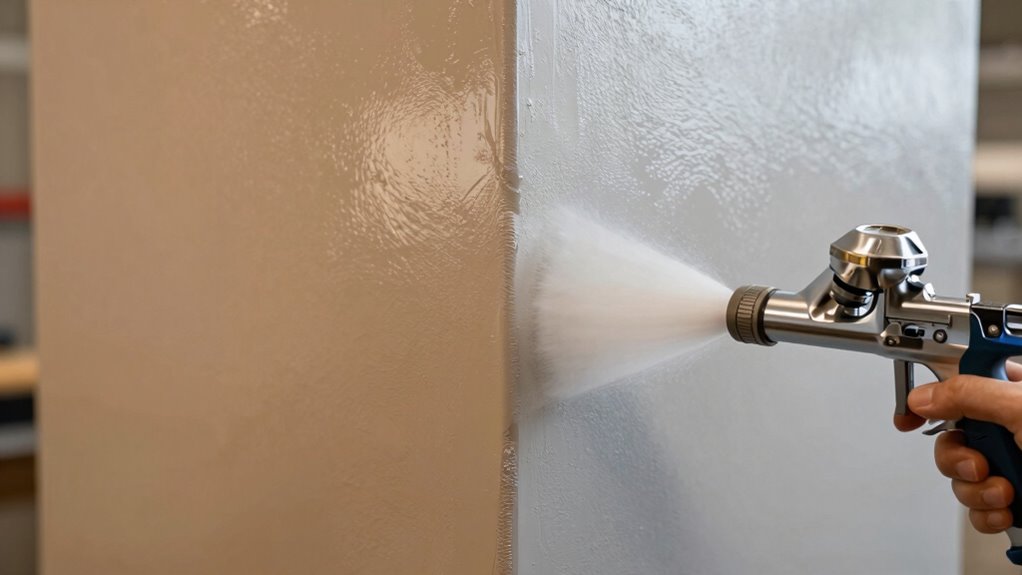
If you’re choosing between airless and HVLP sprayers, consider whether speed or finish quality matters most. Airless sprayers cover large areas fast but may leave some surface texture, making them ideal for quick jobs. HVLP systems produce a smoother, more detailed finish with less overspray, perfect for finishing furniture or delicate surfaces. Your decision depends on whether you prioritize efficiency or a flawless look—stick around to discover more about each option’s best uses.

Get business pricing on tools and workshop supplies
- Business-only prices and quantity discounts
- Tax-exempt purchasing
- Multiple users, one account, clear invoices
Key Takeaways
- Airless sprayers cover large areas quickly but may produce a rougher surface finish.
- HVLP systems provide a finer, smoother finish ideal for detailed or high-quality projects.
- Airless sprayers generate more overspray and paint waste, reducing environmental impact.
- HVLP units are more affordable upfront and suited for small, precision tasks.
- Choose airless for speed and large surfaces; opt for HVLP for quality and detailed work.
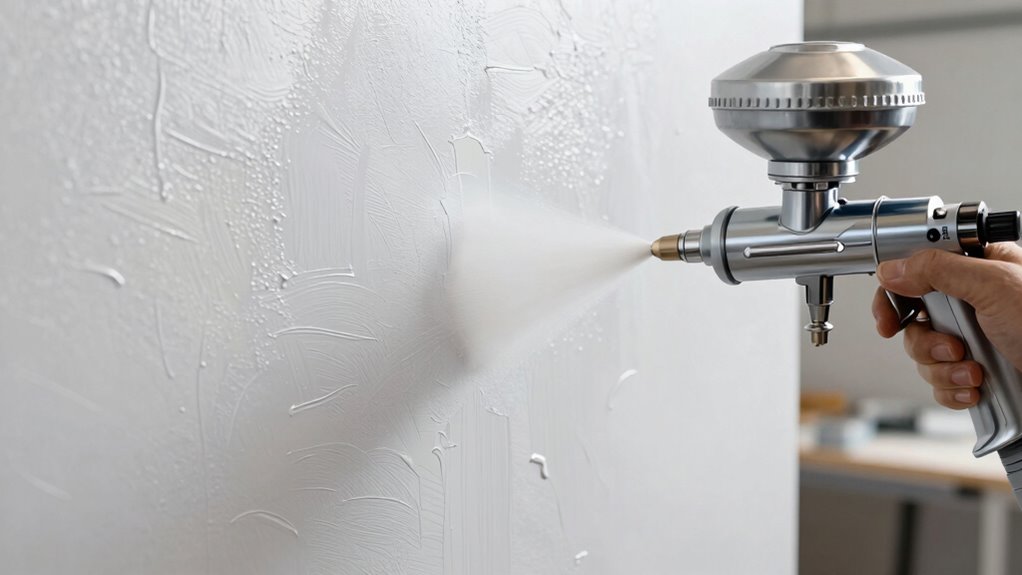
When choosing between airless and HVLP spray systems, understanding their differences can help you make an informed decision for your project. Both options have unique advantages, but your priorities—whether it’s finish quality or speed—will guide your choice. Airless sprayers are known for their ability to cover large surfaces quickly, making them ideal for big jobs where time is a concern. They shoot paint at high pressure, pushing it through a narrow nozzle, which results in a fast, even coat. On the other hand, HVLP (High Volume Low Pressure) systems deliver a gentler spray, producing a finer, smoother finish with less overspray. This means you’ll spend more time on each surface, but the result is often superior in quality, especially for detailed work or furniture finishing.
If eco-friendly options are a priority for you, HVLP systems tend to be more environmentally conscious. Because they operate at lower pressure, they generate less overspray and waste, reducing the amount of paint that ends up in the air or on unintended surfaces. Less waste not only benefits the environment but also saves you money in the long run. When it comes to cost comparison, initial investments can differ. Airless sprayers are generally more expensive upfront, especially for professional-grade models, but they can save you money on large projects thanks to their speed. HVLP units are usually more affordable initially, making them appealing for smaller projects or homeowners who aren’t tackling big jobs regularly. However, because HVLP systems require more time to complete a project, labor costs may be higher if you’re paying for professional help.
In terms of finish quality, HVLP wins out for detail work, providing a smooth, professional-looking surface with minimal texture. If your goal is a flawless, high-end finish, an HVLP system is usually the better choice. Conversely, if you’re more concerned with covering large areas quickly and don’t mind some minor surface texture, an airless sprayer will serve you well. Ultimately, your decision depends on balancing the need for a high-quality finish versus the speed of completion. Keep in mind that eco-friendly options are more readily available with HVLP systems, and their lower operating pressure can make them a more sustainable choice overall. If time is tight, and you’re comfortable with a slightly rougher finish, an airless system may be best. For meticulous detail work with an eye toward sustainability, HVLP is likely your ideal option. Additionally, understanding spray system differences can help you optimize your results and choose the right equipment for your specific needs.
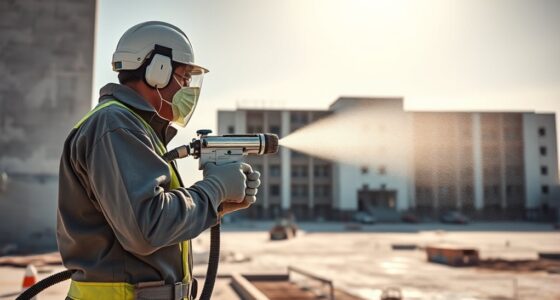
airless paint sprayer for large projects
As an affiliate, we earn on qualifying purchases.
As an affiliate, we earn on qualifying purchases.
Frequently Asked Questions
Which Spray System Is Better for Outdoor Projects?
For outdoor projects, an airless spray system is better because it delivers a larger spray pattern, covering surfaces quickly, which saves you time. It also provides sufficient application precision for broad areas like fences or siding. While HVLP offers more control, it’s slower for big outdoor jobs. Choose airless for faster coverage, especially when you need to get the job done efficiently without sacrificing a smooth finish.
How Do Cleaning and Maintenance Compare Between Airless and HVLP?
You’ll find that cleaning and maintenance differ between airless and HVLP spray guns, impacting spray gun longevity and cleaning frequency. Airless systems typically need more frequent cleaning due to thicker coatings and higher pressure, which can wear parts faster. HVLP guns, with lower pressure, usually require less frequent cleaning, helping extend their lifespan. Regular maintenance keeps both types functioning smoothly, but expect more routine care with airless systems for peak performance.
Can HVLP Be Used for Industrial-Scale Painting?
You can’t exactly turn an HVLP into a giant industrial painter, but it’s not impossible. While HVLP sprayers are great for precision and fine finishes, their paint consistency and equipment portability limit their use for large-scale projects. They’re better suited for small jobs or detailed work. For industrial-scale painting, airless sprayers are more efficient, covering more surface quickly, while HVLPs excel in delicate, detailed applications.
What Safety Precautions Are Needed for Each Spray Type?
You need to wear protective gear like masks, goggles, and gloves to stay safe with both spray types. Make sure good ventilation, especially with HVLP, to prevent inhaling fumes and overspray. For airless sprayers, keep the area well-ventilated and avoid enclosed spaces. Always follow manufacturer instructions, and consider using respirators if you’re working for extended periods. Proper safety precautions protect your health and improve your spraying results.
Are There Specific Paints Better Suited for Airless or HVLP?
Think of choosing paint for your spray method like selecting the right brush for a painting; some paints glide better, delivering a smooth finish. For airless sprayers, thicker paints like latex or elastomerics work well, providing durable coverage. HVLP excels with thinner, delicate paints like stains or lacquers, ensuring a high-quality, smooth finish. Matching paint compatibility to your sprayer guarantees ideal results and a professional-looking finish.
Conclusion
Choosing between airless and HVLP is like picking between a swift river and a gentle stream—you’ll need to decide whether speed or finesse matters most. Airless offers a lightning-fast flow, perfect for covering large landscapes with a bold splash. HVLP, on the other hand, provides a delicate touch, like whispering colors onto your canvas. Whichever path you take, remember: your finish is the story you paint, so select the tool that best narrates your vision.
Halloween Picks
halloween
As an affiliate, we earn on qualifying purchases.