To apply fire-resistant coatings with an airless sprayer, start by preparing surfaces thoroughly and making certain equipment is clean and well-maintained. Use the correct spray tip size and set pressure for an even, consistent spray. Maintain a steady distance (about 12 inches) from the surface and overlap passes slightly. Applying multiple thin coats and monitoring thickness with a wet film gauge will guarantee effective fire protection. Keep reading to learn essential tips for perfect application.
Key Takeaways
- Prepare surfaces thoroughly by cleaning and removing dust, grease, and debris before spraying for optimal adhesion.
- Use the correct spray tip size, pressure settings, and maintain a steady distance (~12 inches) for even coating thickness.
- Regularly inspect and clean equipment components like hoses, filters, and tips to prevent clogs and ensure consistent spray patterns.
- Apply multiple thin coats, allowing each to dry completely, rather than one thick layer, for better protection and finish.
- Monitor coating thickness with a wet film gauge and adjust equipment settings to maintain proper fire-resistant barrier standards.

Applying fire-resistant coatings with an airless sprayer offers an efficient and uniform way to protect structures from fire hazards. To achieve the best results, you need to pay close attention to spray equipment maintenance. Properly maintained equipment ensures consistent spray patterns, prevents clogs, and extends the lifespan of your tools. Regularly inspect hoses, filters, and tips, replacing worn or damaged parts immediately. Clean all components thoroughly after each use to prevent buildup and corrosion. Well-maintained spray equipment not only improves coating application but also reduces downtime, saving you time and money in the long run.
Proper equipment maintenance ensures consistent, effective fire-resistant coating application and extends tool lifespan.
Controlling coating thickness is vital when applying fire-resistant coatings. Too thin, and the protective barrier may be compromised; too thick, and you risk drips, runs, or uneven coverage. Use the right spray tip size and pressure settings to achieve the desired thickness. Many airless sprayers have built-in pressure regulators, making it easier to maintain consistent output. Keep a wet film gauge handy to monitor the coating thickness during application, especially on large surfaces. Consistent thickness ensures a reliable fireproof barrier and helps meet safety standards.
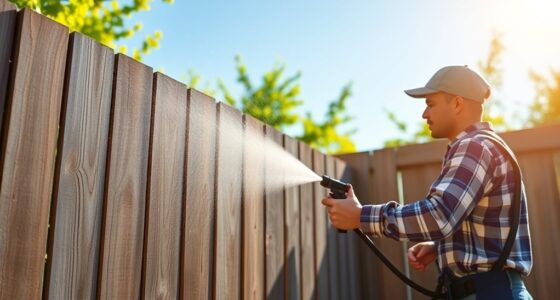
Before starting, prepare your surfaces properly—clean, dry, and free of dust or grease. Mix your fire-resistant coating thoroughly, following the manufacturer’s instructions. When you begin spraying, keep the nozzle consistently perpendicular to the surface and maintain a steady distance, usually around 12 inches, to ensure even coverage. Overlap each pass slightly to avoid missed spots or thin areas. If you notice uneven spray patterns, check your equipment’s maintenance status—clogs or worn tips could be the cause—and address those issues promptly.
Adjust your spraying technique as needed to control thickness. Applying multiple thin coats often results in a better finish and more reliable protection than a single thick layer. Allow each coat to dry thoroughly before applying the next, as per the product guidelines. Remember, consistent spray technique combined with diligent equipment maintenance and thickness control guarantees a uniform, durable fire-resistant coating that effectively safeguards your structures. Additionally, understanding the importance of contrast ratio can help you evaluate the visual quality and effectiveness of the coating, especially in areas requiring detailed visual inspections.
Frequently Asked Questions
How Do I Choose the Right Fire-Resistant Coating for My Project?
To select the appropriate fire-resistant coating, you need to take into account the fire rating required for your project, guaranteeing the coating meets safety standards. Check coating compatibility with the surface material to ensure adhesion and durability. Consult manufacturer specifications and fire safety codes, and if unsure, seek professional advice. This way, you ensure your project stays compliant, safe, and effectively protected from fire hazards.
What Safety Precautions Are Necessary When Using an Airless Sprayer?
Think of using an airless sprayer like riding a bicycle—safety gear is vital. Always wear personal protective equipment including goggles, gloves, and a mask to prevent exposure. Make sure proper ventilation to avoid inhaling fumes, much like opening windows when cooking. Follow manufacturer instructions, inspect equipment beforehand, and keep the workspace clear of ignition sources. Staying vigilant keeps you safe while applying fire-resistant coatings efficiently.
How Do Temperature and Humidity Affect Application Quality?
Temperature and humidity critically impact application quality. High humidity can cause the coating to dry too slowly, leading to runs or uneven coverage, while low humidity speeds up drying, risking cracks. Temperature control is essential; if it’s too cold, the coating may not adhere properly, and if too hot, it can dry too quickly. Maintaining ideal conditions guarantees a smooth application and a durable, fire-resistant finish.
What Maintenance Is Required for the Sprayer After Use?
After use, you should clean the sprayer thoroughly to prevent coating buildup and clogs. Use the appropriate cleaning solution for fire-resistant coatings, and flush the system until the water runs clear. Store it in a dry, cool place, following storage tips like removing the tip and protecting it from freezing temperatures. Regular maintenance guarantees your sprayer remains in good condition and ready for the next project.
Can Fire-Resistant Coatings Be Applied to Wet or Damp Surfaces?
You shouldn’t apply fire-resistant coatings on wet or damp surfaces because moisture can compromise adhesion and fireproofing effectiveness. For example, in a case study, applying coating over a damp wall led to peeling and reduced fire resistance. To make certain of proper application, you need thorough surface preparation, removing moisture, and installing moisture barriers if necessary. This guarantees the coating bonds well and provides reliable fire protection.
Conclusion
By choosing to apply fire-resistant coatings with an airless sprayer, you’re embracing a careful touch that safeguards your space and loved ones. Your attention to detail and commitment to safety create a warm, protected environment. With every stroke, you’re not just coating surfaces—you’re nurturing a sense of security and peace. Trust in this method to help you craft a safer, more resilient space where comfort and care flourish quietly and confidently.