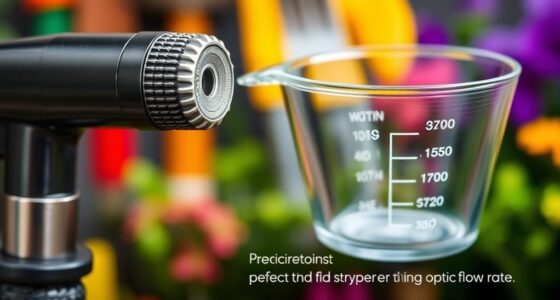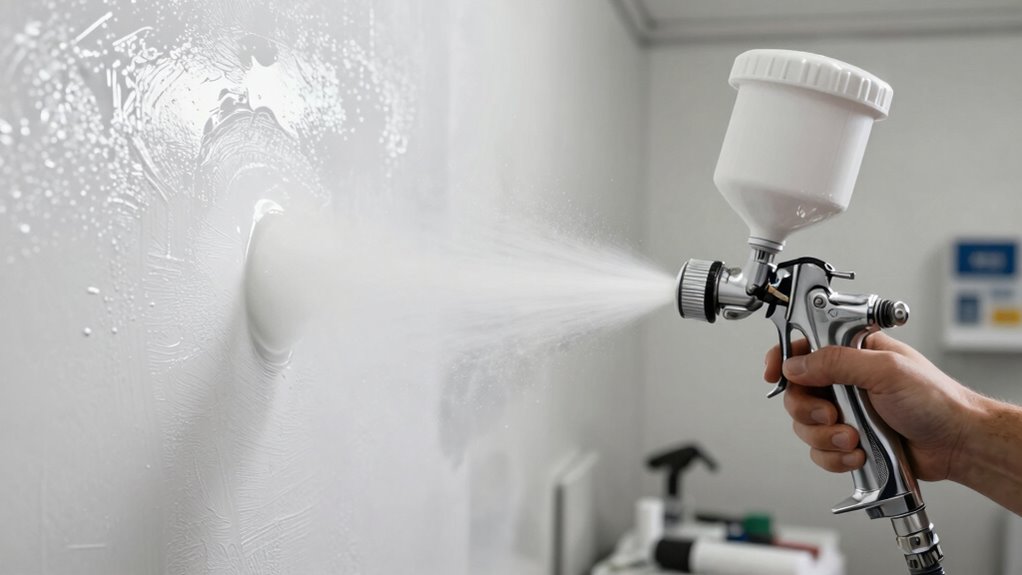
To prevent stalls when spraying thick coatings, choose a high-quality spray gun with adjustable pressure controls and a large nozzle size suitable for high-viscosity materials. Make certain your equipment is properly calibrated and kept clean to maintain consistent flow. Use slightly increased pressure without overdoing it, and practice on scrap surfaces to find the right settings. Maintaining steady motion and overlaps helps achieve uniform coverage. Keep these tips in mind, and you’ll be on your way to smoother spraying—and more details await if you keep exploring.

Get business pricing on tools and workshop supplies
- Business-only prices and quantity discounts
- Tax-exempt purchasing
- Multiple users, one account, clear invoices
Key Takeaways
- Use a spray gun with adjustable pressure to handle higher viscosity coatings effectively.
- Thin thick coatings appropriately according to manufacturer instructions to improve flow and prevent stalling.
- Regularly clean and maintain equipment to ensure proper atomization and prevent clogs.
- Increase spray pressure slightly while avoiding overspray, ensuring consistent fluid delivery.
- Practice on scrap surfaces to calibrate settings for smooth application of heavy coatings.
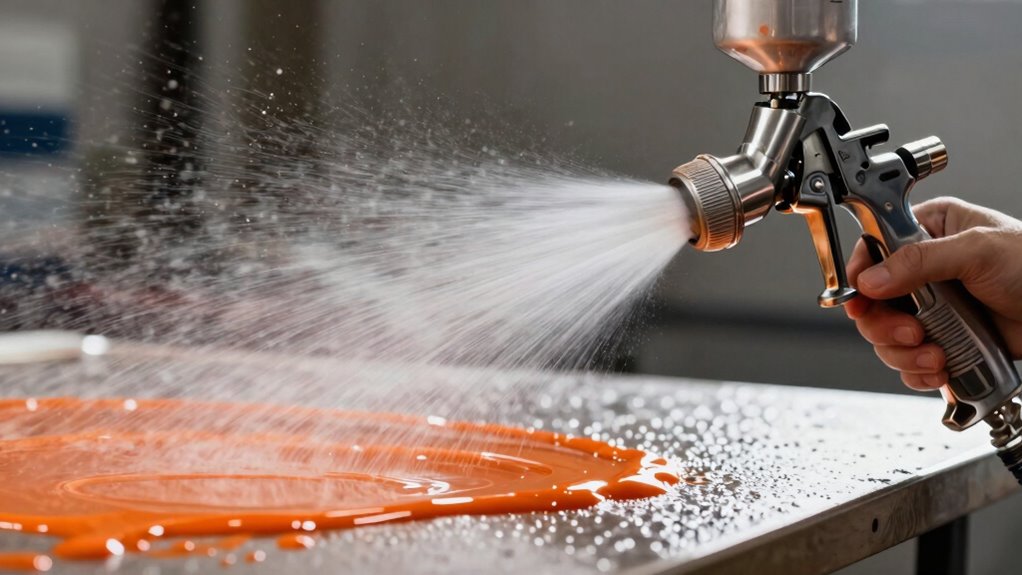
Spraying thick coatings can be be a challenging task, but with the right techniques and equipment, you can achieve a smooth, durable finish. When working with heavy coatings, your success depends heavily on mastering application techniques that guarantee even coverage without overloading the spray gun. To avoid stalls or uneven layers, you should start by thinning the coating appropriately, following manufacturer recommendations. Proper thinning helps the material flow smoothly through the spray gun, reducing the risk of clogging or drips. As you work, maintain a consistent distance from the surface, typically about 6 to 12 inches, and keep your spray motion steady and overlapping slightly with each pass. This consistency results in a uniform coat that minimizes runs and sags.
Achieve a smooth, even finish by thinning coatings properly and maintaining consistent spray techniques.
Equipment maintenance plays an essential role in preventing stalls when spraying thick coatings. Before you begin, thoroughly clean your spray gun, filters, and hoses to remove any residual paint or debris that could cause blockages. Regularly check your equipment’s nozzles and seals, replacing worn or damaged parts to guarantee ideal atomization. A well-maintained spray system functions more reliably when handling heavy materials, as clogged or worn parts can cause inconsistent spray patterns or pressure drops. After each use, clean your equipment meticulously, following the manufacturer’s instructions, to prevent buildup that could interfere with application in future projects. Proper equipment maintenance can also help identify potential issues early, saving time and resources during the project. Incorporating routine maintenance checks into your workflow can help identify potential issues early, avoiding costly downtime.
Another key application technique involves adjusting the pressure settings on your sprayer. For thick coatings, increasing the pressure slightly can help deliver a more fluid spray, reducing the chances of interruptions. However, be cautious not to set it so high that it causes overspray or loss of control. It’s also beneficial to practice on a scrap surface to dial in the right settings before tackling your main project. Consistent movement and avoiding stopping mid-spray will help maintain an even coat and prevent streaks or uneven buildup. Proper technique, combined with equipment calibration, ensures you achieve a professional finish with minimal rework. Being aware of equipment performance during application can greatly improve the final outcome and efficiency of your work. Additionally, adjusting your spraying technique based on the type of coating can further enhance results and prevent application issues. Regularly monitoring application consistency helps ensure a high-quality, uniform finish throughout the project.
high pressure spray gun for thick coatings
As an affiliate, we earn on qualifying purchases.
As an affiliate, we earn on qualifying purchases.
Frequently Asked Questions
What Types of Spray Equipment Are Best for Thick Coatings?
For thick coatings, you should use high-volume, low-pressure (HVLP) or airless spray equipment. These tools handle viscous materials effectively when combined with proper application techniques, like thinning the coating if needed. Remember, equipment maintenance is vital—clean your sprayer thoroughly after each use to prevent clogs or stalls. Regularly check hoses and filters, and adjust pressure settings to guarantee smooth operation and a consistent finish.
How Do Temperature and Humidity Affect Spraying Thick Coatings?
Imagine your coating stalling mid-spray—frustrating, right? Temperature and humidity play vital roles here. If the temperature’s too high or low, it can cause uneven curing or improper adhesion. High humidity introduces excess moisture, leading to drips or sags. To prevent this, focus on temperature regulation and moisture control, ensuring ideal conditions. This balance helps your spray equipment work smoothly, giving you a flawless finish without stalls or imperfections.
Can Thick Coatings Be Applied With Handheld Spray Guns?
Yes, you can apply thick coatings with handheld spray guns, but it’s often better to contemplate alternative methods like brush application or roller techniques. Using a spray gun may cause stalls if the coating’s too thick, so thinning it properly helps. For best results, guarantee even coating application and avoid over-application, which can lead to runs or drips. Combining spraying with brush or roller techniques can give you a smoother, more controlled finish.
What Safety Precautions Are Necessary When Spraying Thick Coatings?
When spraying thick coatings, you should wear protective gear like masks, goggles, and gloves to prevent inhaling fumes and skin contact. Guarantee proper ventilation safety by working in well-ventilated areas or using exhaust fans to reduce fumes buildup. Always follow manufacturer instructions, check equipment for leaks, and keep a fire extinguisher nearby. Taking these precautions helps protect your health and maintains a safe, efficient spraying environment.
How Do I Prevent Clogging During Thick Coating Application?
To prevent clogging during thick coating application, you should focus on proper surface preparation and regular equipment maintenance. Make sure the surface is clean, dry, and free of debris before spraying. Frequently inspect and clean your spray equipment, including filters and nozzles, to avoid buildup. Using the right spray pressure and thinning the coating appropriately also helps prevent clogs, guaranteeing a smooth, consistent finish without stalls.
Conclusion
Don’t let thick coatings hold you back. With the right tools and techniques, you can spray smoothly without stalls or frustration. It might seem overwhelming at first, but mastering the process means your projects will turn out flawless and save you time. Remember, every effort you put in now pays off with a professional finish and pride in your work. Keep pushing forward—you’re capable of achieving perfect results every time.
Halloween Picks
halloween
As an affiliate, we earn on qualifying purchases.