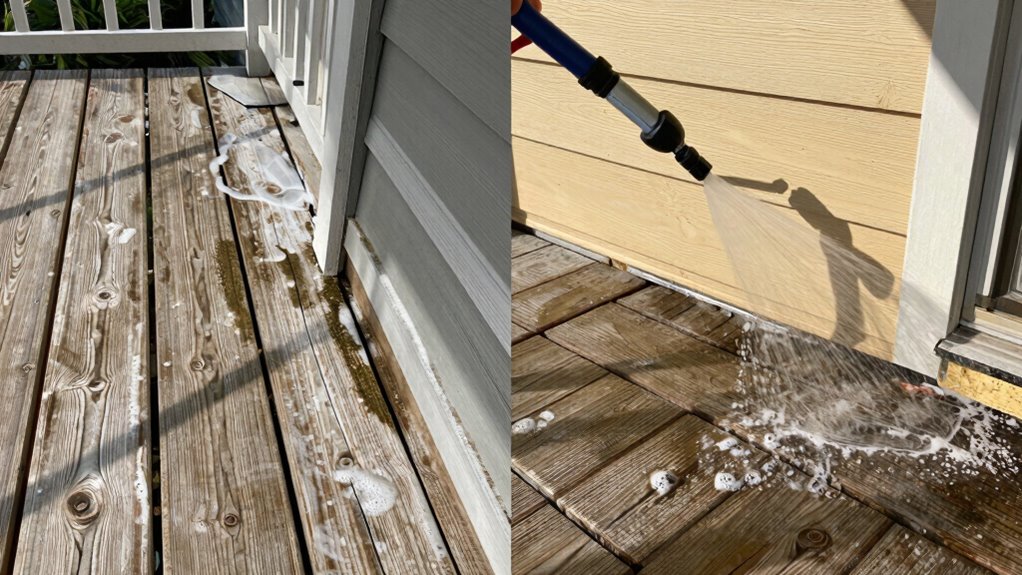

If you’re preparing surfaces for paint, choose soft washing for delicate areas like vinyl siding, stucco, or wood, as it uses gentle, low-pressure cleaning that won’t damage the surface. For tough, durable surfaces like concrete, brick, or stone, pressure washing is more effective, applying high pressure to remove stubborn grime. Knowing which method to use helps guarantee a clean surface and extends paint life—continue to explore which surfaces benefit most from each technique.

Get business pricing on tools and workshop supplies
- Business-only prices and quantity discounts
- Tax-exempt purchasing
- Multiple users, one account, clear invoices
Key Takeaways
- Soft washing is ideal for delicate surfaces like vinyl siding, stucco, and wood before painting to prevent damage.
- Pressure washing is suitable for durable surfaces such as concrete, brick, and stone to ensure deep cleaning before painting.
- Use soft washing to preserve surface integrity and avoid stripping paint on fragile materials.
- Reserve pressure washing for rough, textured surfaces that require thorough dirt removal for better paint adhesion.
- Proper surface assessment ensures choosing the right method, preventing damage and enhancing paint longevity.
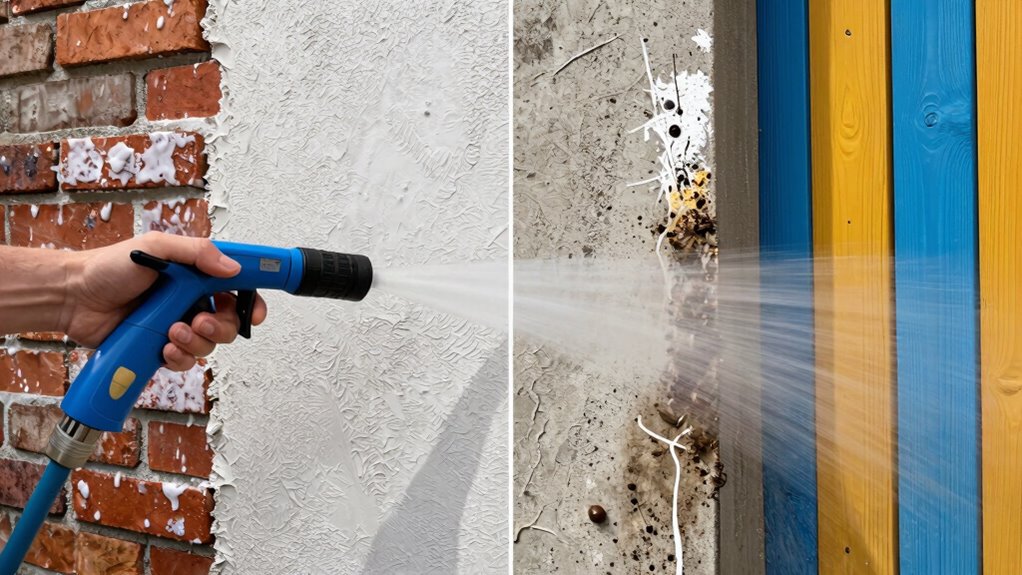
When preparing your home’s exterior for painting, choosing the right cleaning method is essential to guarantee a smooth and long-lasting finish. Two common options are soft washing and pressure washing. Each technique serves different purposes, and understanding which one to use depends on the surface you’re working with. Surface preparation methods vary, and selecting eco-friendly techniques can help you clean effectively while reducing environmental impact. For example, opting for biodegradable cleaning solutions can significantly lessen your environmental footprint. Soft washing uses low-pressure water combined with specialized cleaning solutions to gently remove dirt, mold, algae, and grime. It’s ideal for delicate surfaces like vinyl siding, stucco, and wood, which can be damaged or warped by high-pressure streams. Soft washing is also an eco-friendly technique because it employs biodegradable cleaning solutions that break down contaminants without harming plants, animals, or your landscaping. This method ensures thorough cleaning without the risk of stripping paint or damaging fragile surfaces. When you opt for soft washing, you’re not just cleaning; you’re also preserving the integrity of your exterior surfaces. Understanding the environmentally friendly cleaning options available can help you make more sustainable choices during your project. Additionally, using proper surface preparation techniques can further enhance the longevity of your paint job.
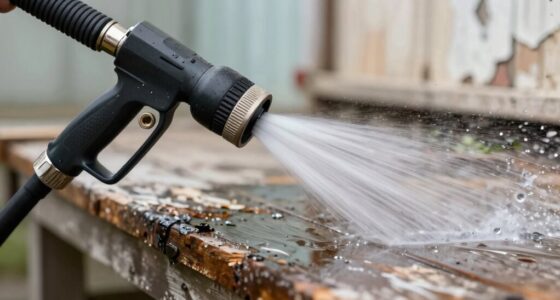
Pressure washing, on the other hand, involves high-pressure water streams capable of removing stubborn dirt, peeling paint, and built-up grime from more durable surfaces like concrete, brick, or stone. It’s effective for deep cleaning those rougher textures and preparing them for repainting. However, using too much pressure on softer surfaces can cause damage, so it’s crucial to adjust the PSI and nozzle accordingly. Pressure washing can also be an eco-friendly technique if you use environmentally friendly detergents and avoid harsh chemicals. It’s important to prioritize surface safety—high-pressure cleaning can sometimes strip paint or leave surfaces vulnerable if not done carefully. Being aware of eco-friendly cleaning options can help you maintain sustainability in your project. Properly selecting the right pressure and cleaning solutions can further improve your results while keeping environmental impact minimal. Knowing which surface needs which cleaning method is key to avoiding damage and ensuring your paint job lasts longer. For delicate siding or textured surfaces, soft washing provides a gentle, thorough clean without risking harm. For sturdy, hard surfaces like driveways or patios, pressure washing offers a deeper clean, but you should always consider the pressure settings and cleaning solutions to keep it eco-friendly. Both surface preparation methods are vital steps in your painting project, and choosing the right one can save you time and money while protecting the environment. By understanding the specific needs of each surface and the benefits of eco-friendly techniques, you set the stage for a professional, durable finish that enhances your home’s curb appeal.
soft wash pressure washer for siding
As an affiliate, we earn on qualifying purchases.
As an affiliate, we earn on qualifying purchases.
Frequently Asked Questions
How Long Does Each Cleaning Method Typically Take?
The cleaning duration depends on the surface compatibility and the method used. Soft washing usually takes longer, around 30 minutes to an hour, because it gently cleans delicate surfaces like shingles or stucco without damage. Pressure washing is quicker, often 15 to 30 minutes, suitable for tougher surfaces like concrete or brick. You should consider the surface’s sensitivity and size to determine the best method and approximate cleaning duration.
Are There Any Surfaces That Shouldn’T Be Washed at All?
Did you know that around 30% of home surfaces can be damaged by improper washing? Fragile surfaces like antique wood or decorative stone shouldn’t be pressure washed, as they can crack or erode. Similarly, chemically sensitive surfaces, such as certain painted or stained areas, can be harmed by harsh chemicals or high pressure. You should avoid washing these surfaces altogether or consult a specialist to prevent costly damage.
Can Soft Wash Remove Stubborn Mold or Algae?
Yes, soft wash can effectively remove stubborn mold or algae. Its gentle cleaning approach uses eco-friendly solutions that penetrate and break down mold spores and algae without damaging the surface. This method is ideal for delicate surfaces like shingles, siding, and wood that could be harmed by high-pressure water. Soft washing guarantees thorough cleaning while protecting your surfaces, keeping them looking fresh and preventing future growth.
Is There Any Risk of Damage With Pressure Washing?
Yes, pressure washing can cause damage if not done properly. You might risk stripping paint, gouging surfaces, or forcing water into areas that can lead to mold or rot. Additionally, high-pressure water can create chemical risks if cleaners contain harsh substances, and it may negatively impact the environment through runoff. To avoid these issues, use appropriate pressure levels, eco-friendly cleaners, and professional expertise for delicate surfaces.
How Often Should Surfaces Be Cleaned Before Painting?
Think of your surface as a canvas waiting to be painted. You should clean it regularly—every 1 to 3 years—to maintain its integrity. Proper surface preparation involves removing dirt, mildew, and old paint, guaranteeing the best adhesion. The cleaning frequency depends on weather and surroundings, but consistent upkeep prevents issues. By doing this, you’re nurturing the foundation for a long-lasting, beautiful finish, much like tending a garden to ensure healthy growth.
Conclusion
Choosing between soft wash and pressure washing before painting depends on your surface. Soft washing gently cleans delicate surfaces, like siding or shingles, preserving their integrity. In contrast, pressure washing blasts away stubborn grime from tougher surfaces, like concrete or brick. Think of soft washing as a gentle caress, and pressure washing as a powerful blast. By selecting the right method, you’ll guarantee your surfaces are perfectly prepared, setting the stage for a flawless, long-lasting paint job.
Halloween Picks
halloween
As an affiliate, we earn on qualifying purchases.