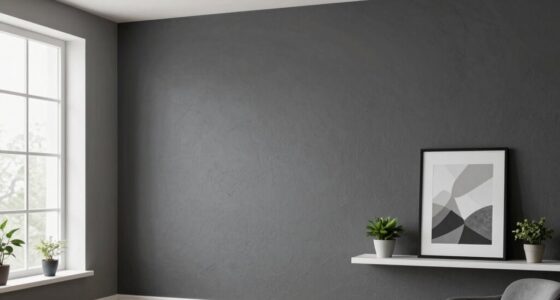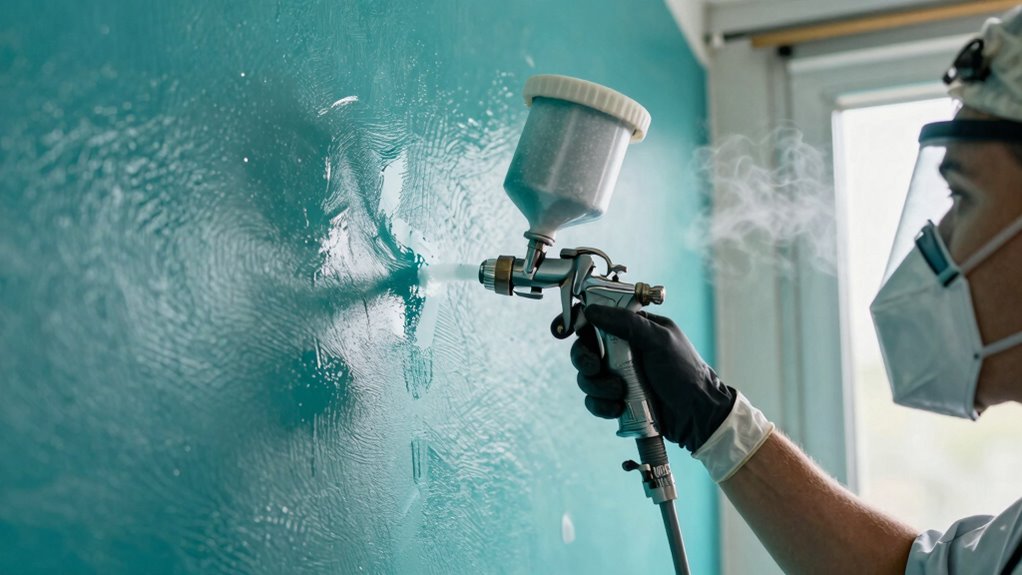

To spray an accent wall without creating a mess, you should prepare your space carefully. Cover floors, furniture, and nearby surfaces with drop cloths or plastic sheeting, and use painter’s tape along edges for clean lines. Set up in a well-ventilated area and test your spray pattern to avoid drips or splatters. Maintain consistent distance and smooth motions, and clean your equipment thoroughly afterward. Following these steps will help you achieve a polished look—keep going to learn more tips for a flawless finish.

Get business pricing on tools and workshop supplies
- Business-only prices and quantity discounts
- Tax-exempt purchasing
- Multiple users, one account, clear invoices
Key Takeaways
- Cover surrounding areas with drop cloths and plastic sheeting to catch overspray.
- Use painter’s tape along edges and outlets for clean, sharp lines.
- Test spray pattern on scrap before starting to avoid uneven coverage or drips.
- Maintain a consistent distance of 10-12 inches from the wall for even application.
- Spray in smooth, overlapping strokes and avoid stopping mid-stroke to prevent streaks.
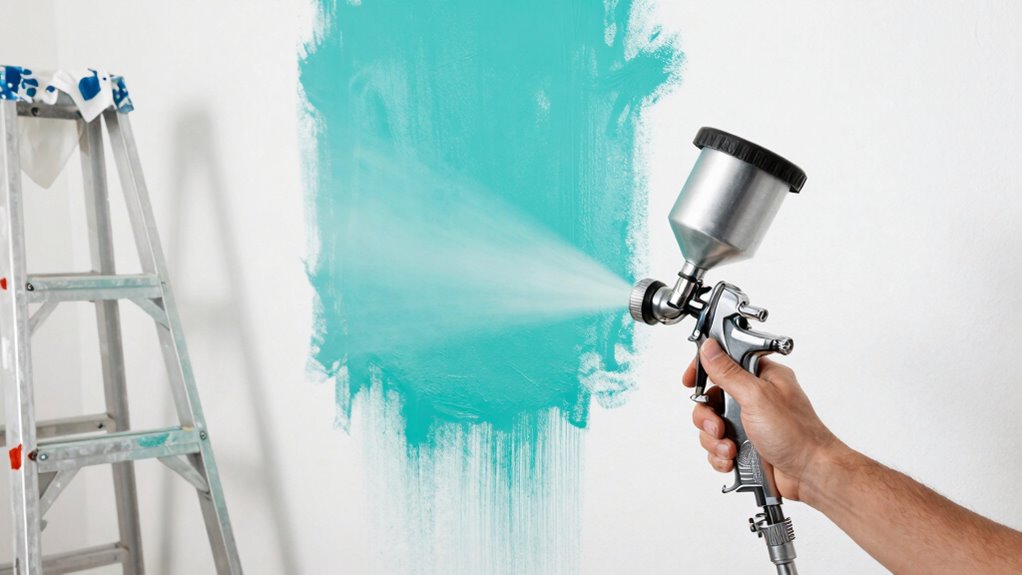
Spraying accent walls can be an efficient way to achieve a professional-looking finish, but without proper preparation, it can quickly turn into a messy ordeal. To avoid this, start by carefully planning your approach. Before you even pick up the spray gun, consider your brush techniques and paint selection. Using the right brushes for touch-ups and edges helps create clean lines, especially around trim and corners where overspray can be problematic. When selecting paint, opt for a high-quality, spray-compatible product that offers good coverage and minimal overspray. Thinning the paint slightly with water or a reducer, as recommended by the manufacturer, ensures smoother application and less clogging of the spray nozzle.
Preparation is key. Cover furniture, floors, and any surfaces you don’t want painted with drop cloths or plastic sheeting. Use painter’s tape along edges, moldings, and outlets to protect areas from overspray. Setting up your workspace in a well-ventilated area also helps control fumes and improves visibility. Once everything’s covered and taped, test your spray pattern on a scrap piece of cardboard. This allows you to adjust the spray gun’s distance, pressure, and pattern size, ensuring even coverage and avoiding drips or streaks. Additionally, understanding spray pattern adjustments can significantly improve your results.
As you begin spraying, maintain a consistent distance from the wall—usually about 10 to 12 inches—and keep your strokes smooth and overlapping slightly with each pass. This technique prevents streaks and uneven patches. Use your brushes for detailed work and touch-ups once the main coat is dry. If you notice paint pooling or running, slow down and adjust your spray distance or pressure. Practicing proper technique and patience will help you achieve a clean, professional finish with minimal mess and overspray.
As an affiliate, we earn on qualifying purchases.
Frequently Asked Questions
What Type of Spray Paint Is Best for Accent Walls?
For accent walls, choose a high-quality latex or acrylic spray paint that offers excellent paint durability and true color matching. These paints adhere well, resist chipping, and provide vibrant, consistent color. Look for options labeled for interior use if you’re painting inside, and consider matte or semi-gloss finishes depending on your preferred look. Proper preparation and spray technique will guarantee a clean, professional finish without mess.
How Long Does It Take for Spray Paint to Dry?
You’ll find that spray paint dries quickly, usually within 15 to 30 minutes, but it’s best to wait 24 hours before applying a second coat or touching the surface. During this time, proper surface preparation and careful painting techniques matter. Rushing can cause smudges or uneven finishes, so exercise patience. Trust the process, and your accent wall will look flawless, with a smooth, durable finish that’s worth the wait.
Can I Spray Paint Over Textured Walls?
Yes, you can spray paint over textured walls, but it’s essential to take into account texture concealment and paint adhesion. First, clean the surface thoroughly to remove dust and grease. Lightly sand the textured areas to improve paint adhesion and help conceal the texture. Use a high-quality primer designed for textured surfaces to ensure even coverage. Then, apply thin, even coats of spray paint, allowing proper drying time between coats for a smooth finish.
Is It Safe to Spray Paint Indoors?
Spray painting indoors can be safe if you take proper precautions. You should guarantee good indoor ventilation to reduce fumes and improve air quality. Always wear protective gear like masks, goggles, and gloves to prevent inhalation of fumes and contact with paint. Keep windows open and use fans to circulate air. If you follow these safety tips, you can spray paint indoors with minimal risk.
How Do I Remove Spray Paint Stains From Floors?
Imagine your floor as a canvas suddenly splattered with spray paint. To remove stains, act quickly with cleaning tips like blotting gently to lift the paint. Use a mixture of mild soap and warm water, or try rubbing alcohol for stubborn spots. For best stain removal, avoid scrubbing harshly, which can damage your flooring. Patience and prompt action turn your mess back into a clean, fresh surface.
Conclusion
So, you’ve mastered the art of spraying your accent wall without turning your room into a paint battlefield. Ironically, the real trick isn’t just avoiding messes but learning to enjoy the process—mistakes and all. After all, a little splatter might just become your signature style, reminding you that sometimes, the best results come from a bit of chaos. Embrace the mess; it’s proof you’re boldly transforming your space, one spray at a time.
Fall yard work Picks
leaf blowers
As an affiliate, we earn on qualifying purchases.