TL;DR

Get business pricing on tools and workshop supplies
- Business-only prices and quantity discounts
- Tax-exempt purchasing
- Multiple users, one account, clear invoices
A House Beautiful report asked five interior designers which widely seen textile patterns they are moving away from as 2027 approaches. Their picks are abstract brushstrokes, mass-market block prints, faux tapestry, ikat and oversized watercolor florals; the views are designers’ opinions, not evidence of a measured industry-wide shift.
Interior designers cited by House Beautiful say they are moving away from five textile patterns they see as overused or dated as 2027 approaches: abstract brushstrokes, mass-produced block prints, faux tapestry, ikat and oversized watercolor florals. The list reflects the designers’ preferences, rather than a measured industry-wide survey, and points toward a stated preference for handmade detail, subtler color and smaller-scale prints.
The report is based on comments from designers asked which prints they are tired of seeing and plan to use less. Sara Swabb, founder of Storie Collective, said abstract brushstroke textiles can feel forced when their contrast is stark and individual marks compete for attention. She said she prefers color changes and irregularities that suggest a hand-painted design.
Sonia Chauhan, founder of Studio Sonia, distinguished handmade block printing from mass-produced fabric that imitates it. She described traditional block printing as repeated stamping with a hand-carved block and said the small imperfections signal that a person made the textile. Adnan Anwar likewise criticized mass-produced faux-tapestry fabric, saying he would not cover an entire sofa in the pattern. He said a tapestry print could work on a pillow, while a genuine tapestry remnant would be his preference for upholstery.
Designer Meghan Jay said ikat can be difficult to combine with other patterns and that its colors can feel overly saturated in rooms already layered with prints, textures and color. Jay and Eve Jean, founder of Eve Jean Interiors, both said they were ready to move away from oversized watercolor-style florals. Jay favors smaller botanical prints with more definition; Jean said the washed-out floral look can feel less expressive than patterns with clear detail and character.
A Shift Toward More Distinctive Fabric
The comments offer readers a practical way to interpret changing design preferences: the issue is not simply whether a motif is fashionable, but how it is made and how it works alongside other materials. The designers criticized patterns they consider overexposed, visually busy or mass-produced, while describing detail, craft and restraint as qualities they prefer.
For anyone choosing upholstery, curtains or cushions, those views may help explain why a once-familiar print can now feel less individual. They do not establish that homeowners or the broader design industry have abandoned these patterns. The report presents several professionals’ opinions, not sales data, polling or a forecast supported by market research.
As an affiliate, we earn on qualifying purchases.
Five Prints Under Designers’ Scrutiny
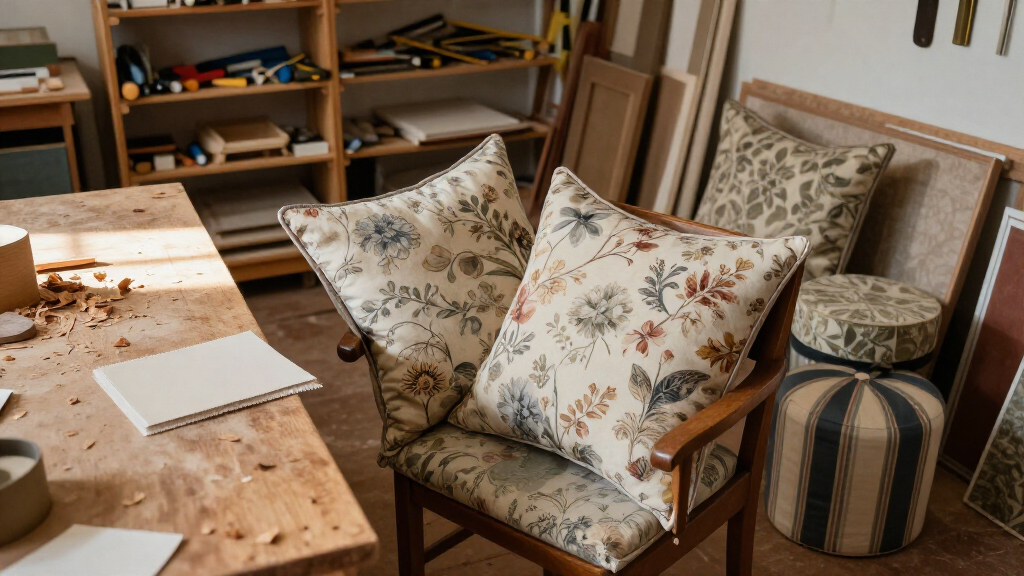
The report places the discussion in the run-up to 2027, when design attention often turns both to emerging trends and to styles that may be losing favor. Its five examples cover a range of approaches: painterly abstractions, printed imitations of traditional craft, tapestry-inspired fabric, ikat and large watercolor florals.
The designers did not reject every version of these motifs. Swabb said she prefers nuanced abstract textiles; Chauhan values authentic hand block printing; and Anwar said a tapestry-style pillow could be acceptable. Jay’s preferred alternative to oversized florals is a smaller botanical print with more definition. Their comments therefore distinguish particular executions and uses, rather than declaring each pattern unsuitable for every home.
“I’m more drawn to textiles with subtle shifts in color and the slight irregularities of a hand-painted pattern.”
— Sara Swabb, founder of Storie Collective
How Broad Is the Design Shift?
The report does not provide survey results, sales figures or other data showing how widely these opinions are shared by designers, retailers or homeowners. It also does not establish that the five patterns are disappearing from stores or interiors. The judgments are attributed to the designers interviewed and concern what they personally expect to use less as 2027 approaches.
It remains a matter of individual taste whether a pattern feels dated, and the comments leave room for selective use. The report does not specify how quickly preferences might change or whether any of the designers’ suggested alternatives will become more widely adopted.
Watch for Specificity in New Prints
The designers’ stated direction is toward textiles with more visible craft, controlled color and clearly defined motifs, rather than broad rejection of pattern. Readers following the trend can look for smaller-scale botanical designs, nuanced painterly effects and genuinely hand-printed cloth, while judging each choice by how it fits the room.
House Beautiful’s report does not set out a formal forecast or a next research milestone. Whether these preferences gain wider traction will become clearer through future designer commentary and the fabrics that retailers and consumers choose in the lead-up to 2027.
Key Questions
Which five textile patterns do the designers say are looking dated?
The designers named abstract brushstrokes, mass-market block prints, faux tapestry, ikat and oversized watercolor florals. These are the interviewees’ opinions, not a finding that every designer rejects the patterns.
Are designers rejecting all block prints and tapestry patterns?
No. Sonia Chauhan praised handmade block printing and its irregularities, while criticizing mass-produced imitations. Adnan Anwar said tapestry-inspired fabric might suit a pillow, but preferred a genuine tapestry remnant for upholstery.
What floral patterns did the designers prefer?
Meghan Jay said she is drawn to smaller botanical prints with more definition and detail, as an alternative to oversized, washed-out watercolor florals.
Does the report prove these patterns are going out of style?
No. It reports the views of several designers and includes no polling, sales data or other measure of industry-wide demand. The claims describe personal design preferences, not a confirmed market trend.
Source: rss
Halloween Picks
halloween
As an affiliate, we earn on qualifying purchases.