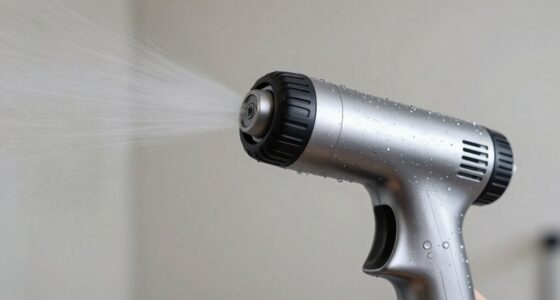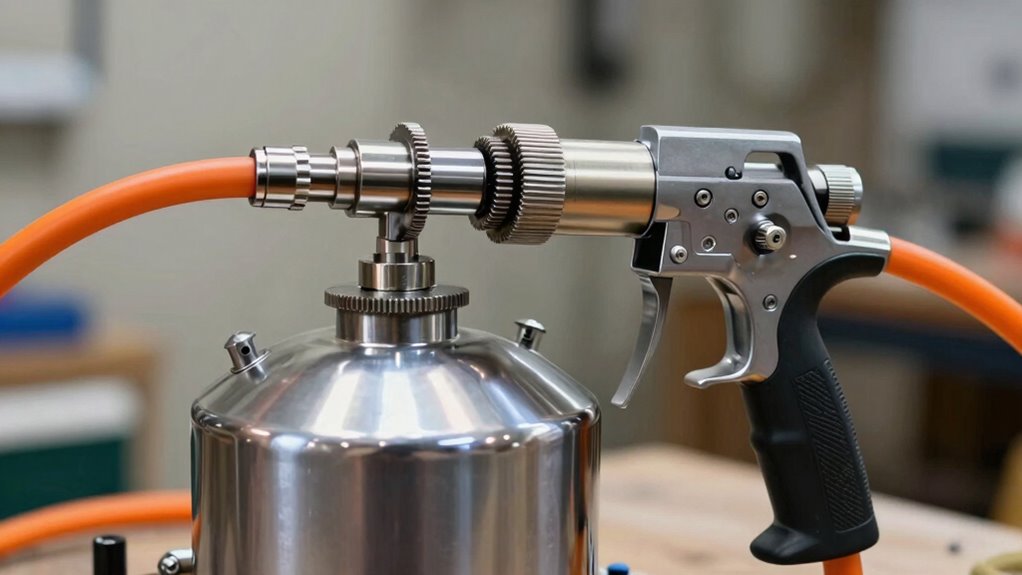

An airless sprayer’s parts work together to deliver a smooth finish. The pump pressurizes the paint and pushes it through the system, while the motor powers the pump for consistent performance. The spray tip controls the spray pattern, and the wand directs the spray where you want it. The paint hose carries paint from the container to the gun, and pressure control adjusts the flow. Knowing what each part does helps you achieve professional results—keep exploring to learn more.

Get business pricing on tools and workshop supplies
- Business-only prices and quantity discounts
- Tax-exempt purchasing
- Multiple users, one account, clear invoices
Key Takeaways
- The pump pressurizes paint and requires regular maintenance to prevent wear and ensure consistent flow.
- The spray tip controls spray pattern, with proper cleaning essential for quality finish and avoiding clogs.
- The paint hose transports paint to the gun, with pressure control adjusting flow for different viscosities.
- The spray wand directs the spray, and proper cleaning and tip selection improve efficiency.
- The paint container holds and prepares paint, requiring cleanliness and proper viscosity management for optimal spraying.
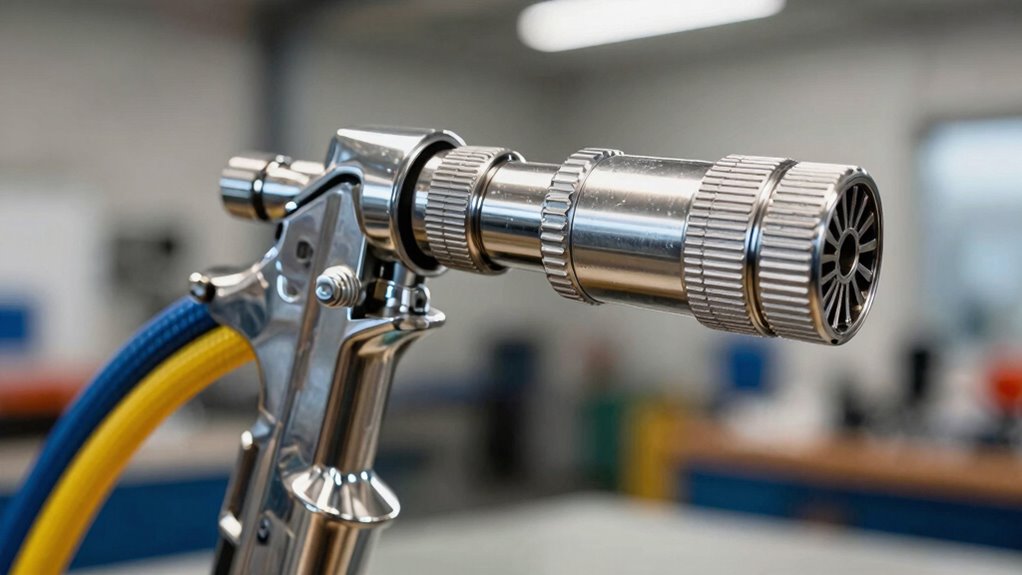
An airless sprayer is a powerful tool that simplifies large painting projects, but understanding its components can help you operate it more effectively. When you know what each part does, you can troubleshoot issues more efficiently, perform proper sprayer maintenance, and achieve a smoother finish. One key aspect to bear in mind is the relationship between the sprayer’s components and the paint’s viscosity. Thicker paints require different handling than more fluid ones, and understanding this helps prevent clogs and uneven spray patterns.
Understanding your airless sprayer’s parts and paint viscosity ensures smoother operation and professional results.
The pump is the heart of your airless sprayer. It pressurizes the paint and pushes it through the system. Regular sprayer maintenance involves checking the pump for wear and tear and ensuring it’s properly lubricated. If you notice inconsistent spray or loss of pressure, the pump might need cleaning or replacing. The motor powers the pump, and depending on your sprayer model, it might be electric or gas-powered. Keeping the motor in good shape means avoiding overheating and ensuring it runs smoothly during long projects. Proper motor maintenance is essential for consistent performance.
The spray tip is where the paint exits and directly affects your spray pattern and finish quality. Different tips are suited for various paint viscosities and project types. A tip too small for thick paint might clog easily, while a larger tip might produce overspray. Adjusting or changing the spray tip is straightforward but vital for achieving a fine, even coat. The spray wand connects the tip to the gun, giving you control over the spray direction and distance. Properly maintaining the wand—cleaning it after use and inspecting for cracks—helps avoid leaks and uneven spraying. Additionally, selecting the correct spray tip can significantly improve your painting efficiency.
The paint hose is the conduit that carries paint from the pump to the spray gun. Flexibility and durability are essential here, especially if you work on large projects. Regularly inspecting the hose for cracks or leaks and cleaning it prevents contamination of your paint and ensures consistent flow. The pressure control valve regulates the amount of pressure applied to the paint, which is critical when spraying different paint viscosities. Using the right pressure setting prevents paint from splattering or dripping and ensures an even coat. Proper hose maintenance also extends the lifespan of your equipment. Understanding how paint viscosity influences your spray settings and process helps you adapt to different project requirements.
Finally, the paint container holds your paint before spraying. Maintaining a clean container prevents clogs and contamination. When dealing with different paint viscosities, it’s essential to thin or stir the paint properly before loading it into the container. Proper sprayer maintenance is crucial for optimal performance and longevity of the equipment. By understanding each part’s function and performing regular sprayer maintenance, you’ll improve your efficiency and get the best results from your airless sprayer. Properly managing paint viscosity and keeping components in top shape make all the difference in achieving a professional finish.
airless paint sprayer pump maintenance kit
As an affiliate, we earn on qualifying purchases.
As an affiliate, we earn on qualifying purchases.
Frequently Asked Questions
How Long Does an Airless Sprayer Typically Last?
An airless sprayer typically lasts 5 to 10 years with proper care. Its durability depends on usage frequency, the quality of parts, and regular maintenance. To extend your sprayer’s life, follow maintenance tips like cleaning filters, checking for wear, and lubricating moving parts. Proper upkeep prevents breakdowns and guarantees peak performance, making your investment last longer and saving you money over time.
Can I Use Any Paint With an Airless Sprayer?
You can’t just use any paint with an airless sprayer because paint compatibility varies. Check the manufacturer’s guidelines to confirm your sprayer can handle different types, like latex or oil-based paints. This guarantees equipment versatility and prevents clogs or damage. If you’re using thicker paints, you might need to thin them or use a specific nozzle. Always test a small batch first to achieve the best results.
What Safety Precautions Should I Take During Use?
You should always wear personal protective equipment like goggles, gloves, and a mask to prevent paint splashes and inhalation risks. Make sure proper ventilation in your workspace to avoid inhaling fumes and to disperse overspray. Before starting, read the manufacturer’s safety instructions. Keep the sprayer grounded to prevent static shocks, and avoid spraying near open flames or heat sources. Taking these precautions helps protect you and ensures a safer painting experience.
Is Maintenance Required for Optimal Performance?
Yes, maintenance is crucial for peak performance. You should follow cleaning routines after each use to prevent clogging and wear. Regularly inspect and replace worn parts when necessary. Store your sprayer properly, ideally in a dry, cool place, to avoid damage. Proper storage tips include emptying the system and covering it to keep dust out. Consistent maintenance ensures your sprayer works efficiently and lasts longer.
How Do I Troubleshoot Common Spray Pattern Issues?
To troubleshoot spray pattern issues, start by inspecting the sprayer nozzle for clogs or damage and clean or replace it if needed. Check the pressure regulation to guarantee it’s set correctly, as improper pressure can cause uneven spray patterns. Adjust the pressure regulator and clean the nozzle regularly to maintain consistent spray quality. Proper maintenance helps prevent issues and guarantees your sprayer performs at its best.
Conclusion
Now that you understand each part of your airless sprayer, you’re equipped to tackle your next project with confidence. Imagine the paint flowing smoothly, the spray gun guiding your hand like a steady breeze on a quiet morning. When you know how each component works together, painting becomes an effortless dance. Soon, your walls will be transformed, and the scent of fresh paint will mingle with the anticipation of a job well done.
Halloween Picks
halloween
As an affiliate, we earn on qualifying purchases.