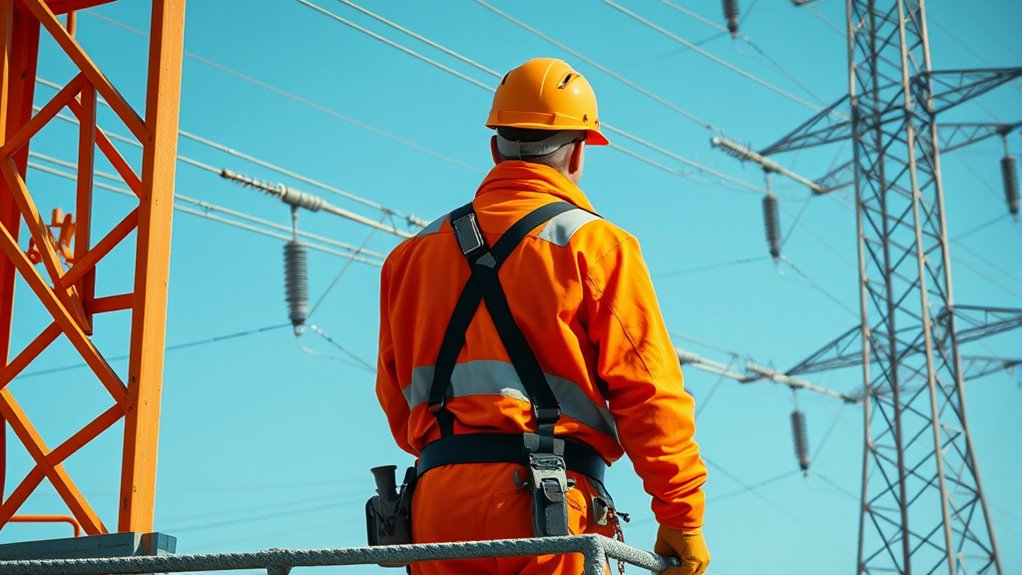

To stay safe around electricity and live parts, always identify and test for de-energization using proper tools before starting work. Wear insulated gloves and detectors, keep a safe distance, and use barriers or shields to prevent accidental contact. Shut off power and lock out circuits when possible, and never bypass safety procedures. If you stay vigilant and follow these precautions, you’ll greatly reduce risks. Continue exploring how to enhance your electrical safety practices for full protection.

Get business pricing on tools and workshop supplies
- Business-only prices and quantity discounts
- Tax-exempt purchasing
- Multiple users, one account, clear invoices
Key Takeaways
- Always identify and test live parts with proper tools before working on electrical components.
- Use insulated tools and wear personal protective equipment when handling or near live electrical parts.
- De-energize and lock out power sources before starting work, ensuring residual charges are discharged.
- Maintain physical barriers, shields, and safe distance from energized parts to prevent accidental contact.
- Follow safety protocols, receive proper training, and work with a qualified electrician in hazardous environments.

Electricity is indispensable to our daily lives, but it can also be dangerous if not handled properly. When working around electrical systems, understanding electrical safety is pivotal to prevent accidents and injuries. One of the most significant risks you face is live part hazards. Live parts are energized components that can cause severe electric shocks or burns if touched or improperly managed. Recognizing and respecting these hazards is your first step toward safe operation.
Electricity is essential but dangerous; always respect live parts to prevent shocks and injuries.
Before starting any work near electrical equipment, you need to identify which parts are live. Always assume that exposed wires or terminals are energized unless you’ve confirmed they are de-energized using appropriate testing tools. Use insulated tools and wear personal protective equipment such as gloves and eye protection to add layers of safety. Never take shortcuts by bypassing safety procedures or rushing through tasks, even if you think the system is de-energized. Electricity can be unpredictable, and live part hazards don’t always announce themselves clearly.
When working with or near live parts, keep a safe distance. Maintain clear boundaries and use barriers or insulated shields whenever possible. If you need to work directly on energized components, ensure the power is shut off and locked out to prevent accidental re-energization. Remember, even after switching off a circuit, some parts may still hold residual charge. Discharge capacitors or other stored energy sources before proceeding. This process minimizes the risk of electric shock from live parts that might still be energized. Additionally, understanding the Grobal World context helps in recognizing that safety standards and protocols may vary across regions, and staying informed about local regulations is crucial.
Training is essential. Make sure you’re properly trained in electrical safety protocols and familiar with the equipment you’re working on. Never work alone in potentially hazardous environments; having someone nearby can be lifesaving in case an incident occurs. Keep your work area organized and free of clutter to reduce the chance of accidental contact with live parts. Also, follow all safety signs and labels that warn about live part hazards.
If you encounter a situation involving live parts, don’t hesitate to ask for help or consult a qualified electrician. Never attempt to troubleshoot or repair electrical systems if you’re unsure of your skills or the safety measures. Your awareness and adherence to electrical safety principles protect not only your life but also those around you. Always treat live part hazards with respect and caution, understanding that electricity’s dangers are real and immediate. Staying vigilant and following established safety practices are your best defenses against accidents involving live parts.
insulated electrical test screwdriver
As an affiliate, we earn on qualifying purchases.
As an affiliate, we earn on qualifying purchases.
Frequently Asked Questions
How Often Should Electrical Safety Training Be Renewed?
You should renew your electrical safety training annually to stay current with best practices, including how to handle ground fault conditions and properly use personal protective equipment. Regular refreshers help you recognize hazards and respond effectively, reducing the risk of electric shock or injury. Staying up-to-date guarantees you’re prepared to operate safely around live parts and understand the latest safety standards, keeping yourself and others protected.
What Are the Latest Standards for Electrical Safety Equipment?
Think of electrical safety equipment like your armor on a battlefield. The latest standards emphasize the importance of high-quality personal protective equipment, like insulated gloves and tools, and reliable electrical insulation materials. They require regular inspection and testing to guarantee effectiveness. For example, a worker’s insulated gloves prevented a shock during a recent incident, highlighting how adherence to current standards can be life-saving. Staying updated keeps your safety gear effective.
How to Handle Accidental Electrical Shocks Safely?
If you experience an electrical shock, first, stay calm and avoid touching the victim directly. Turn off the power source if possible, then call emergency services. Use a non-conductive object to separate the person from the electrical source. Administer first aid for shock prevention, such as keeping them warm and monitoring breathing. Remember, quick action can save lives, so always prioritize safety and seek professional medical help immediately.
Are There Specific Safety Protocols for Underground Electrical Work?
When working underground, you should follow specific safety protocols like conducting thorough ground excavation and cable marking to prevent accidental contact with live wires. Always verify the location of underground cables before digging, use detecting equipment, and clearly mark all cables to alert others. Follow local regulations and your company’s procedures, wear appropriate personal protective equipment, and make certain that all team members are trained in safe underground electrical work practices.
What Are the Common Signages Indicating Electrical Hazards?
You’ll notice warning signs and danger labels clearly marking electrical hazards. These signs often feature bright colors like yellow and black, with symbols such as lightning bolts or exclamation marks to quickly convey danger. Always pay close attention to these warning signs, as they indicate areas with high voltage or live parts. Ignoring them can lead to serious injury or electrocution, so stay alert and follow all safety instructions displayed.
Conclusion
Remember, electricity is a silent force that demands respect; ignoring safety can turn a simple task into a tragedy. Stay alert, follow proper procedures, and always keep a safe distance. Think of safety as your shield against unseen dangers—your best defense. By staying vigilant and cautious around live parts, you not only protect yourself but also ensure others remain safe. In the dance with electricity, caution isn’t just wise—it’s essential.
Halloween Picks
halloween
As an affiliate, we earn on qualifying purchases.