
Good dust control helps you achieve a smooth, flawless final finish by preventing dust particles from settling on surfaces. It reduces imperfections like bumps, craters, and uneven textures that can ruin the look. With proper dust management, your tools stay clean, and airborne particles are minimized, saving you time and effort on rework. Maintaining a dust-free environment guarantees a professional, durable result. Keep exploring to discover more ways to perfect your finishing process.
Key Takeaways
- Prevents dust particles from settling on surfaces, ensuring a smooth and flawless final coat.
- Reduces imperfections like bumps, craters, and uneven textures caused by airborne debris.
- Maintains a clean environment, minimizing contamination during application and curing.
- Enhances overall finish durability and appearance by avoiding surface defects.
- Saves time and resources by decreasing the need for rework, sanding, or touch-ups.
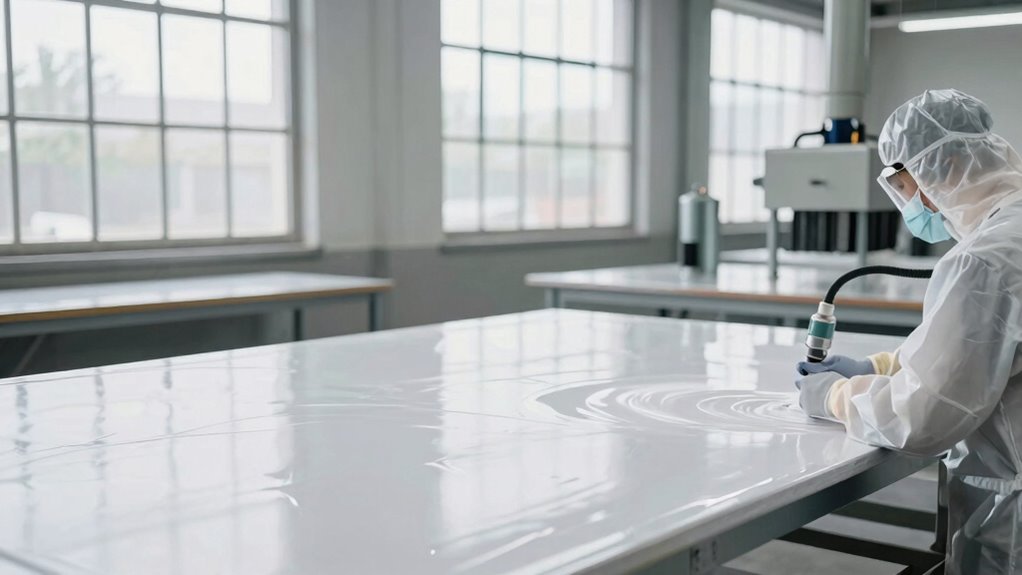
Have you ever wondered how dust affects the final finish quality of your projects? The truth is, dust can make or break the smoothness and appearance of your work. When you’re preparing a surface, proper surface preparation is essential. Dust particles settle on surfaces, creating imperfections that are almost impossible to remove once paint or coating is applied. If the surface isn’t thoroughly cleaned beforehand, these tiny particles can cause bumps, uneven textures, or even tiny craters that ruin the overall finish. This means your initial preparation isn’t just about making the surface look good—it’s about creating a clean, dust-free zone that guarantees your final coat goes on flawlessly.
Equally important is equipment maintenance. Dirty or poorly maintained tools and spray devices tend to generate more dust and debris during application. For example, if spray guns aren’t cleaned regularly, residual dust or dried material can contaminate the finish. This not only impacts the smoothness but also leads to inconsistent color or sheen. When your equipment is well-maintained, it operates more efficiently, and you’re less likely to introduce unwanted particles into your project. Regularly checking and cleaning filters, nozzles, and hoses makes a substantial difference. Proper equipment maintenance reduces airborne dust, ensuring the environment remains as dust-free as possible during application, which directly influences the quality of your final finish. Additionally, understanding how dust control measures function can help you implement effective strategies to keep your workspace cleaner. Using dust barriers and filtration further minimizes airborne particles and creates a controlled environment for optimal results. Maintaining a clean workspace and understanding airborne dust control** are crucial for achieving the best possible finish. Incorporating effective dust management** strategies can also help prevent dust from settling on surfaces during critical stages of your project.
Moreover, implementing vacuum systems and extraction tools can significantly reduce dust levels during surface preparation and finishing processes, enhancing overall quality.
Good dust control also involves managing the environment around your workspace. Using dust barriers, air filtration units, or even simple plastic sheeting can considerably cut down on airborne particles settling on your work. When dust levels are kept low, you give your finishing coats a better chance to adhere smoothly and cure without blemishes. This means you don’t have to spend extra time sanding or re-coating, saving you effort and resources.
In essence, controlling dust isn’t just about cleanliness; it’s about precision. Proper surface preparation removes existing dust and debris beforehand, while diligent equipment maintenance prevents new particles from contaminating your work. When dust is kept in check, your final finish isn’t compromised by unwanted imperfections. Instead, you achieve a sleek, professional look that lasts. Dust control isn’t an afterthought—it’s an integral part of the process that ensures your project turns out exactly as you envisioned.
As an affiliate, we earn on qualifying purchases.
Frequently Asked Questions
How Often Should Dust Control Equipment Be Maintained?
You should maintain your dust control equipment regularly, ideally following a strict maintenance schedule. Perform routine equipment inspections daily or weekly to identify and address issues early. Regular maintenance helps guarantee your dust control systems operate efficiently, preventing dust buildup that can compromise finish quality. Stick to your maintenance schedule and inspect your equipment consistently to maximize dust collection, reduce downtime, and achieve a high-quality final finish.
What Types of Dust Are Most Harmful to Finish Quality?
The most harmful dust types to finish quality are fine particles and airborne pollutants, as they easily settle on surfaces and cause contamination. Particle contamination from dust, dirt, and debris can lead to surface imperfections, while airborne pollutants like fumes and micro-particles compromise the smoothness and appearance of the final finish. Effective dust control minimizes these hazards, ensuring a cleaner environment and a higher-quality, flawless finish.
Can Dust Control Improve Worker Safety?
Ever wonder how dust control boosts safety? It definitely does. By implementing effective safety protocols and dust management strategies, you protect workers from inhaling harmful particles and reduce accident risks from slippery surfaces or impaired visibility. Good dust control creates a safer work environment, ensuring worker protection and peace of mind. When dust is managed properly, you foster a healthier, safer workplace where everyone can focus on delivering top-quality finishes.
Are There Environmental Regulations for Dust Management?
Yes, there are environmental regulations for dust management that you must follow. These rules aim to protect air quality by limiting dust emissions from your operations. You’re required to implement proper dust control measures, monitor air quality, and stay compliant with local, state, and federal standards. By doing so, you guarantee regulatory compliance, reduce environmental impact, and create a safer, cleaner work environment.
What Is the Cost-Benefit Analysis of Dust Control Systems?
You might find that investing in dust control systems pays off through cost efficiency by reducing cleanup and health-related expenses. While implementation challenges, like initial setup and maintenance, seem intimidating, the long-term benefits outweigh these hurdles. The improved final finish quality minimizes rework and waste, ultimately boosting your profitability. In the end, the emotional relief from a safer, cleaner environment makes the upfront costs worth it, creating a win-win situation.
Conclusion
By prioritizing dust control, you’re not just cleaning up your workspace—you’re setting the stage for a flawless finish. When dust stays in check, your final product shines with professional quality and fewer imperfections. It’s a win-win that saves you time and frustration down the line. Remember, a clean workspace means a smooth finish, so don’t let dust be the elephant in the room. Keep it controlled, and your results will speak for themselves.