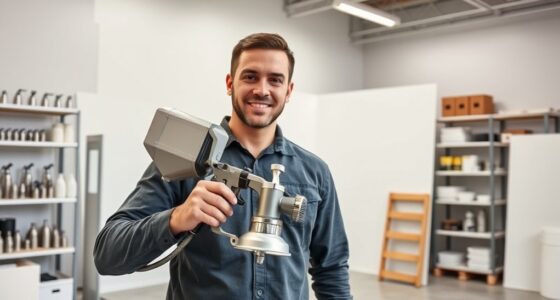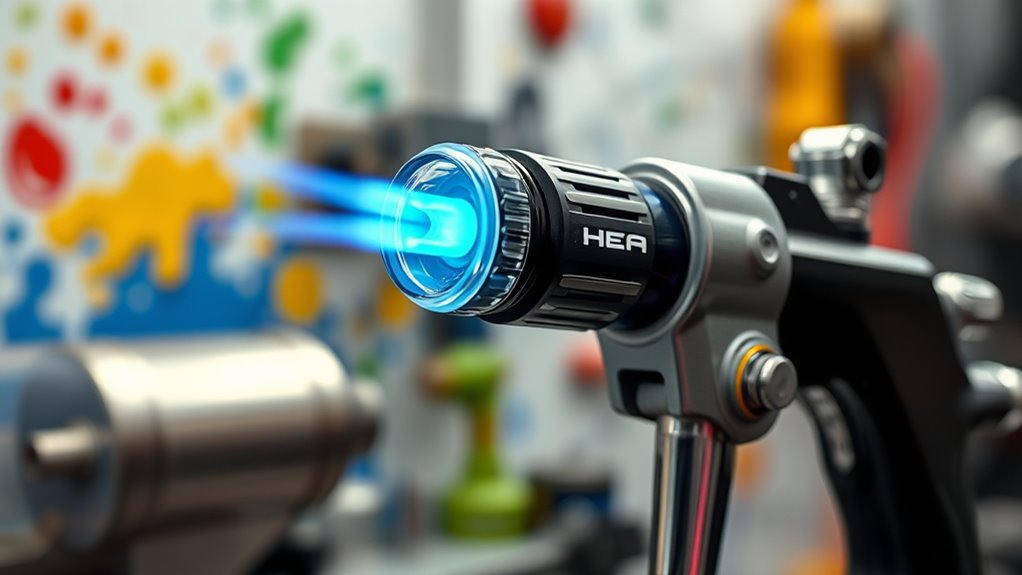
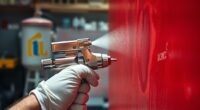
High-Efficiency Airless (HEA) technology uses a specially designed spray tip and lower pressure to create a narrower, more controlled spray pattern. This allows for more precise paint application, reducing overspray, mess, and waste. HEA also lowers equipment strain, extends lifespan, and improves safety by decreasing airborne particles. With these benefits, HEA makes your projects cleaner, faster, and more efficient. To discover how this innovative system can transform your work, keep exploring further.
Key Takeaways
- HEA technology produces a narrower, more controlled spray pattern for precise paint application.
- It operates at lower pressure, reducing equipment wear and extending lifespan.
- HEA minimizes overspray and airborne particles, enhancing safety and environmental sustainability.
- It improves efficiency by reducing paint waste, cleanup time, and maintenance costs.
- HEA revolutionizes painting processes, offering faster, cleaner, and more sustainable industry standards.

Have you ever wondered how HEA technology is revolutionizing the way industries operate? It’s transforming paint application processes by offering faster, cleaner, and more efficient ways to complete projects. Unlike traditional airless sprayers, High‑Efficiency Airless (HEA) systems utilize a specially designed tip that produces a narrower, more controlled spray pattern. This means you can apply paint more precisely, reducing overspray and minimizing waste. For you, this translates into less mess to clean up and less paint used overall, saving money and time. The technology also enables a smoother finish, even on challenging surfaces, because it delivers a consistent and even coating. With HEA, you can tackle projects more confidently, knowing you’ll get professional results with less effort.
One of the key advantages of HEA technology is its impact on equipment maintenance. Because the system sprays at lower pressure than traditional airless equipment, it experiences less wear and tear. This means that your equipment’s lifespan extends, and maintenance becomes less frequent and less costly. You won’t have to worry about replacing parts as often, which keeps your project timelines on track and your budget intact. Additionally, the reduced pressure lowers the risk of clogging or damage to the spray tip, meaning fewer interruptions during your workday. Proper maintenance is still essential, but HEA technology simplifies it. You’ll find that cleaning the equipment is quicker and easier, thanks to the lower pressure and cleaner spray pattern. This efficiency in maintenance allows you to focus more on the job rather than troubleshooting equipment issues. Moreover, understanding essential oils for equipment care can help you maintain your sprayers and prolong their lifespan.
Furthermore, HEA technology promotes safer working conditions. Because it produces less overspray and airborne particles, you and your team are exposed to fewer fumes and paint particles, creating a healthier environment on the job site. This safety aspect is vital, especially when working in enclosed spaces or with hazardous materials. The combination of improved paint application and reduced equipment strain means you spend less time dealing with equipment breakdowns or paint wastage, ultimately boosting productivity. Plus, with less cleanup and fewer repairs needed, your overall project costs decrease, and your reputation for quality work improves.
In essence, HEA technology isn’t just about making paint application easier; it’s about enhancing every aspect of your work—efficiency, safety, and cost-effectiveness. As you adopt this innovative approach, you’ll notice how it streamlines your processes and helps you deliver high-quality results faster and more sustainably. It’s a game-changer that’s shaping the future of industries relying on paint application and equipment maintenance.
Frequently Asked Questions
How Does HEA Technology Compare to Traditional Spray Systems?
HEA technology outperforms traditional spray systems by offering greater application versatility and reducing overspray. You’ll notice smoother, more even finishes with less paint waste. It also provides environmental benefits, such as lower VOC emissions and less solvent use. This makes HEA ideal for various projects, saving you time and money while being eco-friendlier. Overall, HEA technology streamlines your work and promotes sustainable painting practices.
What Safety Precautions Are Necessary When Using HEA Equipment?
When using HEA equipment, you should always wear protective gear like goggles, gloves, and a mask to prevent paint inhalation or splashes. Make certain proper ventilation in your workspace to disperse fumes and reduce health risks. Follow manufacturer instructions for safe operation, check hoses and connections for leaks, and avoid spraying in confined or poorly ventilated areas. These precautions help keep you safe and ensure a successful project.
Can HEA Technology Be Used for All Types of Paints?
HEA technology isn’t suitable for all types of paints. You need to take into account paint compatibility because some coatings may clog or not spray properly with HEA systems. While HEA offers great application versatility for many latex and acrylic paints, it may not work well with thicker or specialty paints like epoxies or oil-based coatings. Always check manufacturer recommendations to ensure your paint is compatible for a smooth, efficient application.
What Maintenance Is Required to Keep HEA Systems Optimal?
Did you know proper maintenance can extend your HEA system’s life by up to 30%? To keep it running smoothly, follow cleaning protocols after each use and inspect the nozzle regularly for wear or clogs. This guarantees ideal spray quality and prevents costly repairs. Keep the filters clean and check for leaks, so your HEA system stays efficient and reliable, saving you time and money long-term.
How Does HEA Impact Painting Project Timelines and Costs?
HEA technology speeds up your painting projects and reduces costs by delivering higher pressure with less overspray and faster application. This means you can complete jobs more quickly, increasing project efficiency. The reduced paint waste and quicker setup also lead to significant cost savings. Overall, using HEA systems helps you finish projects faster and more affordably, making them a smart choice for improving your painting workflow.
Conclusion
Now that you understand HEA technology’s efficiency and precision, you might think it’s just another innovation. But it’s more—it’s a game-changer that challenges traditional methods, blending advanced engineering with eco-conscious design. Just as precision meets power, innovation meets responsibility. Embrace HEA technology not only for its performance but for its potential to reshape industries and reduce environmental impact. In this blend of strength and sustainability, you see the future taking shape.