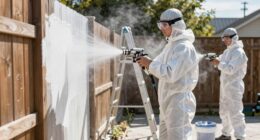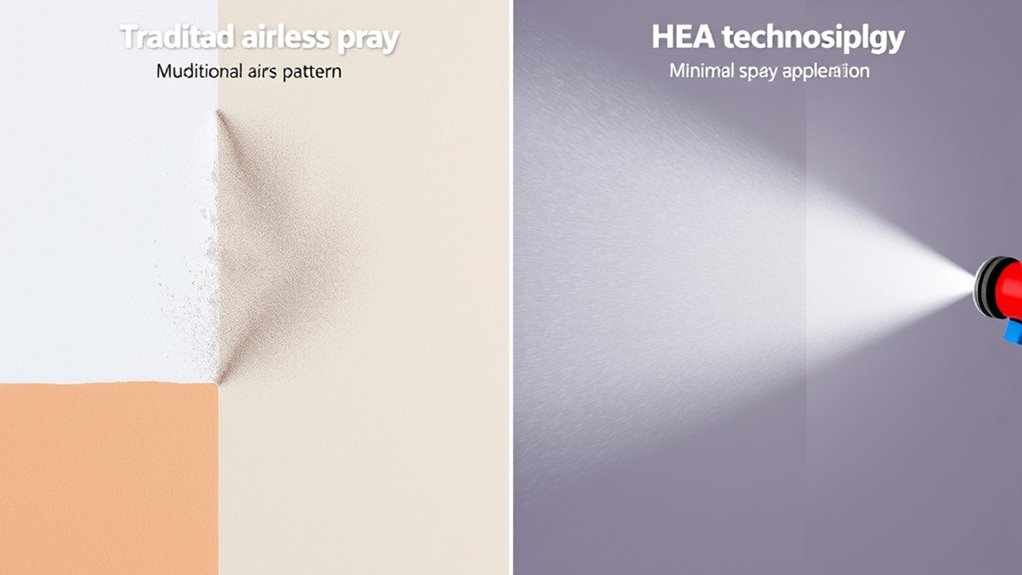

HEA sprayers substantially cut down overspray compared to traditional airless systems. They deliver more controlled, precise patterns, producing finer droplets that reduce paint drift and waste. They also operate at lower pressure, making them safer and easier to handle. This means cleaner lines, less mess, and a safer work environment. If you want to learn detailed differences and how to maximize these benefits, keep exploring how HEA technology can improve your projects.
Key Takeaways
- HEA sprayers produce finer, more controlled spray droplets, significantly reducing overspray compared to traditional airless systems.
- HEA technology operates at lower pressures, minimizing paint drift and over-application.
- Traditional airless sprayers generate larger droplets and require skill to manage overspray effectively.
- HEA sprayers enhance safety by decreasing airborne paint particles and fumes during operation.
- Overall, HEA systems offer better surface control and cleaner finishes with less waste and overspray.

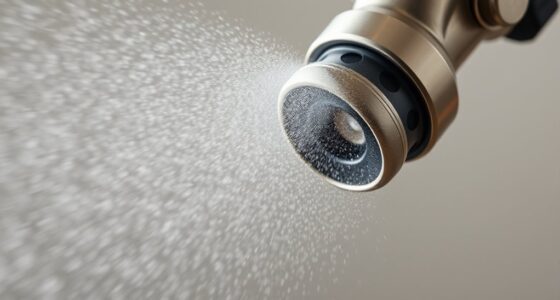
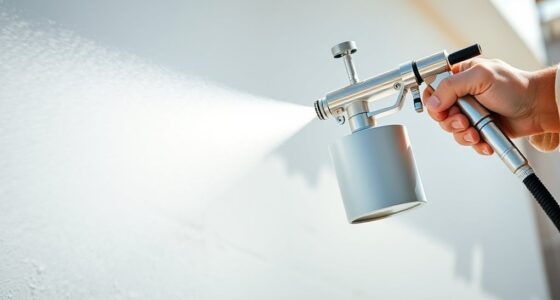
Ever wonder how to minimize paint overspray and keep your project clean? Reducing overspray is essential not only for the quality of your work but also for your safety and efficiency. When it comes to achieving precise spray patterns, the type of equipment you choose makes a substantial difference. HEA (High Efficiency Airless) sprayers are designed to deliver a more controlled spray, resulting in less overspray compared to traditional airless systems. These sprayers produce a finer, more consistent spray pattern that reduces paint drift and over-application, making it easier for you to hit your target surface accurately. This means fewer paint particles escape into the air, helping you maintain a cleaner workspace and avoid wasting material.
In addition to better spray patterns, HEA sprayers also enhance painter safety. Traditional airless sprayers tend to generate higher pressure and larger spray droplets, which can lead to excessive overspray and airborne paint particles. These particles pose health risks, especially if you’re working in poorly ventilated areas. With HEA technology, the lower pressure output and optimized spray pattern considerably cut down on the amount of airborne paint, making it safer for you to work without inhaling harmful fumes or paint mist. This improved safety profile allows you to focus more on your craft rather than worrying about health hazards.
Using HEA sprayers also simplifies cleanup and reduces the need for extensive masking and surface preparation. Since the spray is more precise, you can target specific areas with minimal fallout, saving time and effort. This accuracy not only improves your workflow but also minimizes the risk of accidental overspray onto surfaces you don’t want painted. In turn, this helps you maintain better control over your project, ensures cleaner lines, and produces a professional-looking finish. Additionally, understanding tuning techniques can further optimize your equipment’s performance for specific projects.
While traditional airless systems are often more powerful and suitable for large-scale jobs, they require more skill to manage spray patterns and avoid overspray. HEA sprayers, on the other hand, are more user-friendly and forgiving, making them ideal for both DIYers and experienced painters looking to improve efficiency and safety. Investing in an HEA system can transform your painting experience by providing a more controlled, safer, and cleaner way to complete your projects. Overall, understanding the benefits of HEA versus traditional airless equipment helps you make informed choices that enhance your results and protect your health on every job.
Frequently Asked Questions
How Does Overspray Impact Paint Waste and Costs?
Overspray substantially impacts paint waste and costs, reducing your paint economy and overall cost efficiency. When overspray occurs, you use more paint than necessary, leading to higher expenses and wasted materials. By minimizing overspray, you can save money, extend your paint supplies, and improve job quality. Investing in equipment or techniques that cut down on overspray helps you work more efficiently and cost-effectively, ensuring better results and lower overall costs.
What Safety Measures Are Needed When Reducing Overspray?
To stay safe when reducing overspray, you should always wear appropriate personal protective equipment like masks, goggles, and gloves. Make certain your workspace has proper ventilation systems in place to prevent inhaling fumes and overspray particles. Keep a close eye on air quality and use extraction fans if necessary. These measures protect your health, improve safety, and help you work efficiently while minimizing paint waste.
Can Overspray Reduction Improve Paint Finish Quality?
Yes, overspray reduction can improve your paint finish quality. When you minimize overspray, you enhance paint adhesion and create a smoother surface. Less overspray signifies fewer uneven textures and fewer imperfections, resulting in a more professional look. By using advanced techniques like HEA, you achieve finer atomization and more precise application, which ultimately boosts surface smoothness and guarantees your paint job looks polished and durable.
Are There Environmental Benefits to Reducing Overspray?
Yes, reducing overspray offers environmental benefits by promoting eco-friendly practices and improving air quality. When you cut down on overspray, you minimize paint waste and VOC emissions, which helps protect the environment and your health. Less overspray means fewer airborne particles, leading to cleaner indoor and outdoor air. By choosing efficient spraying methods, you support sustainability and create safer, healthier spaces for everyone.
How Does Overspray Reduction Affect Application Speed?
Think of overspray reduction as clearing a foggy window—you see your target clearly and move faster. When you cut down overspray, your application efficiency skyrockets, allowing you to cover surfaces more swiftly. Plus, with less waste, coverage consistency improves, so your job gets done quicker and cleaner. Overall, reducing overspray streamlines your process, making each pass more precise and saving you valuable time on every project.
Conclusion
Think of your painting project as steering a ship through calm waters. Choosing HEA over traditional airless sprayers is like trimming the sails for a smoother ride—cutting down overspray and waste. With better control and precision, you’ll navigate your project more efficiently, saving time and materials. Embrace the change, and watch your work become a masterpiece, gliding effortlessly toward perfection. The right tools make all the difference—set your course for success.