
To manage overspray effectively, start by adjusting your spray gun to the right pressure and maintain a consistent distance from the surface, usually 6-12 inches. Use smooth, steady strokes and avoid tilting the gun excessively to prevent uneven coverage. Mask surfaces thoroughly with painter’s tape and drop cloths to protect areas you don’t want to paint. Controlling your spray pattern and equipment settings is essential—keep practicing, and you’ll discover more tips for perfect results.
Key Takeaways
- Adjust spray pressure and distance to minimize overspray and enhance control during application.
- Use masking strategies like painter’s tape and drop cloths to protect surfaces from overspray.
- Maintain steady, smooth strokes and consistent speed to ensure even coverage and reduce excess spray.
- Properly prepare surfaces and mask edges for clean lines and to prevent paint seepage.
- Select appropriate spray equipment and set optimal pressure settings to balance coverage and overspray control.

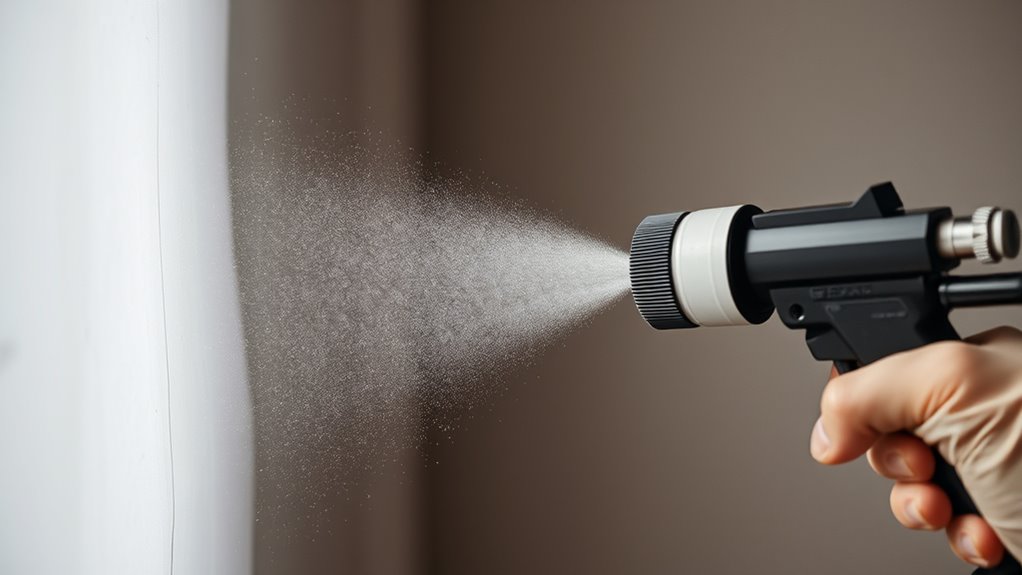
Have you ever struggled to keep overspray from ruining your project or surrounding surfaces? If so, you’re not alone. Managing overspray is a common challenge for anyone working with spray equipment, but understanding spray patterns and employing effective masking techniques can make a huge difference. When you’re ready to start, it’s vital to control how your spray behaves. Spray patterns determine the distribution of paint or coating, and mastering them helps you avoid unnecessary mess. Whether you’re using a spray gun, airbrush, or aerosol can, adjusting the spray pattern to suit your task ensures you’re applying the material precisely where it’s needed. For larger surfaces, a wide, even pattern works best, but for detailed work or tight corners, a narrow, focused spray minimizes overspray. Taking the time to dial in your spray pattern prevents excess material from drifting beyond your intended area and reduces cleanup later. Monitoring your vacuum cleaner’s suction power and filtration system can also help manage dust and overspray effectively improving overall control.
Master spray patterns and masking to keep overspray under control and achieve a professional finish.
Masking techniques are your best allies in managing overspray. Before you start spraying, cover everything you want to protect with painter’s tape, drop cloths, or masking paper. Use high-quality masking tape to secure edges, ensuring it sticks firmly and prevents paint from seeping underneath. For irregular shapes or complex surfaces, cut masking paper or film to fit precisely around edges, then secure it with tape. This not only blocks overspray but also gives you clean, sharp lines. When masking, pay attention to tight seals and overlaps to prevent paint from sneaking through gaps. Proper masking techniques also include removing objects or hardware that could get coated unintentionally. The more thorough your masking, the less you have to worry about overspray reaching unintended surfaces.
Another tip is to control your spray distance and movement. Keep the spray nozzle at the recommended distance—usually about 6 to 12 inches from the surface—and use smooth, steady strokes. Rapid or uneven movements can cause uneven spray patterns and overspray. Also, avoid tilting or angling the spray gun excessively, as this can lead to uneven coverage and more overspray. Adjust pressure settings on your spray equipment to match the task; higher pressure can produce more overspray, so lower it if possible for better control. Consistent speed and distance help maintain a uniform spray pattern, reducing the chances of overspray escaping your intended boundaries.
Managing overspray is all about preparation, control, and technique. By mastering your spray patterns and employing meticulous masking techniques, you can keep your project clean and professional-looking. It takes effort upfront but pays off by minimizing cleanup, saving time, and achieving a flawless finish. Remember, patience and attention to detail are key—small adjustments in how you spray and mask can make a significant difference in controlling overspray and ensuring your project turns out just as you envisioned.
Frequently Asked Questions
What Are the Environmental Impacts of Overspray?
Overspray can critically impact the environment by causing pollution, contaminating nearby soil and water sources. When you control overspray effectively, you prevent harmful chemicals from drifting into ecosystems, reducing environmental impact. Pollution prevention is vital, as it minimizes health risks for wildlife and humans alike. By using proper techniques, you keep the air clean and protect the environment, ensuring safer, more sustainable project outcomes.
How Do Weather Conditions Influence Overspray Control?
When weather conditions change, it’s like trying to hit a moving target. Wind effects can blow overspray off course, making it harder to control, while high humidity levels can cause paint to drift or settle unevenly. To stay on top, you need to monitor these conditions closely, adjusting your spraying techniques and using humidity control methods. This way, you keep overspray in check, no matter the weather.
Are There Specific Equipment Settings to Minimize Overspray?
You can minimize overspray by carefully calibrating your equipment to guarantee the correct flow rate and pressure. Adjust the spray pattern to a narrower or more controlled setting, which helps prevent excess material from spreading beyond the target area. Regularly check and fine-tune your equipment calibration, especially before large jobs, to maintain consistent spray patterns and reduce overspray effectively.
What Are the Safety Precautions During Overspray Management?
Think of overspray safety as guarding a treasure. You should always wear proper personal protective equipment, including masks and gloves, to shield yourself from harmful particles. Use spill containment measures to prevent overspray from spreading. Keep the work area well-ventilated, and guarantee all safety protocols are followed. These precautions help protect you and your environment, making overspray management safe and effective.
How Can Overspray Be Safely Contained in Tight Spaces?
To safely contain overspray in tight spaces, you should use containment barriers like plastic sheeting or curtains to block airflow. Combine this with effective air filtration systems, such as HEPA filters, to capture airborne particles. Make certain barriers are well-sealed around the work area, and regularly check filtration units for peak performance. These steps help prevent overspray from spreading and maintain a safer environment.
Conclusion
By understanding the importance of proper masking, practicing consistent spraying techniques, and choosing the right equipment, you can effectively manage overspray. Controlling overspray requires attention, patience, and precision. It demands preparation, focus, and commitment. When you prioritize these strategies, you reduce waste, improve finish quality, and enhance safety. Ultimately, managing overspray isn’t just about technique; it’s about dedication, discipline, and the desire to achieve professional results every time you work.