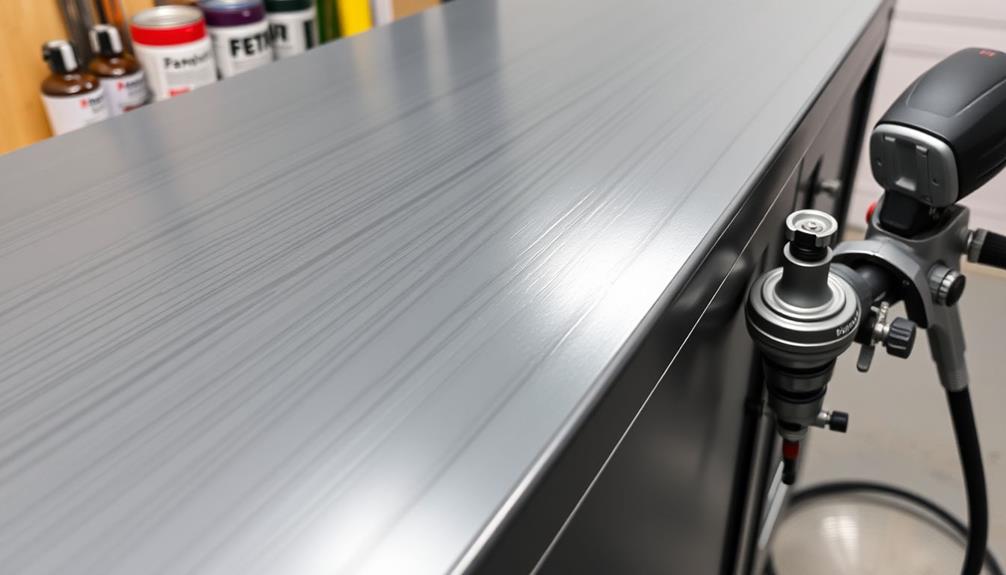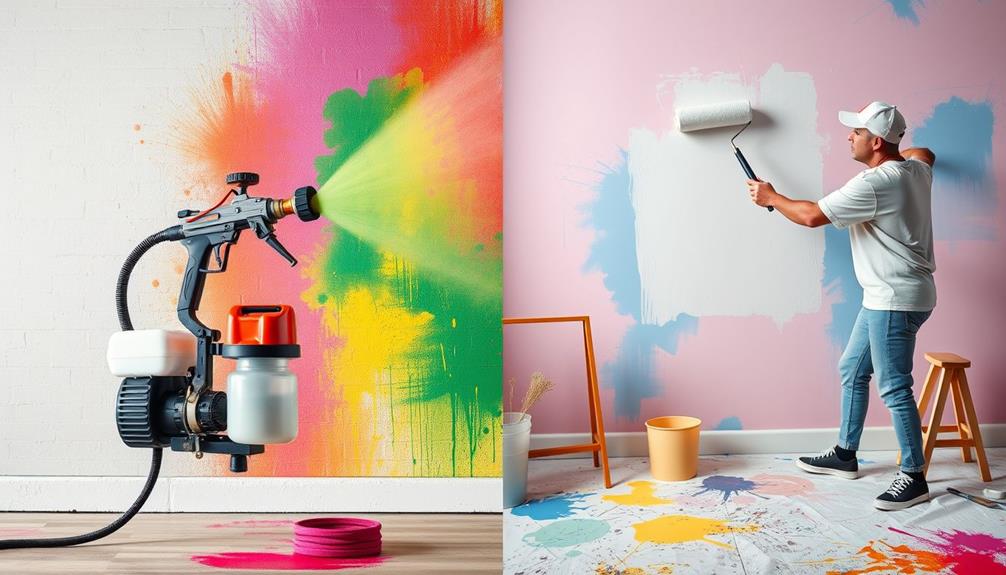
Overspray happens when paint particles drift beyond your target surface because of how spray guns atomize paint into tiny droplets. Factors like nozzle size, pressure, distance, and environmental drafts influence overspray levels. Thinner paints and improper technique can increase mist, while controlling these settings helps reduce waste. By adjusting your equipment, controlling airflow, and mastering your technique, you can tame overspray. To learn more about effectively managing overspray, keep exploring the key causes and solutions.
Key Takeaways
- Overspray occurs due to atomized paint particles carried beyond the target by high pressure or wide nozzles.
- Thinner paints produce finer mist, increasing drift and overspray risk during spraying.
- Poor technique, such as jerky movements or incorrect gun distance, exacerbates overspray.
- Environmental factors like drafts and airflow can carry paint particles away from the surface.
- Proper adjustments of spray settings and controlling workspace conditions help minimize overspray effectively.

Have you ever wondered what causes overspray and how it impacts your painting projects? Overspray happens when tiny droplets of paint drift beyond your intended surface, settling on areas you didn’t mean to paint. This phenomenon isn’t just a minor nuisance; it can lead to wasted paint, uneven finishes, and extra cleanup time. Understanding why overspray occurs is the first step toward controlling it, so you can achieve cleaner, more professional results.
At its core, overspray is caused by the physics of spray painting. When you activate a spray gun, paint is atomized into small particles by high pressure or air. These particles are propelled toward your target surface, but not all of them hit their mark. Factors like the spray gun’s nozzle size, pressure settings, and distance from the surface influence how much overspray you get. Higher pressure or a wider nozzle often produce a finer mist, increasing the likelihood of overspray. Similarly, holding the spray gun too close or too far from the surface can cause a spray pattern that’s too dense or too diffuse, respectively. Wind or drafts in your workspace can also carry tiny paint particles onto unintended areas, especially when painting outdoors or in poorly controlled environments.
Overspray results from spray gun settings, distance, and environmental drafts affecting paint atomization and distribution.
Another contributor is the type of paint you’re using. Thinner paints tend to atomize more easily, resulting in finer particles that are more prone to drifting away from your target. Conversely, thicker paints may produce larger droplets that settle more quickly, reducing overspray but potentially causing uneven coverage. The technique you employ also plays a role. Jerky or inconsistent movements, or stopping and starting mid-spray, can create uneven patterns and increase overspray. When you rush or don’t maintain a steady hand, you inadvertently produce more mist that drifts beyond the surface.
Environmental factors further influence overspray. Drafts and airflow in your workspace can carry tiny paint particles into unwanted areas. If your workspace isn’t well-ventilated or lacks proper containment, overspray can settle on nearby objects or surfaces, creating extra work for you. Temperature and humidity can also affect how paint atomizes and dries, indirectly impacting overspray levels. Additionally, adopting data-driven strategies can help you optimize your spray technique and workspace conditions to minimize overspray.
Frequently Asked Questions
How Can I Prevent Overspray During Delicate Projects?
To prevent overspray during delicate projects, you should use a fine-tip spray nozzle and maintain consistent, light pressure. Keep a steady hand and move the spray in smooth, controlled motions. Mask off surrounding areas thoroughly and practice on scrap material first. Additionally, adjust your distance from the surface—closer for detail work—and use multiple thin coats instead of heavy application to minimize overspray and achieve a clean finish.
What Tools Are Best for Controlling Overspray?
You should use high-quality spray tips with narrow or adjustable spray patterns for better control. A HVLP (High Volume Low Pressure) sprayer helps reduce overspray by delivering a finer mist. Additionally, employing masking tape and painter’s shields can protect areas you don’t want painted. Practice your technique, maintain consistent distance from the surface, and use proper airflow settings to keep overspray to a minimum during delicate projects.
Does Environmental Temperature Affect Overspray?
Yes, environmental temperature affects overspray. For instance, if you spray in hot weather, the paint can dry too quickly, causing droplets to disperse unpredictably and increase overspray. Conversely, cooler temperatures slow evaporation, allowing better atomization. You might notice more overspray on a hot day, making it essential to adjust your technique or timing. Keeping the environment consistent helps you control overspray and achieve a cleaner finish.
How Does Surface Texture Influence Overspray?
Surface texture considerably influences overspray because smooth surfaces allow paint to settle evenly, reducing bounce-back and drift. Rough or textured surfaces tend to trap overspray, causing uneven coverage and more waste. When you spray onto a textured surface, expect more overspray to scatter around, making cleanup harder. To minimize overspray, prepare surfaces with a smooth finish whenever possible, and adjust your spraying technique to suit different textures.
Can Overspray Be Recycled or Reused Effectively?
Overspray can be recycled or reused effectively, and it’s easier than you think! You just need the right equipment, like filters and collection systems, to reclaim the excess paint. Once collected, you can often filter and re-mix it for future use, reducing waste and saving money. Think of overspray as a hidden treasure—turning what seems wasted into a valuable resource with a little effort.
Conclusion
Don’t let overspray discourage you from achieving a perfect finish. With a clear understanding of why it happens and the right techniques, you can control it effectively. Some might think it’s just part of the process, but with patience and practice, you’ll see significant improvement. Remember, mastering overspray isn’t about perfection overnight—it’s about learning and refining your skills. Keep experimenting, stay persistent, and soon, overspray will be a thing of the past in your projects.