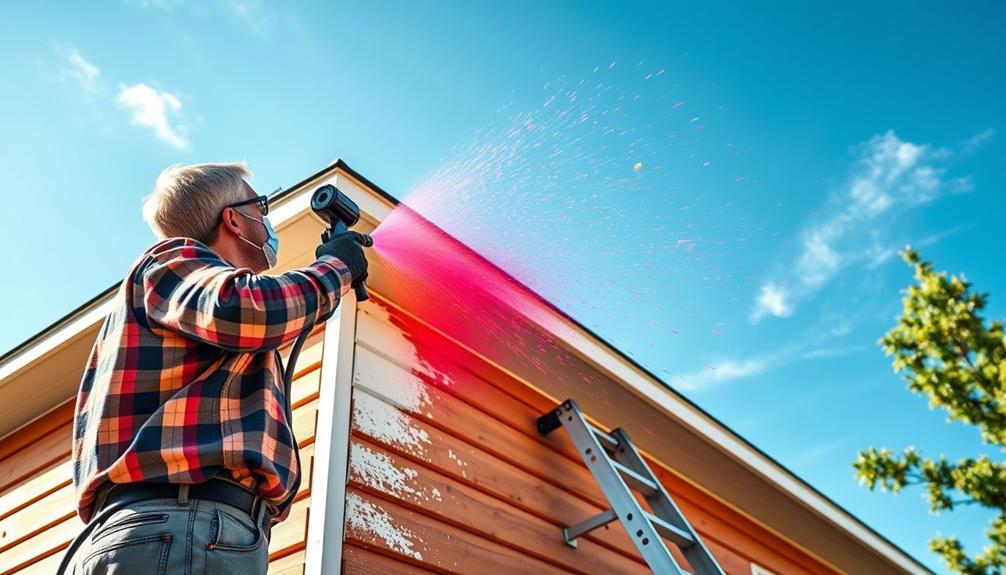
Understanding paint chemistry involves knowing how viscosity, solids content, and shear affect your application. Viscosity determines how easily paint flows; too thick and it’s hard to spread, too thin and it may drip. Solids content impacts coverage, durability, and finish gloss; higher solids mean thicker, more durable coats. Shear influences how paint flows during brushing or spraying, helping you achieve smooth, even results. Mastering these basics ensures a perfect finish—keep exploring to learn more about optimizing your paint projects.
Key Takeaways
- Viscosity measures a paint’s resistance to flow, affecting application ease and finish texture.
- Solids content determines coverage, durability, and sheen of the dried coating.
- Shear describes the force applied during spreading, influencing how paint flows under brushing or spraying.
- Proper viscosity prevents drips and brush marks, ensuring a smooth, even surface.
- Higher solids generally produce thicker, more durable, and glossier finishes.

Have you ever wondered what makes paint stick, shine, and last? It all comes down to its chemistry, particularly factors like viscosity, solids content, and shear. Understanding these elements can help you choose the right paint for your project and even troubleshoot issues that arise during application. Let’s break down these key concepts so you get a clearer picture of what’s happening behind the scenes.
Viscosity refers to how thick or thin the paint is, which directly impacts how it spreads on a surface. Think of it as the paint’s resistance to flowing. A high-viscosity paint is thick and resists movement, making it ideal for textured finishes or detailed work because it doesn’t drip easily. Conversely, a low-viscosity paint is more fluid, allowing for smooth, even coats, especially useful for large surfaces or spray applications. You can often adjust viscosity by thinning the paint with solvents or by choosing formulations suited for your method of application. Proper viscosity guarantees you get a uniform finish without drips or brush marks. If the paint is too thick, it might be hard to spread, and if it’s too thin, it can run or sag.
Viscosity determines how easily paint flows and spreads on surfaces.
Solids content plays a vital role in durability and coverage. When you look at a paint can, the percentage of solids indicates how much of the paint remains on the surface after drying. Higher solids mean more pigment, binder, and additives in the film, resulting in a thicker, more durable coating that covers better and lasts longer. Lower solids are often used for coatings that need to be more flexible or easier to apply. The solids also influence the sheen; paints with higher solids tend to have a richer, glossier appearance. If you want a paint that provides excellent coverage and longevity, choosing a formulation with a higher solids percentage is usually best.
Shear refers to the force applied when you spread or brush the paint. It’s a bit like how you control the flow of honey or syrup—you can adjust the shear to control how the paint behaves during application. When you brush or roll paint, shear forces help distribute it evenly. The shear-thinning property means that the paint becomes less viscous when you apply more force, making it easier to spread out. This is essential for achieving a smooth finish without applying excessive pressure. If the shear properties aren’t right, your paint might be too thick to spread evenly or too runny, causing drips and uneven coats. Additionally, shear influences the paint’s flow characteristics, which are crucial for spray application and achieving a professional finish. Understanding how shear affects paint can help you optimize your technique and get a professional-looking result.
Frequently Asked Questions
How Does Temperature Affect Paint Viscosity During Application?
When you apply paint, higher temperatures make it thinner, reducing viscosity, which helps it spread more easily. Conversely, colder temperatures increase viscosity, making the paint thicker and harder to apply smoothly. You should warm up the paint if it’s too thick and cool it down if it’s too runny. Temperature control guarantees you achieve a smooth finish and proper adhesion during application.
What Role Do Pigments Play in Paint Solids Content?
Pigments play a essential role in determining the paint’s solids content because they are the primary solid particles suspended in the liquid binder. When you add more pigment, you increase the solids percentage, which affects coverage, durability, and opacity. Conversely, using less pigment decreases solids, making the paint more fluid but potentially reducing its hiding power. So, choosing the right pigment amount balances performance and application qualities.
Can Shear Thinning Paint Improve Coverage on Rough Surfaces?
Yes, shear thinning paint can improve coverage on rough surfaces. When you apply shear thinning paint, it temporarily reduces viscosity, making it easier to spread into textured areas. This allows the paint to flow more smoothly and fill in crevices more effectively. As you stop applying force, the paint thickens again, reducing drips and runs. Overall, shear thinning paint helps you achieve better coverage and a more even finish on uneven surfaces.
How Do Different Solvents Influence Paint Shear Properties?
Different solvents can considerably alter paint’s shear properties, acting like a double-edged sword. When you add more volatile solvents, the paint becomes less viscous and flows easily, making it easier to spread but harder to control. Conversely, higher-boiling solvents increase viscosity, offering better control but risking uneven application. You need to balance solvent choice carefully, understanding that each one influences how your paint responds to shear forces during application.
What Are the Environmental Impacts of Paint Viscosity Additives?
You might not realize it, but viscosity additives can impact the environment by introducing chemicals that may be harmful if not properly managed. These additives can increase pollution during manufacturing or disposal if they contain volatile organic compounds (VOCs) or hazardous substances. To minimize environmental impacts, choose eco-friendly additives, follow disposal regulations, and support paints with lower VOC content, helping reduce air and water pollution.
Conclusion
By mastering paint chemistry, you hold the power to turn dull walls into vibrant masterpieces and transform a simple brushstroke into a symphony of color. Understanding viscosity, solids, and shear isn’t just technical—it’s like wielding a magic wand that can make or break your masterpiece. So, immerse yourself in these basics, and soon you’ll be creating walls so stunning, they’ll practically glow in the dark, leaving everyone in awe of your incredible talent!