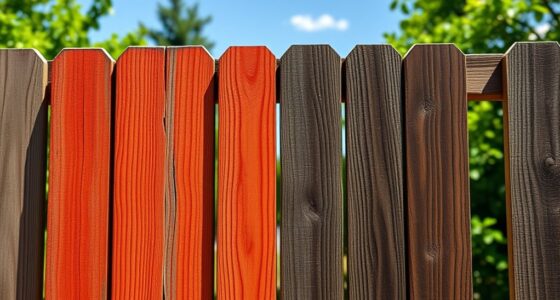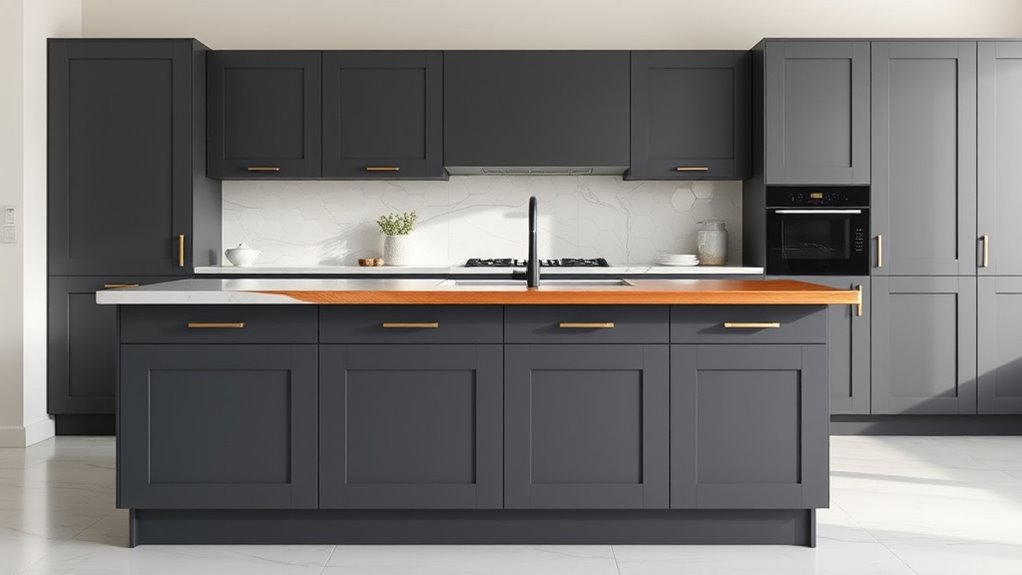

When painting your base cabinets and island units, start by choosing a color that complements your kitchen’s overall look. Prep the surfaces by cleaning, lightly sanding, and applying a quality primer. Use smooth, even coats with a good brush or roller, and let each layer dry thoroughly. Finish with a durable topcoat for added protection. Paying attention to detail results in a stunning transformation—continue with these tips to guarantee a professional, long-lasting finish.
Key Takeaways
- Choose a cohesive color scheme that complements countertops, backsplash, and flooring for a unified look.
- Prepare surfaces thoroughly by cleaning, light sanding, and applying a high-quality primer for optimal paint adhesion.
- Use high-quality brushes or rollers to apply thin, even coats, allowing each to dry fully before the next.
- Select a durable finish such as semi-gloss or satin for easy cleaning and moisture resistance.
- Inspect the painted cabinets and consider adding a clear topcoat to enhance protection and achieve a professional appearance.
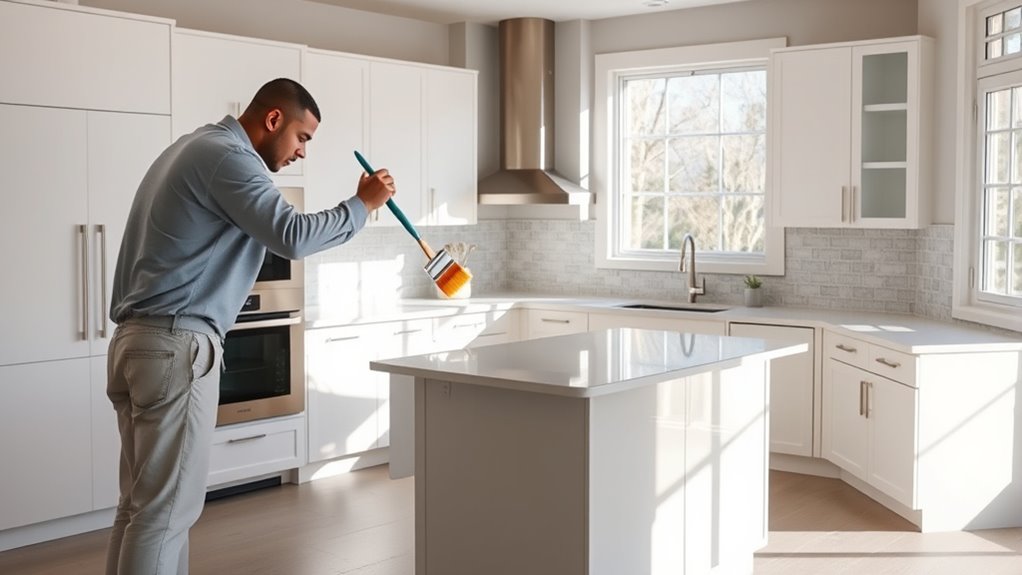
Transforming your kitchen’s look begins with painting your base cabinets and island units. This step offers an instant upgrade, giving your space a fresh, cohesive feel. To achieve a polished result, focus on the details of color matching and paint finishing. Choosing the right color is vital because it sets the tone for your entire kitchen. You want a hue that complements your countertops, backsplash, and flooring. If you’re unsure, bring a sample or a photo to your paint store to match colors accurately. Remember, the goal is harmony; mismatched or clashing colors can detract from the overall aesthetic. Once you’ve picked your color, pay close attention to paint finishing. The finish determines not only the look but also the durability of your cabinets. Satin or semi-gloss finishes are popular choices because they are easy to clean and resist moisture, ideal for a kitchen environment. Matte finishes can hide imperfections but may be harder to keep spotless, so choose based on your lifestyle and preferences.
Before you start painting, proper surface preparation is essential. Clean your cabinets thoroughly to remove grease, dirt, and old residue. Lightly sand the surfaces to create a smooth base that allows the paint to adhere better. Wipe away dust with a damp cloth and let everything dry completely. Use a high-quality primer suited for your cabinet material to guarantee even coverage and better color matching. Applying primer also helps in achieving a smoother finish and prolongs the lifespan of your paint job. When it’s time to paint, use a high-quality brush or roller designed for cabinets to avoid streaks and uneven coverage. Apply thin, even coats, allowing each layer to dry fully before adding the next. Multiple coats ensure a more durable, professional-looking finish. Be patient; rushing through the process can lead to drips, missed spots, or uneven color.
Once your final coat has dried, inspect your work carefully. Touch up any areas that need more coverage and consider applying a clear topcoat for extra protection. This protective layer enhances the paint’s durability and adds a subtle sheen, especially if you’ve opted for a matte or satin finish. Proper paint finishing techniques not only improve the appearance but also extend the life of your cabinets. Paying attention to cultural narratives and design trends can help your kitchen stay stylish over time. The effort you put into these steps will pay off in a stunning transformation that makes your space feel fresh and inviting for years to come.
Frequently Asked Questions
What Type of Paint Is Best for Kitchen Cabinets?
You should choose a high-quality, semi-gloss or satin finish paint for your kitchen cabinets. These finishes are durable and easy to clean, making them ideal for high-traffic areas. Use the best primer options like a bonding or stain-blocking primer to guarantee a smooth, lasting finish. This combination helps you achieve a professional look while protecting your cabinets from moisture, stains, and wear over time.
How Long Does Painted Cabinet Finish Last?
Your painted cabinet finish can last 5 to 10 years with proper care. The cabinet durability depends on the quality of the paint and application, as well as how well you maintain it. To maximize paint longevity, avoid harsh abrasives and excessive moisture, and clean surfaces gently. By choosing high-quality paint and following proper prep, you guarantee your cabinets stay beautiful and durable for many years to come.
Can I Change the Color of My Cabinets Easily?
You can definitely change your cabinet color easily if you follow proper paint preparation. Many believe repainting is complicated, but with the right steps—cleaning, sanding, priming—you’ll get great results. Just remember to update your cabinet hardware to match the new look. This process is straightforward and rewarding; it refreshes your space without the cost of new cabinets. So go ahead, change that color confidently!
What Are the Cost Differences Between Painting and Replacing?
Painting your cabinets is usually more budget-friendly than replacing them, offering a clear cost comparison. You typically spend less on paint, primer, and labor, saving you significant renovation expenses. Replacing cabinets involves higher costs for new materials, demolition, and installation. If you’re looking to refresh your kitchen without breaking the bank, painting is the smarter choice, providing a fresh look at a fraction of the price of a full replacement.
How Do I Prevent Paint Chipping Over Time?
Think of your cabinets as a delicate dance—every move counts. To prevent paint chipping, focus on surface preparation; clean and sand your cabinets thoroughly before painting. Use high-quality, durable paint with excellent paint durability. Applying a clear, protective topcoat adds an extra layer of defense. Regularly clean your cabinets with gentle methods, and avoid harsh abrasives. These steps keep your paint looking fresh and chip-free for years.
Conclusion
Painting your base cabinets and island units transforms your kitchen’s look, making it feel fresh and new. While the process requires effort and patience, the result offers satisfaction and pride. Just as a fresh coat of paint revives tired cabinets, it also renews your sense of home and creativity. Sometimes, a simple change can bring about profound joy—reminding you that beauty often lies in the details, and transformation begins with your own hands.