To paint doors and door frames with an airless sprayer, first guarantee your paint is properly thinned and mixed to prevent clogs. Keep the sprayer about 12 inches from the surface and move steadily, overlapping each pass for uniform coverage. Use brushes for detailed corners and edges. Always wear safety gear like masks and goggles. Mastering these techniques and precautions will help you achieve a sleek finish—if you want to perfect your approach, keep going.
Key Takeaways
- Thin and thoroughly mix paint before use to ensure smooth, clog-free spraying on doors and frames.
- Maintain a consistent distance of about 12 inches from the surface for even coverage.
- Overlap spray passes by approximately 50% to prevent streaks and achieve uniform results.
- Use brushes or rollers for detailed edges and hard-to-reach corners for precision.
- Always wear protective gear like masks and goggles to ensure safety during the spraying process.

Painting doors and door frames can dramatically enhance your home’s appearance, but it requires careful preparation and technique. When you’re planning to use an airless sprayer, the first step is making sure your paint preparation is spot-on. Proper paint preparation involves thinning the paint to the right consistency, which helps the sprayer apply it smoothly without clogging or leaving drips. You’ll want to mix the paint thoroughly and test it on a scrap piece to confirm it flows well through the sprayer. This step saves you time and effort during the actual painting process, preventing uneven coverage or overspray issues. Keep in mind that the right paint consistency is key for a sleek finish, especially on detailed door frames and panels.
Once your paint is properly prepared, focus on your brush techniques as a backup or for touch-ups. Using brushes correctly can help you avoid common issues like drips or missed spots, especially around edges and corners where the sprayer might not reach perfectly. When working with a brush, use long, smooth strokes and maintain a wet edge to ensure seamless coverage. This technique helps blend new paint into previously painted sections without visible lines. Additionally, holding the brush at a consistent angle and applying even pressure will give you better control, resulting in a cleaner, professional appearance. Combining these brush techniques with the precision of the airless sprayer allows for a flawless finish, especially on larger flat surfaces.
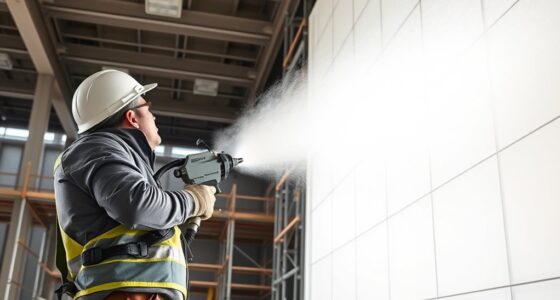
When you start spraying, keep the gun at a consistent distance from the surface—usually around 12 inches—and move steadily to avoid heavy buildup or uneven texture. Overlapping each pass by about 50% ensures full coverage and minimizes streaks. Remember to keep the sprayer moving smoothly and avoid pausing in one spot for too long, which can cause drips or runs. For intricate areas or corners, you might want to switch to a brush or small roller to get precision where the sprayer can’t reach easily. Always wear protective gear, including a mask and goggles, to avoid inhaling paint fumes or getting splatters in your eyes.
Frequently Asked Questions
What Safety Precautions Should I Take When Using an Airless Sprayer?
When using an airless sprayer, you should always wear personal protective equipment like gloves, goggles, and a mask to protect your skin, eyes, and lungs. Make certain proper ventilation requirements are met by working in a well-ventilated area or using exhaust fans to prevent inhaling fumes. Keep the sprayer away from open flames and follow manufacturer safety instructions carefully to avoid accidents or health hazards.
How Do I Clean and Maintain the Airless Sprayer After Painting?
After painting, you should start by cleaning brushes and inspecting filters to make certain they’re free of paint buildup. Next, run the sprayer with water or solvent to flush out remaining paint, depending on your paint type. Regularly check and clean the filters to prevent clogs. Store the sprayer in a dry, safe place, and perform routine maintenance, like lubricating moving parts, to keep it in top condition for next use.
Can I Paint Doors and Frames With Different Types of Paint Using an Airless Sprayer?
You can absolutely paint doors and frames with different types of paint using an airless sprayer. Just make certain of paint compatibility—oil-based over oil-based or latex over latex—and always apply a primer if switching between incompatible paints. This method guarantees smooth, professional results. Before starting, clean your sprayer thoroughly to prevent mixing issues, and check the paint’s viscosity to avoid clogs or uneven coverage.
What Is the Ideal Pressure Setting for Spraying Doors and Frames?
You should set your airless sprayer’s pressure between 1,200 and 1,500 PSI for doors and frames. Adjust the spray pressure to guarantee a smooth, even spray pattern without over-atomizing the paint. Start at a lower setting and increase gradually until you achieve a consistent spray pattern, avoiding drips or runs. Proper pressure helps you control the paint flow, resulting in a professional finish.
How Do I Prevent Paint Runs and Uneven Coating During Spraying?
To prevent paint runs and uneven coating, make certain your paint has the right consistency—neither too thick nor too thin. Use a steady spraying technique, keeping the sprayer at a consistent distance from the surface and moving smoothly across the door or frame. Practice overlapping each pass slightly and maintain a consistent speed to achieve even coverage. Adjust your pressure if needed to avoid over-application and ensure a flawless finish.
Conclusion
As you finish painting, think of your door as a gateway to new beginnings, each stroke symbolizing a fresh start. The smooth finish reflects your attention to detail and care, opening the way for welcoming moments. Just like a well-painted door invites others in, your effort creates an inviting space filled with potential. Embrace this project as a symbol of renewal, knowing that your craftsmanship transforms not just the door, but the atmosphere within.

With James‘ articles, you can expect comprehensive breakdowns of airless paint sprayer features, performance assessments, and expert insights into the latest industry innovations. His meticulous approach ensures that readers gain a thorough understanding of the equipment they are considering, helping them make well-informed choices.