
Painting radiators and heating covers is a simple way to refresh your space and update your decor. Use heat-resistant paint that can withstand high temperatures to guarantee your finish stays intact over time. Properly clean and prepare the surface before applying multiple thin coats for a smooth, professional look. Choosing the right color can help your radiators blend seamlessly or make a bold statement. Keep going for more tips on achieving lasting, polished results.
Key Takeaways
- Choose heat-resistant, high-quality paint designed specifically for radiators and heating covers.
- Properly clean and sand surfaces before painting to ensure optimal adhesion and a smooth finish.
- Match radiator color to your room’s decor for a cohesive and polished look.
- Apply multiple thin coats with adequate drying time to prevent drips and ensure durability.
- Use primer on metal surfaces to enhance paint adhesion and longevity of the finish.
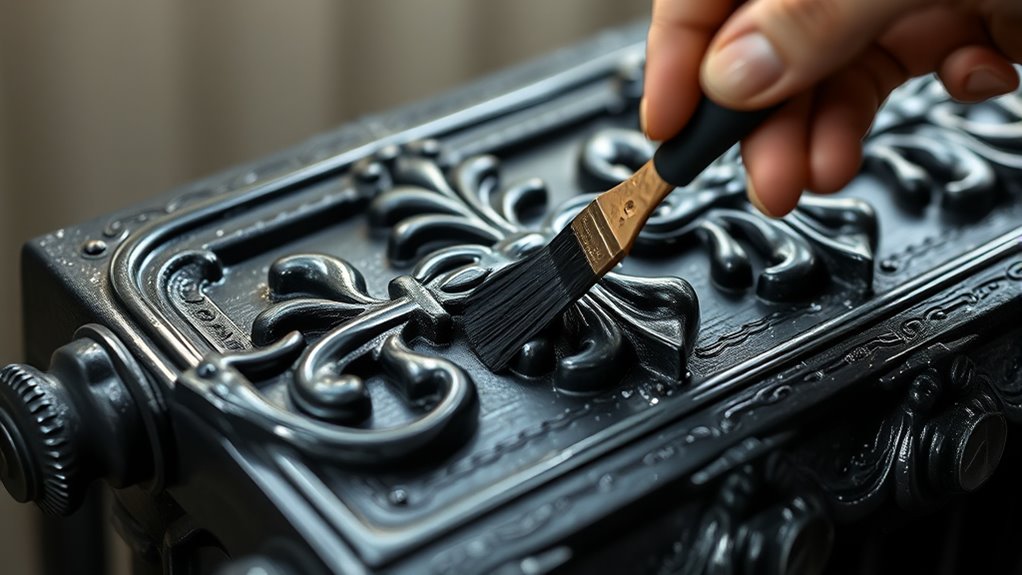
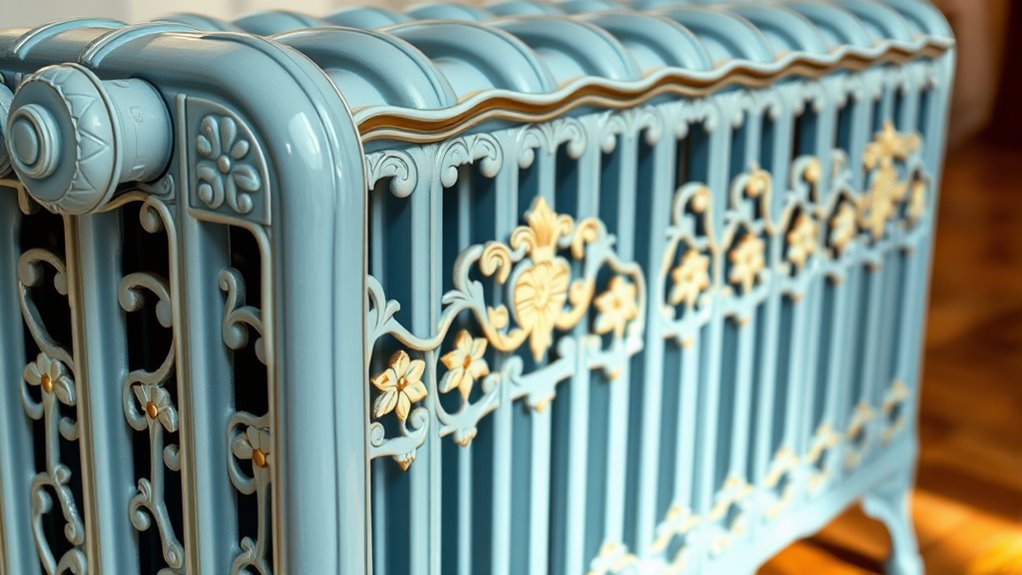
Have you ever contemplated how painting your radiators can refresh your room’s look? It’s a simple way to update your decor without a full renovation. When you’re thinking about painting radiators or heating covers, one of the most important factors is color matching. You want your radiators to blend seamlessly with your existing color scheme or make a subtle statement that complements your walls and furniture. Choosing the right color can make a big difference—whether you opt for a bold hue for a modern touch or a neutral shade for a classic appearance. Keep in mind that the color you pick should harmonize with the room’s overall palette, creating a cohesive and polished look.
Choosing the right color for your radiators enhances your decor and creates a cohesive, polished look.
However, aesthetics aren’t the only concern. You also need to consider heat resistance. Radiators generate heat, so your paint must withstand high temperatures without peeling, cracking, or discoloring. Not all paints are suitable for this purpose, so look for products specifically designed for heat resistance. These paints contain special properties that allow them to endure the constant heat output while maintaining their appearance over time. If you use regular wall paint, it might not hold up under the heat, leading to unsightly peeling or a dull finish. Investing in heat-resistant paint ensures your radiator stays looking fresh and vibrant, even after years of use.
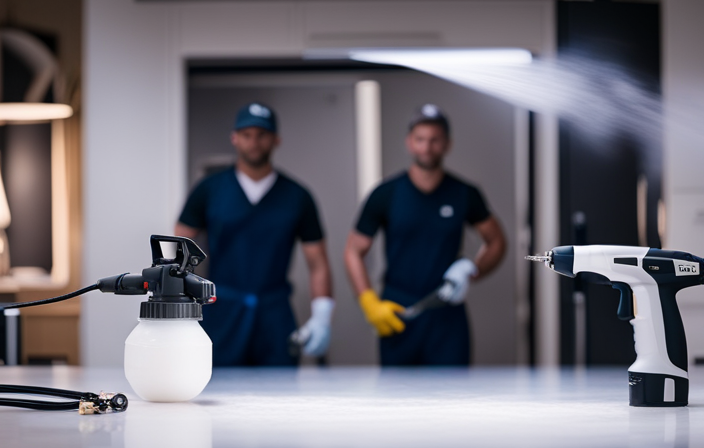
Before you start painting, proper preparation is key. Clean the radiator thoroughly to remove dust, grease, or old paint. Lightly sanding the surface can help the new paint adhere better and create a smooth finish. When selecting your paint, opt for a high-quality, heat-resistant product that offers excellent coverage and durability. Applying a primer designed for metal surfaces can also enhance adhesion and improve the final result. Use even strokes and multiple thin coats rather than one thick coat to avoid drips and ensure an even finish. Allow adequate drying time between coats, especially since heat-resistant paints may require a longer curing period. Incorporating proper surface preparation and choosing the right paint will help ensure a professional-looking and long-lasting result.
Incorporating color matching and heat resistance into your painting project transforms your radiators from functional fixtures into design elements. With the right approach, you can breathe new life into your space, making it look more modern, coordinated, and inviting. Whether you’re aiming for a subtle update or a bold statement, these considerations will help you achieve a professional-looking result that lasts. Remember, investing in quality materials and taking your time during the process ensures your painted radiators will stay attractive and functional for years to come.
Frequently Asked Questions
What Type of Paint Is Best for Exterior Radiator Surfaces?
You should use a high-quality, heat resistant coating designed for exterior radiator surfaces. Before applying, guarantee proper radiator surface preparation by cleaning and sanding to remove rust or debris. Choose a paint formulated for outdoor use that can withstand temperature fluctuations. This combination ensures durable protection and a smooth finish, preventing peeling or cracking over time. Always follow the manufacturer’s instructions for ideal results.
How Often Should Radiators Be Repainted for Maintenance?
You might think radiators need constant repainting, but honestly, a good paint maintenance schedule is every 5-10 years. That’s right—no need to obsess over it annually. Stick to a sensible repainting schedule, especially if you notice chips or rust. Regular upkeep keeps them looking fresh and prevents damage, so save yourself the fuss and repaint only when necessary. Your radiators will thank you with a longer lifespan.
Can I Use Spray Paint on Heating Covers?
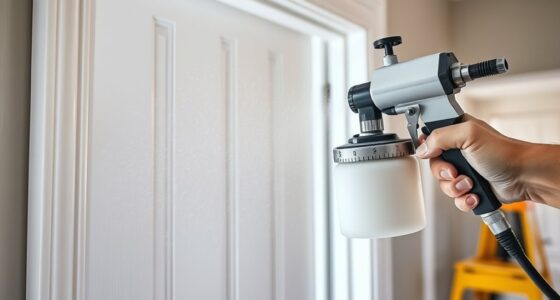
You can use spray paint on heating covers, but verify it’s suitable for heat resistance. Look for spray paints specifically labeled as heat resistant coatings, as regular paint may peel or emit fumes when heated. Before applying, clean the surface thoroughly, and consider using a high-temperature spray paint designed for radiators and heating covers. This will give you a durable, professional finish that withstands heat and lasts longer.
Are There Eco-Friendly Paint Options for Radiators?
Yes, you can find eco-friendly paints for radiators that are better for the environment and your health. Look for eco-friendly paints made with natural finishes, such as water-based or low-VOC options. These paints diminish harmful emissions and are safe to use indoors. By choosing natural finishes, you guarantee a beautiful, sustainable look for your radiators while minimizing your ecological footprint and promoting healthier indoor air quality.
How to Prevent Paint From Cracking Over Time?
To prevent paint from cracking over time, you should choose a high-quality, flexible paint that accommodates thermal expansion. Make certain proper surface preparation by cleaning and sanding the radiator thoroughly, which improves paint adhesion. Applying thin, even coats and allowing sufficient drying time also helps. These steps reduce the stress caused by temperature fluctuations, minimizing cracks and maintaining a smooth, durable finish on your radiators and covers.
Conclusion
Now that you know how to paint radiators and heating covers, you’re ready to give your space a fresh look. Just remember, a little effort goes a long way, and it’s worth the time to do it right. Don’t be afraid to roll up your sleeves and take pride in your work—after all, a job well done is the best kind of reward. With patience and care, your home will shine brighter than ever.