To paint shutters and window casings effectively, start by cleaning the surfaces thoroughly, removing dirt, dust, and loose paint to guarantee good adhesion. Repair any cracks or chips with primer or filler, then lightly sand for a smooth finish. Choose high-quality exterior paint and apply multiple thin coats using brushes or rollers, allowing each coat to dry completely. Proper preparation and application make your paint last longer, and if you keep going, you’ll discover tips for perfect-looking finishes.
Key Takeaways
- Clean and dry shutters and casings thoroughly to ensure proper paint adhesion.
- Repair any cracks, chips, or peeling areas with primer or filler before painting.
- Lightly sand surfaces to improve paint grip and remove rough spots or old paint.
- Choose high-quality exterior paint suitable for wood or metal surfaces for durability.
- Apply multiple thin coats, allowing each to dry completely for an even, long-lasting finish.
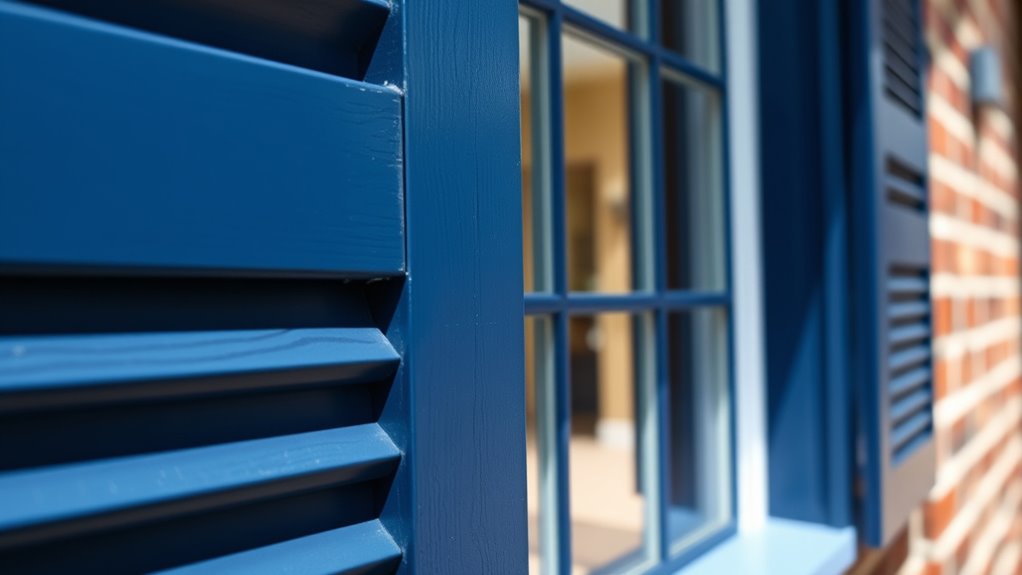
Painting shutters and window casings is an excellent way to refresh your home’s exterior and boost its curb appeal. Before you dive in to painting, it’s essential to focus on proper surface preparation and color matching. These steps ensure your work looks professional and lasts longer, saving you time and money in the long run.
Start by thoroughly inspecting the surfaces you plan to paint. Remove any dirt, dust, or loose paint using a stiff brush or a power washer. This step is crucial because a clean surface allows paint to adhere better and provides an even finish. Once the surface is clean and dry, assess any imperfections like cracks, chips, or peeling paint. Filling these with a quality exterior primer or filler guarantees a smooth, uniform surface for painting.
Thoroughly clean surfaces before painting for better adhesion and a smooth, lasting finish.
Surface preparation also involves sanding. Lightly sand the shutters and window casings with fine-grit sandpaper to create a slightly rough surface that helps the new paint grip better. Be sure to sand in the direction of the grain or existing paint lines to avoid creating uneven surfaces. After sanding, wipe away any dust with a damp cloth or tack cloth to ensure no debris is left behind. Proper surface preparation is vital because it prevents peeling and ensures your paint job remains vibrant over time.
Color matching is another critical aspect. To achieve a cohesive look, select colors that complement your home’s existing exterior palette. Bringing paint samples or swatches to a paint store can help you find the perfect hue. If you’re repainting shutters or window casings that are currently a different color, consider whether you want a contrast or a seamless match. Testing small patches before committing to a full coat can help you visualize the final result and avoid surprises.
When applying the paint, use high-quality exterior paint suited for wood or metal surfaces, depending on your shutters and casings. Use a brush or roller designed for exterior work to ensure smooth coverage. Multiple thin coats are better than one thick coat, providing a durable finish that resists peeling and weathering. Allow each coat to dry thoroughly before applying the next.
Frequently Asked Questions
What Types of Paint Are Best for Exterior Shutters?
For exterior shutters, you should choose high-quality, weather-resistant paints like acrylic latex or oil-based paints. These options offer excellent exterior durability, resisting fading, cracking, and peeling caused by weather changes. They also allow for color matching to your home’s aesthetic. Be sure to prep surfaces well and apply multiple coats for a long-lasting finish. This guarantees your shutters stay vibrant and protected against the elements.
How Do I Prevent Paint From Chipping Over Time?
Want your paint job to last? You need to focus on proper surface preparation and guarantee good paint adhesion. Have you cleaned and sanded the surface thoroughly before painting? Applying a primer suited for your material also helps. Use high-quality exterior paint and avoid painting in extreme weather. These steps create a strong bond, preventing chipping and extending the life of your shutters and casings over time.
Can I Paint Over Stained or Varnished Window Casings?
Yes, you can paint over stained or varnished window casings, but first, you need to do some paint removal and proper surface preparation. Start by cleaning the surface thoroughly, then lightly sand the varnished areas to create a rough texture. Use a deglosser or primer designed for glossy surfaces to guarantee the paint adheres well. This process helps your new paint stay durable and look smooth over time.
What Tools Are Recommended for a Smooth Finish?
You should choose a high-quality, fine-bristled brush for a smooth finish, like a sash brush or an angled brush. Use gentle sanding techniques to create a smooth surface before painting—lightly sand the window casings and shutters to remove imperfections and guarantee better paint adhesion. This combination of proper brush selection and careful sanding helps achieve a professional, even look with minimal streaks or brush marks.
How Long Should I Wait Between Coats?
You should wait about 2 to 4 hours between coats, but always verify the drying time on your paint label, as environmental factors like humidity and temperature can affect it. If it’s humid or cold, give it extra time to dry thoroughly before applying the next coat. Rushing this step can lead to uneven finishes or peeling, so patience ensures a smooth, professional look.
Conclusion
Painting your shutters and window casings is like dressing your home in a finely tailored suit—it elevates its charm and personality. With each brushstroke, you breathe new life into your space, making it sparkle with fresh elegance. Embrace the process, knowing that your careful touch transforms ordinary surfaces into a masterpiece. In the end, your home becomes a canvas of your taste, shining brighter and more inviting, like a jewel catching the morning sun.