
Choosing between a piston pump and a diaphragm pump depends on your specific needs. If you require high pressure and durability for straightforward fluids, a piston pump is the better choice. But if you’re handling corrosive, viscous, or delicate fluids and want low maintenance, a diaphragm pump excels. Both have strengths, so understanding their differences helps you pick the right tool. Keep exploring to discover which style suits your application’s unique demands.

Get business pricing on tools and workshop supplies
- Business-only prices and quantity discounts
- Tax-exempt purchasing
- Multiple users, one account, clear invoices
Key Takeaways
- Piston pumps excel in high-pressure, industrial applications requiring durability and steady flow control.
- Diaphragm pumps are better suited for handling corrosive, viscous, or delicate fluids with minimal leakage.
- Piston pumps generally require more maintenance due to wear on moving parts, while diaphragm pumps offer lower maintenance needs.
- Diaphragm pumps provide superior sealing, reducing contamination risk, ideal for pharmaceutical or food industries.
- The optimal choice depends on specific operational needs, balancing pressure requirements, fluid type, and maintenance considerations.
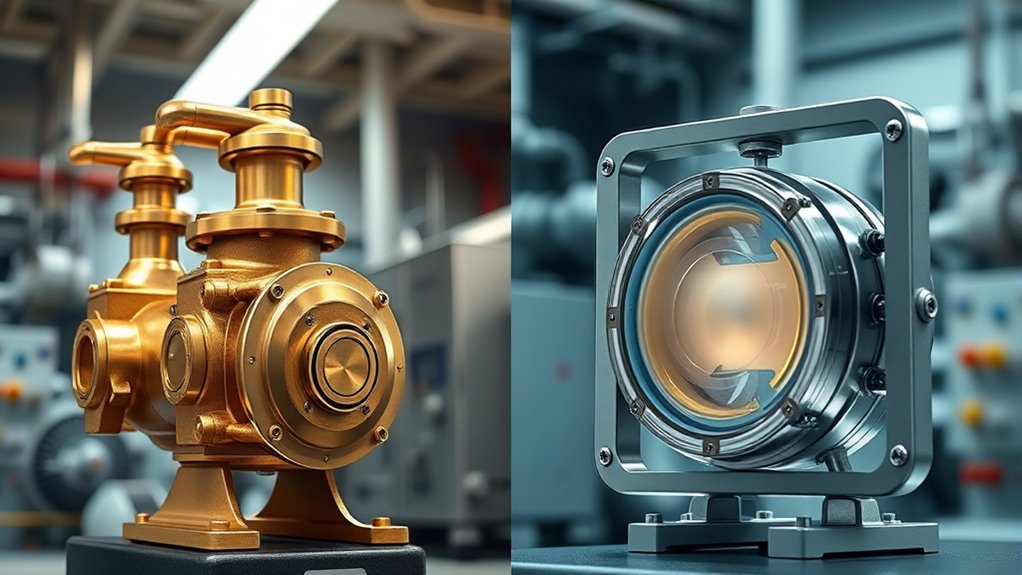
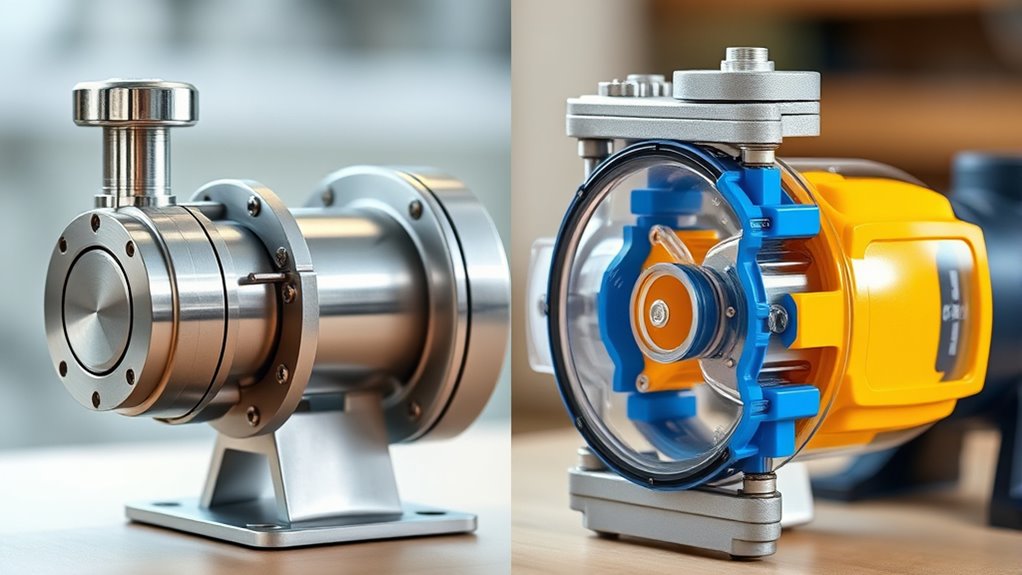
When choosing between piston pumps and diaphragm pumps, understanding their fundamental differences is essential. Both types serve as reliable solutions for moving fluids, but they operate on distinct principles and are suited for different applications. A piston pump uses a reciprocating piston within a cylinder to displace fluid. As the piston moves back and forth, it creates a pressure differential that draws fluid in and pushes it out. This design allows for high-pressure output and precise flow control, making piston pumps ideal for tasks that require a steady, strong stream of fluid. They are often used in industrial settings where durability and consistent performance under high pressure are needed.
Piston pumps provide high-pressure output and precise flow control for demanding industrial applications.
On the other hand, diaphragm pumps use a flexible diaphragm that moves back and forth to generate flow. This diaphragm is typically made from rubber, thermoplastic, or other flexible materials. As the diaphragm moves away from the chamber, it creates a vacuum that draws fluid in. When it moves back, it pushes the fluid out. This mechanism provides excellent sealing, which minimizes leaks and makes diaphragm pumps highly suitable for handling corrosive, abrasive, or sensitive fluids. Since they don’t have valves or pistons that come into direct contact with the fluid, diaphragm pumps tend to require less maintenance and are safer for transfer of hazardous substances.
The key difference lies in their construction and the type of fluids they handle best. Piston pumps are robust and can generate very high pressures, but their moving parts can wear out over time, especially when dealing with abrasive materials. They often require more maintenance and can be noisier during operation. Diaphragm pumps, on the other hand, excel in environments where fluid purity and chemical compatibility are critical. Their sealed design prevents contamination and leaks, which is a significant advantage in pharmaceutical or food processing industries. They are also more forgiving when handling sticky or viscous fluids.
Additionally, the availability of extended hours and online shopping options makes it easier to acquire these pumps outside of regular store hours, ensuring minimal downtime for your operations.
Your decision between the two should depend on your specific needs. If you require high pressure, durability, and are working with relatively straightforward fluids, piston pumps might be the right choice. Conversely, if fluid integrity, chemical compatibility, and low maintenance are priorities, diaphragm pumps could better serve your needs. Both pump styles have their strengths, but understanding these core differences helps you make an informed choice. Ultimately, selecting the right pump depends on matching its features to the demands of your application, ensuring efficiency, safety, and longevity.
As an affiliate, we earn on qualifying purchases.
Frequently Asked Questions
Which Pump Type Is More Environmentally Friendly?
You’ll find diaphragm pumps are generally more environmentally friendly because they operate with minimal leaks and contamination risks, thanks to their sealed design. Piston pumps, on the other hand, may release more emissions or waste during operation due to their mechanical complexity. If reducing environmental impact is your goal, you should consider diaphragm pumps because they tend to be cleaner, quieter, and more efficient, making them a better eco-friendly choice.
How Do Maintenance Costs Compare Over the Pump’s Lifespan?
Think of your pump as a trusty steed—its upkeep determines how long it runs smoothly. Over its lifespan, diaphragm pumps generally cost less to maintain because they have fewer moving parts and less wear and tear. Piston pumps, with their intricate components, demand more frequent inspections and repairs. So, if you want a budget-friendly ride that keeps going, diaphragm pumps usually win in maintenance costs.
Can Both Pumps Handle Abrasive or Corrosive Fluids?
Yes, both pumps can handle abrasive or corrosive fluids, but their effectiveness depends on specific design features. Piston pumps are robust and suitable for heavy-duty, abrasive applications if properly maintained, while diaphragm pumps are often preferred for corrosive fluids because of their sealed chambers that prevent leaks. You should select a pump with compatible materials like ceramic or specialized plastics to guarantee durability and prevent damage.
Are There Specific Industries That Prefer One Pump Style?
You’ll find that industries like pharmaceuticals and food processing prefer diaphragm pumps because they handle delicate, sterile fluids without contamination risks. Oil and chemical industries often choose piston pumps for their ability to manage high-pressure, abrasive, or viscous fluids efficiently. Depending on your specific needs, you’ll select the pump style that offers durability, safety, and performance tailored to your industry’s requirements.
How Does Energy Efficiency Vary Between Piston and Diaphragm Pumps?
If you’re hoping to save a fortune on energy, you’ll find diaphragm pumps quite the hero—they’re generally more efficient, wasting less juice with each cycle. Piston pumps, on the other hand, tend to guzzle more power, especially under heavy loads. So, if efficiency‘s your game, go diaphragm; if raw power’s king, piston might be your guy. Choose wisely, or pay the energy penalty!
Conclusion
Ultimately, choosing between a piston pump and a diaphragm pump depends on your specific needs. If you need high pressure and durability, a piston pump might be your knight in shining armor. But if you prefer versatility and gentle handling, a diaphragm pump could be your trusty steed. Like a fine artisan’s craft, each has its merits. So, weigh your options carefully—after all, even in this modern age, the right pump can still be a game-changer.
Halloween Picks
halloween
As an affiliate, we earn on qualifying purchases.