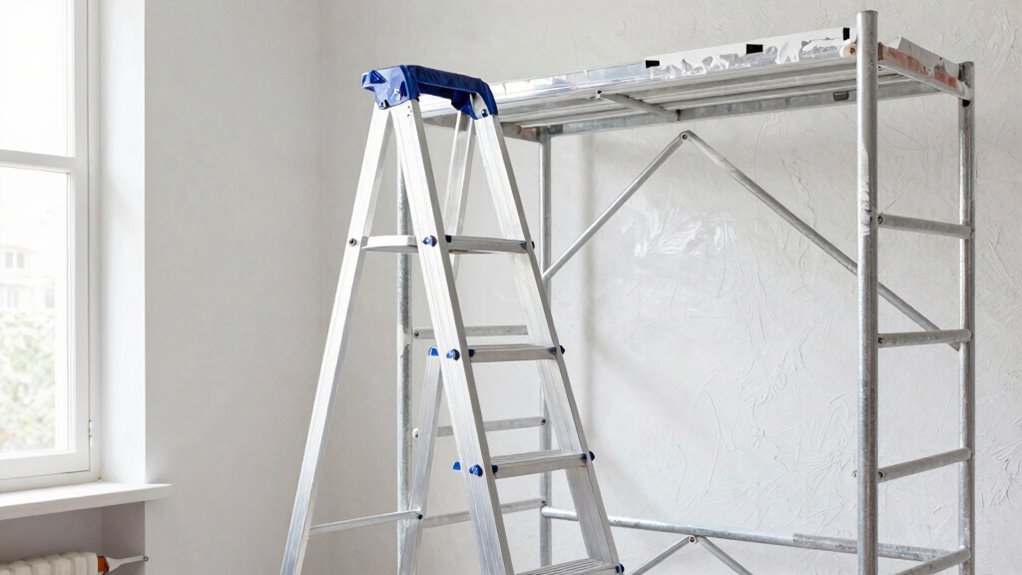

If you’re looking for quick, flexible access, platform ladders are ideal for small jobs and short tasks, allowing you to move easily and set up fast. Scaffolds are better for larger projects, providing a stable platform for extended work and multiple heights. Your choice depends on the scope, safety, and workflow needs. To find out which option helps you work more efficiently and safely, explore the details ahead.

Get business pricing on tools and workshop supplies
- Business-only prices and quantity discounts
- Tax-exempt purchasing
- Multiple users, one account, clear invoices
Key Takeaways
- Platform ladders allow quick setup and easy movement between small, moderate-height surfaces, enhancing workflow for short tasks.
- Scaffolds provide a stable, expansive platform ideal for continuous painting over large areas at multiple heights.
- Ladders are suitable for quick, one-off jobs, reducing downtime compared to scaffold assembly.
- Scaffolds improve safety and comfort during prolonged work, minimizing fatigue and repositioning needs.
- Choice impacts project efficiency: ladders suit rapid, short-term tasks; scaffolds excel in extensive, multi-height projects.
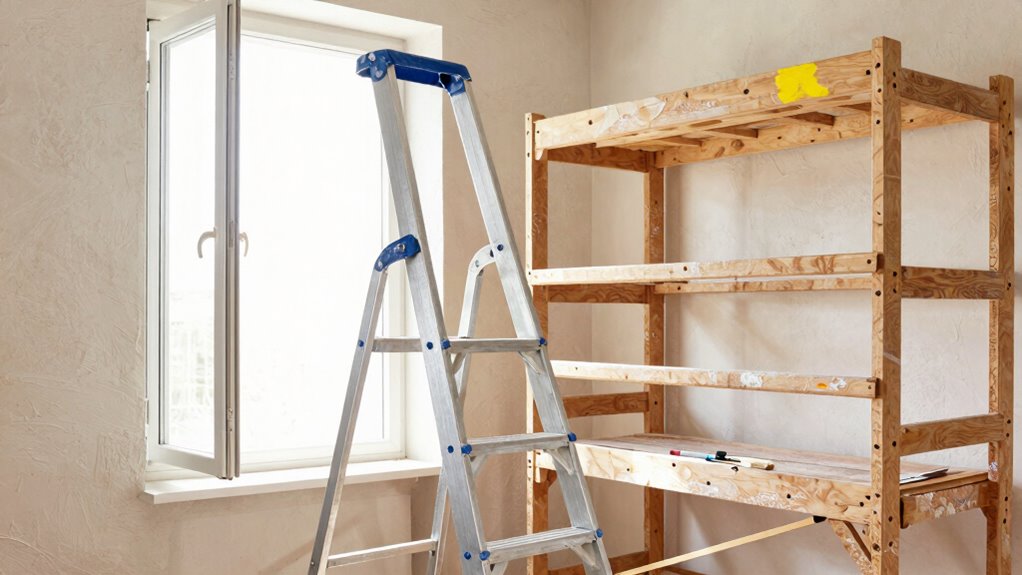
When choosing between platform ladders and scaffolds for painting projects, understanding the key differences can help you work more safely and efficiently. Both options have their advantages and limitations, but your choice can considerably impact your workflow, safety considerations, and setup efficiency. Platform ladders are portable, easy to move around, and ideal for quick jobs at moderate heights. They’re lightweight, don’t require extensive assembly, and are perfect for smaller spaces. However, they offer limited surface area, which can restrict your comfort and productivity when working on larger surfaces or for extended periods. On the other hand, scaffolds provide a stable, expansive platform that allows you to work at multiple heights simultaneously. They are especially useful for large-scale projects or when you need to move around frequently on a broad surface. Setting up a scaffold takes more time and effort, but once in place, it offers a safer, more secure working environment, reducing the risk of falls and accidents. Understanding safety considerations is crucial, as the right choice can significantly impact your overall safety during the project. Additionally, ease of use can influence your decision, especially if quick setup and takedown are priorities for your project.
Safety considerations are essential when deciding between the two. With platform ladders, you need to be cautious about overreaching or leaning, which can compromise your balance and increase the risk of falls. Properly securing the ladder and ensuring it’s on a level surface are critical steps for safety. Scaffolds, however, typically come with guardrails and toe boards, providing additional fall protection and making them safer for prolonged use. They also distribute your weight more evenly, minimizing fatigue and fatigue-related accidents. Your choice should factor in the nature of the job, the height you need to reach, and the duration you’ll spend working at that height. Additionally, proper safety protocols should always be followed to ensure a secure working environment regardless of the equipment used.
Setup efficiency is another essential aspect. Platform ladders are quick to deploy—you simply unfold or extend them, and you’re ready to start. They’re great for small, quick tasks that don’t require extensive setup time. Scaffolds demand more preparation; you need to assemble and secure the frame, check for stability, and position it correctly. Although this takes time initially, scaffolds can improve your workflow by providing a steady, spacious platform that allows you to work comfortably at various heights without constantly repositioning equipment. This setup can ultimately save you time on larger projects, especially when multiple surfaces or extensive areas are involved. The right equipment can streamline your process and reduce the overall project duration.
In essence, your decision depends on the project scope, safety priorities, and how quickly you want to get started. Both tools can enhance your workflow when chosen wisely, but understanding their differences in safety considerations and setup efficiency ensures you work smarter and safer every time.
Products Worth Considering

Bose SoundLink Flex Bluetooth Speaker (2nd Gen), Portable Waterproof Speaker, Black

Levoit Vital 200S-P Smart Air Purifier for Large Rooms

Levoit Core 600S-P Smart Air Purifier for Large Rooms
As an affiliate, we earn on qualifying purchases.
Frequently Asked Questions
Are Platform Ladders Safer Than Scaffolds for High Ceilings?
Platform ladders are generally safer than scaffolds for high ceilings because they undergo thorough safety comparisons and stability analyses. You can move them easily and work comfortably at height, but they might be less stable on uneven surfaces. Scaffolds provide better stability for extended work and uneven terrain. Ultimately, your safety depends on proper setup, weight limits, and following safety guidelines, regardless of which option you choose.
How Much Do Platform Ladders Typically Cost Compared to Scaffolds?
They say “you get what you pay for,” and when comparing costs, platform ladders typically range from $100 to $300, making them more affordable for small jobs. Scaffolds, on the other hand, have a wider price range of $200 to over $1,000, depending on size and materials. Your choice depends on your project’s scope, but generally, platform ladders cost less upfront, offering a budget-friendly option for many painters.
Can Scaffolds Be Used for Outdoor Painting Projects?
Yes, scaffolds can be used for outdoor painting projects. They’re versatile and provide a stable platform for extensive work, especially when you need to cover large areas. Just guarantee the scaffold is designed for outdoor use, has a sufficient weight capacity, and is set up on stable ground. Always follow safety guidelines, wear proper gear, and inspect the scaffold before starting to avoid accidents.
What Are the Storage Requirements for Each Type of Equipment?
You’ll find that platform ladders require minimal storage space, easily fitting in closets or small storage rooms, making equipment maintenance straightforward. Scaffolds, however, demand more storage space due to their size and components, often needing dedicated areas for assembly and safety checks. Proper storage guarantees safety and longevity for both, so plan for adequate space to prevent damage and streamline equipment maintenance. Coincidentally, the right storage setup keeps your workflow smooth and efficient.
Which Option Is More Suitable for Uneven or Rough Surfaces?
Scaffolds are more suitable for uneven or rough surfaces because they offer better surface stability and adaptability. You can adjust scaffold legs or add base plates to improve stability on irregular terrain, ensuring a secure working platform. Platform ladders, however, tend to be less adaptable on uneven ground, risking instability. For safety and efficiency on challenging surfaces, scaffolds give you the flexibility and stability you need.
Conclusion
Ultimately, choosing between platform ladders and scaffolds hinges on your specific project needs. Imagine a painter tackling a historic cathedral’s towering walls—using a scaffold provides stability and safety, enabling precision and peace of mind. On the other hand, a simple ceiling touch-up in a cozy room might only require a sturdy ladder. Your workflow depends on safety, efficiency, and comfort—pick what best supports your vision and keeps you safe.