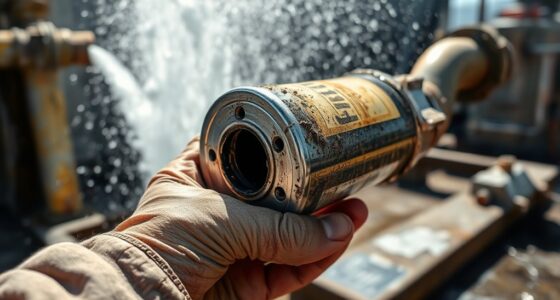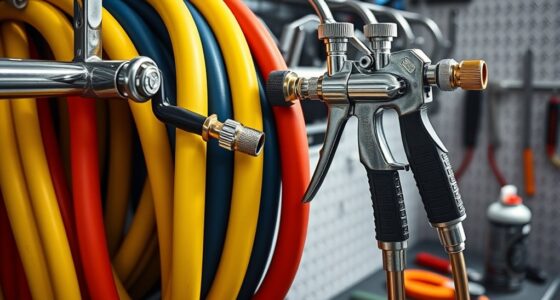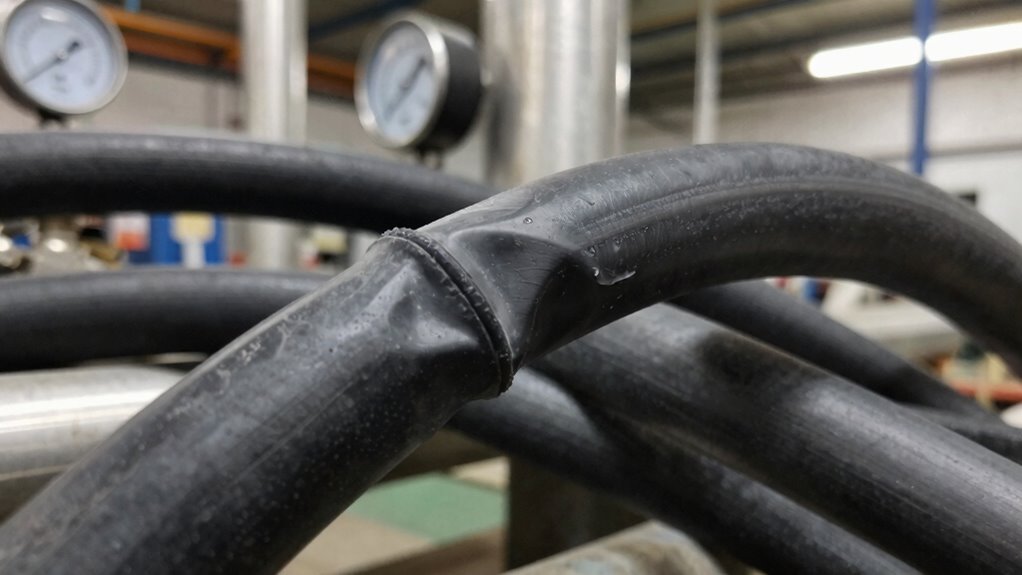
Sudden pressure drops in long hose runs happen when internal resistance increases due to kinks, sharp bends, or obstructions that block fluid flow. Narrower hoses or those with rougher internal surfaces also cause higher friction, reducing pressure unexpectedly. Additionally, blockages or buildup inside the hose can create sudden resistance. If your hose isn’t properly maintained or configured, flow issues become more likely. Keep these factors in mind to prevent pressure drops—there’s more to uncover on this topic.

Get business pricing on tools and workshop supplies
- Business-only prices and quantity discounts
- Tax-exempt purchasing
- Multiple users, one account, clear invoices
Key Takeaways
- Internal surface roughness or buildup increases friction, causing unexpected pressure drops.
- Kinks, bends, or improper hose routing obstruct flow, leading to pressure fluctuations.
- Inadequate hose diameter relative to flow rate raises resistance and pressure loss.
- High fluid viscosity amplifies pressure drops over long distances due to increased resistance.
- Internal obstructions or clogging reduce flow capacity, causing sudden pressure decreases.
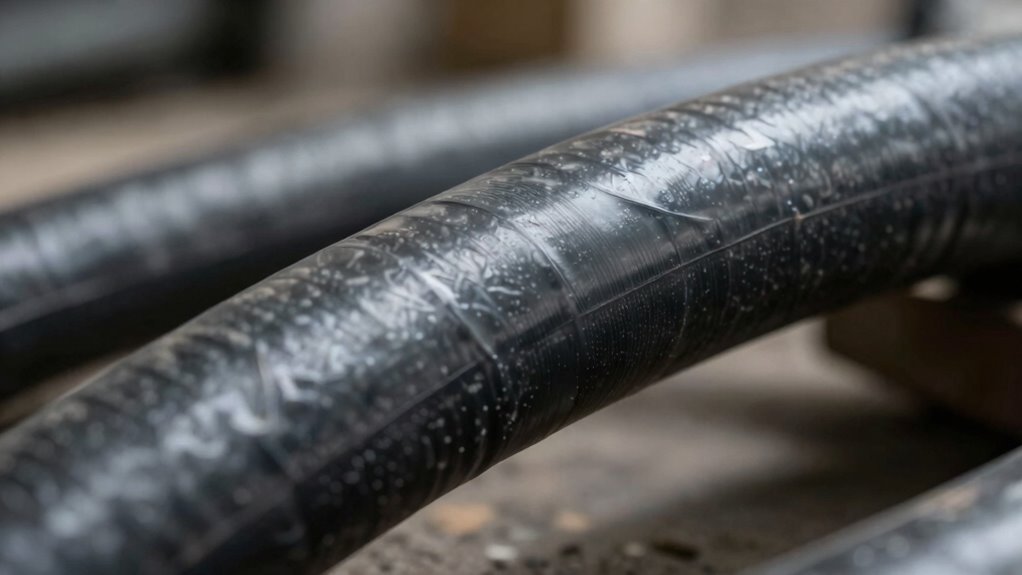
Have you ever experienced a sudden pressure drop when using a long hose? It’s frustrating, especially when you’re in the middle of a task that demands consistent flow. Several factors can cause this issue, and understanding them can help you troubleshoot effectively. One essential aspect often overlooked is the hose material. Different hose materials have varying levels of flexibility, internal smoothness, and resistance to wear. For instance, rubber hoses tend to be more flexible and can handle higher pressure, but they might cause more friction inside if the surface isn’t smooth. On the other hand, plastic or PVC hoses are generally less flexible but offer a smoother internal surface, which can influence flow rate and pressure. The choice of hose material can considerably impact how fluid moves through the hose, especially over long distances. Additionally, internal surface smoothness plays a crucial role in minimizing friction and maintaining steady pressure. Ensuring the hose material is suitable for your specific application can help reduce pressure fluctuations. Properly selecting hoses with optimal internal surface characteristics can make a significant difference in flow consistency. The hose diameter also significantly affects flow and pressure — a narrower hose increases resistance, leading to greater pressure drops. Fluid viscosity plays a key role in pressure drop as well. Viscosity measures a fluid’s resistance to flow; thicker, more viscous fluids experience more resistance. When fluid viscosity is high, it’s harder for the fluid to move through the hose, resulting in a pressure drop. This effect becomes more pronounced over longer runs because the fluid encounters more friction along the entire length. If you’re working with viscous substances like honey, molasses, or certain oils, expect a noticeable pressure drop, especially if the hose isn’t designed to handle high-viscosity fluids. Conversely, with low-viscosity fluids like water or alcohol, the pressure loss might be minimal, but even then, other factors can exacerbate the problem.
Hose material impacts flexibility, internal smoothness, and pressure resistance, affecting fluid flow and pressure over long distances.
In addition to hose material and fluid viscosity, other elements can contribute to pressure drops. Narrower hoses create more resistance because they reduce the cross-sectional area through which the fluid flows. Similarly, kinks or bends in the hose can greatly impede flow, increasing pressure loss. If your hose isn’t properly maintained—say, if it’s clogged or has internal buildup—the flow will slow down, and pressure will drop unexpectedly. Furthermore, the length of the hose itself matters: the longer the hose, the more friction and resistance the fluid must overcome, leading to a greater pressure drop. Ensuring your hose is appropriate for the type of fluid you’re working with and keeping it free of obstructions can help maintain steady pressure throughout your setup.
Understanding how hose material and fluid viscosity influence pressure drop allows you to choose the right equipment and maintain ideal flow conditions. When you encounter a sudden pressure drop, check these factors first. Selecting the appropriate hose material, considering the viscosity of your fluid, and inspecting for kinks or obstructions can prevent issues and keep your system running smoothly.
As an affiliate, we earn on qualifying purchases.
Frequently Asked Questions
How Does Temperature Affect Pressure in Long Hose Runs?
Temperature fluctuations directly impact pressure in long hose runs because as temperatures rise, fluid viscosity decreases, allowing the fluid to flow more easily and reducing pressure. Conversely, cooler temperatures increase viscosity, making the fluid thicker and harder to move, which raises pressure. You’ll notice these changes especially in long hose systems where even slight temperature shifts markedly influence fluid dynamics and pressure levels throughout the run.
Can Hose Material Impact Pressure Stability?
Your hose material definitely impacts pressure stability by influencing hose flexibility and material durability. Flexible hoses resist kinks and bends that cause pressure drops, ensuring steady flow. Durable materials withstand wear, pressure fluctuations, and environmental factors, maintaining consistent performance. When choosing hoses, prioritize those with high flexibility and durable construction to minimize pressure drops, especially over long runs. Proper material selection helps keep pressure stable, preventing sudden drops and optimizing system efficiency.
What Role Do Fittings and Connectors Play in Pressure Drops?
Fittings and connectors considerably influence pressure drops because fitting leaks and connector resistance create obstacles in the flow. When fittings aren’t sealed properly, leaks can cause sudden pressure drops, reducing efficiency. Additionally, connectors with high resistance slow down fluid movement, leading to pressure loss. Ensuring tight seals and choosing low-resistance connectors help maintain consistent pressure throughout long hose runs, improving overall system performance.
How Does Hose Diameter Influence Pressure Loss?
Hose diameter considerably influences pressure loss; a smaller diameter increases resistance, leading to greater pressure drops, especially over long runs. When selecting hoses, consider flexibility alongside diameter, as more flexible hoses may have thinner walls, affecting pressure measurement accuracy. Larger diameters reduce pressure loss and maintain flow efficiency, making them ideal for high-volume applications. Always match hose size to your system’s needs to prevent sudden pressure drops and guarantee peak performance.
Are There Signs Indicating Imminent Pressure Drops?
When you notice your system acting up, it’s like a warning sign flashing bright. Signs of imminent pressure drops include hose flexibility issues, such as kinks or cracks, and sudden pressure surges that disrupt flow consistency. Keep an eye on these indicators—if your hose stiffens or pressure spikes unexpectedly, it’s time to check for blockages or leaks. Catching these early helps prevent a full-blown pressure drop.
Conclusion
Understanding the causes of sudden pressure drops in long hose runs is like steering a winding river—you need to know where the currents threaten to slow you down. By checking for clogs, leaks, or improper fittings, you can prevent your system from hitting turbulent waters. Remember, maintaining your hoses in top shape is like tending a garden; regular care guarantees smooth flow and steady pressure, turning potential chaos into calm, reliable performance.
Halloween Picks
halloween
As an affiliate, we earn on qualifying purchases.