Safe ventilation in spray booths means ensuring your fans create proper airflow to swiftly remove toxic fumes, overspray, and airborne particles. It involves using well-placed, maintained fans that keep fumes away from your workspace, reducing health risks and preventing hazardous buildup. Proper design, regular upkeep, and efficient airflow are key to a safe environment. Want to know how to make your ventilation system ideal? Keep going to discover essential tips for safe spray booth operation.
Key Takeaways
- Safe ventilation ensures the continuous removal of fumes, overspray, and airborne particles to protect worker health.
- Properly maintained spray booth fans optimize airflow, preventing hazardous fumes from accumulating and reducing fire risks.
- Correct fan placement and clean exhaust systems direct fumes toward safe exhaust points, preventing dangerous buildup.
- Efficient airflow minimizes lingering fumes, ensuring compliance with safety regulations and promoting a healthy work environment.
- Regular inspection and maintenance of fans sustain optimal performance, preventing airflow disruptions that compromise safety.
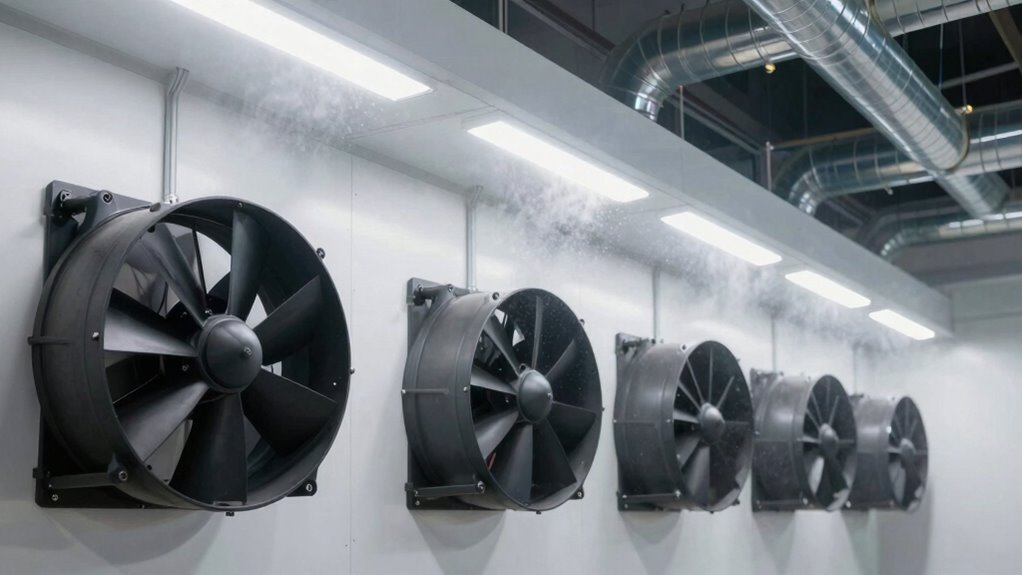
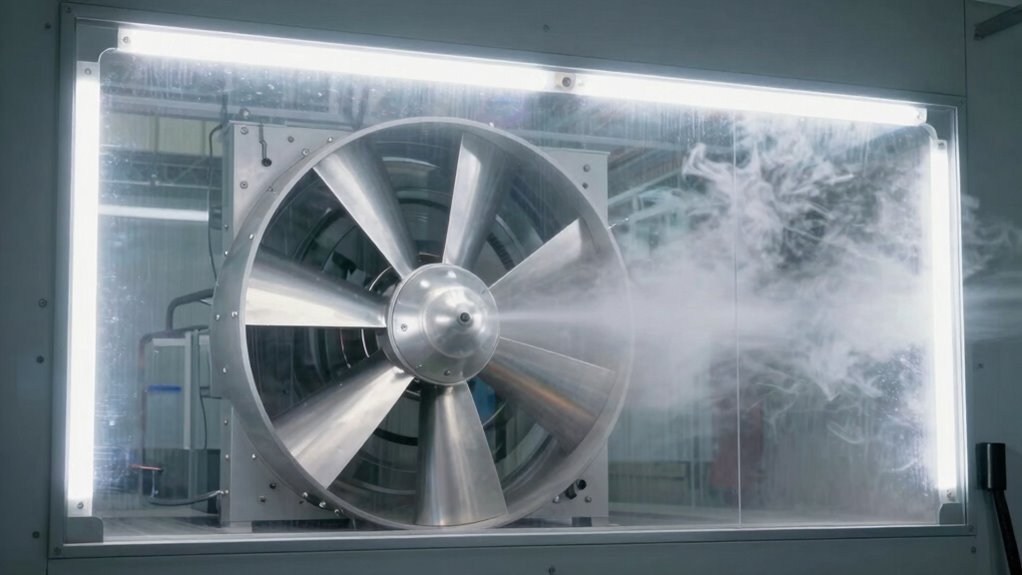
Spray booth fans are essential components that guarantee a safe and efficient painting environment. They work tirelessly to move air through your spray booth, ensuring that fumes, overspray, and airborne particles are effectively removed. When these fans operate optimally, they help maintain proper airflow efficiency, which is crucial for both worker safety and the quality of your finished product. Poor airflow can lead to hazardous buildup of fumes, uneven paint application, and compromised curing times. That’s why understanding how these fans contribute to safe ventilation is vital for any operation.
Spray booth fans ensure safe, efficient airflow by removing fumes and overspray for optimal painting conditions.
To keep your spray booth functioning at peak performance, you need to implement solid maintenance protocols. Regular inspection and cleaning of your fans prevent dust, paint overspray, and debris from clogging the blades or blocking air pathways. This not only prolongs the lifespan of your equipment but also ensures that airflow remains consistent and effective. When fans are neglected, they can become inefficient, causing airflow disruptions that jeopardize safety and paint quality. Scheduled maintenance routines should include checking fan belts, motor function, and electrical connections, alongside routine cleaning. This proactive approach minimizes downtime and costly repairs, while maximizing airflow efficiency.
You should also pay attention to the design and placement of your spray booth fans, as these factors significantly influence ventilation safety. Properly positioned fans create a steady, laminar airflow that directs fumes and overspray toward exhaust systems. This prevents dangerous buildup and ensures that contaminants are swiftly removed from the workspace. It’s equally important to verify that your exhaust filters and ducts are clean and unobstructed, supporting the fans’ ability to maintain a safe environment. When airflow is optimized, you reduce the risk of hazardous fumes lingering in the booth, which directly impacts worker safety and compliance with health regulations. Additionally, understanding airflow efficiency can help you select and operate fans that maximize safety and performance.
Ultimately, safe ventilation isn’t just about installing a fan; it’s about maintaining a well-functioning system through diligent care and understanding airflow efficiency. By adhering to strict maintenance protocols and ensuring your fans are properly designed and positioned, you create a safer, healthier working environment. This attention to detail not only protects your staff but also ensures consistent, high-quality finishes. Remember, a reliable spray booth fan system is an investment in safety, efficiency, and productivity—one that pays off in smoother operations and fewer hazards. Keep your fans in top shape, and you’ll sustain a safe and effective painting environment for years to come.
Frequently Asked Questions
How Often Should Spray Booth Fans Be Inspected and Maintained?
You should inspect and maintain spray booth fans at least every 3 to 6 months. During these checks, replace filters as needed to guarantee proper airflow and prevent contamination. Regularly calibrate airflow to maintain safe ventilation levels. Keep an eye on fan performance, listen for unusual noises, and look for dust buildup. Consistent maintenance helps ensure safe, efficient operation and prolongs the life of your spray booth system.
What Are the Signs of a Failing Spray Booth Fan?
If your spray booth fan shows signs of failing, you’ll notice increased fan noise and irregular operation. You might also detect reduced airflow or overheating, which indicates motor wear. Unusual vibrations or smells can also signal issues. Regular inspections help catch these signs early, preventing costly repairs and ensuring safe, effective ventilation. Keep an ear out for noise changes and monitor fan performance to maintain peak safety and efficiency.
Are There Energy-Efficient Options for Spray Booth Ventilation?
Think of your spray booth like a garden that needs just the right breeze. You can choose energy saving technologies that boost efficiency and reduce costs, all while meeting ventilation standards. These options guarantee your system uses less power without compromising safety. By embracing innovative fans and controls, you keep your workspace safe and sustainable, turning your booth into a model of eco-friendly operation that benefits both your business and the environment.
How Does Fan Size Impact Safety and Airflow?
A larger fan size increases fan capacity, which enhances airflow regulation and helps maintain safe ventilation levels. When you choose a bigger fan, you guarantee proper removal of fumes and overspray, reducing health risks. Conversely, an undersized fan can lead to inadequate airflow, compromising safety. Make sure the fan size matches your booth’s requirements to optimize airflow and create a safe, well-ventilated environment.
Can Portable Spray Booth Fans Ensure Proper Ventilation?
A portable spray booth fan can definitely guarantee proper ventilation if you position it correctly and focus on noise reduction. Think of it as the heartbeat of your workspace—if you place the fan strategically, like near the exhaust outlet, it maximizes airflow and safety. Keep it quiet by choosing models with noise reduction features, so your environment stays safe and comfortable without the roar of an engine.
Conclusion
When choosing spray booth fans, prioritize safety, prioritize proper ventilation, and prioritize peace of mind. Guarantee your equipment is reliable, your airflow is adequate, and your workspace remains safe. Because safe ventilation isn’t just about compliance—it’s about protecting yourself, your team, and your environment. So, invest in quality fans, maintain them regularly, and stay committed to safe practices. Because when you prioritize safe ventilation, you create a safer, healthier, more productive workspace for everyone.