
To avoid weird texture buildup when spraying your garage door, start with thorough surface prep by cleaning and sanding smooth. Use high-quality spray equipment with adjustable pressure and keep a consistent distance of 10-12 inches, moving in overlapping, smooth strokes. Thin your paint according to instructions and test sprays before starting. Applying multiple thin coats and maintaining a steady pace helps achieve a flawless finish. Keep these tips in mind, and you’ll be surprised at how professional your results can look.

Get tools and workshop supplies delivered free — and shop member deals
- Fast, free delivery on millions of items
- Access to Prime Big Deal Days deals on October 6–7
- Prime Video, Amazon Music and more included
Key Takeaways
- Use the correct spray equipment with adjustable pressure and a suitable tip size for even application.
- Thin the paint properly and test spray on scrap to prevent over-atomization and texture issues.
- Maintain a consistent distance of 10-12 inches from the surface during spraying.
- Apply multiple thin coats, allowing each to dry thoroughly to avoid buildup.
- Keep a steady hand, overlapping strokes evenly, and adjust pressure or angle as needed.
Spraying garage doors can give them a fresh, clean look, but if you’re not careful, it can also lead to strange texture buildup that ruins the finish. To avoid this, proper paint preparation is essential. Before you start, thoroughly clean the surface to remove dirt, grease, and loose paint. Use a gentle power washer or a scrub brush with a suitable cleaner, then let the door dry completely. Sand any rough spots or peeling paint to create a smooth, even surface, which helps the new coat adhere better and prevents uneven textures. Mask off edges, handles, and windows with painter’s tape to keep your finish neat and prevent overspray.
Next, selecting the right spray equipment is critical. You want a sprayer that offers adjustable pressure and a consistent spray pattern. Airless sprayers are popular for garage doors because they deliver a smooth, even coat quickly, but make sure you choose one with a suitable tip size—usually around 0.013 to 0.017 inches—to avoid over-atomization or excessive buildup. If you’re new to spraying, start with a smaller, handheld sprayer to get a feel for the flow and coverage. Understanding the importance of proper spray setup can greatly influence the final appearance of your project. Being aware of spray pressure and how it affects the spray pattern can help you achieve a more professional finish.
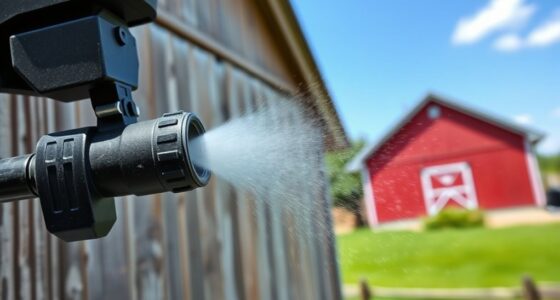
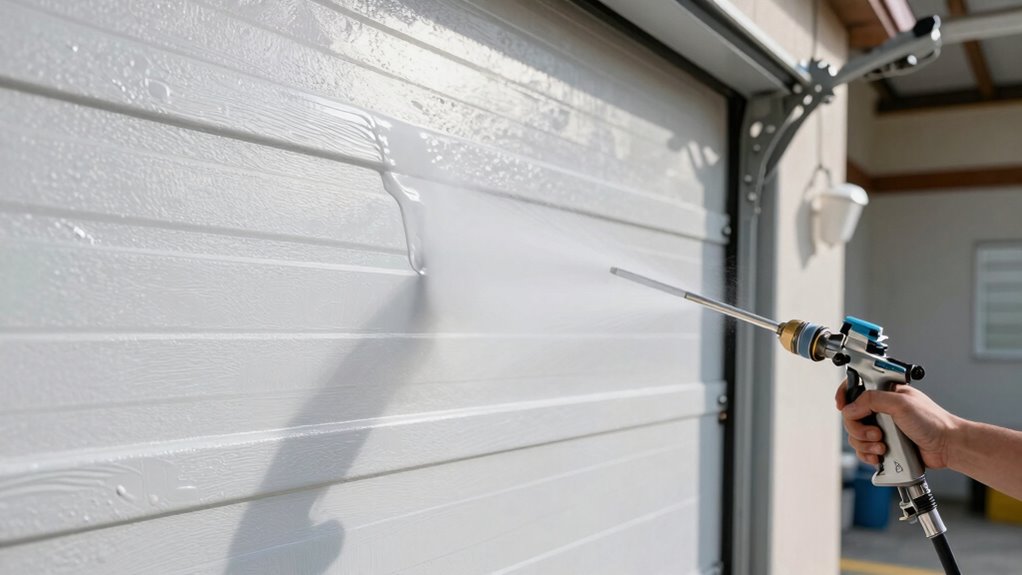
When you’re ready to spray, thin your paint properly according to the manufacturer’s instructions. Thinning helps achieve a finer mist and reduces the risk of texture issues like drips or splatters. Test your spray setup on a scrap piece of cardboard or plywood to fine-tune the pressure and spray pattern. Keep the spray gun at a consistent distance—about 10 to 12 inches from the surface—and move your hand smoothly in even, overlapping strokes. This technique ensures uniform coverage and prevents thick spots that can cause weird textures. Consistent movement and speed are key to a flawless coat.
Maintain a steady pace and avoid stopping mid-spray, which can cause uneven patches or buildup. Applying multiple thin coats rather than one thick coat, allowing each layer to dry thoroughly before applying the next, is recommended to prevent paint from pooling or running, which often results in texture problems. Being aware of paint consistency and adjusting as needed can also help prevent unwanted textures. Additionally, paying attention to spray technique—such as maintaining consistent speed and pressure—can make a significant difference in achieving a smooth finish. Using proper technique also involves adjusting your spray distance and angle to maintain an even application, preventing uneven buildup or textures. Keep an eye on your spray pattern and adjust the pressure or nozzle if you notice any uneven spray or buildup.
As an affiliate, we earn on qualifying purchases.
Frequently Asked Questions
What Type of Spray Gun Is Best for Garage Doors?
For spraying garage doors, a HVLP (High Volume Low Pressure) spray gun works best because it provides a smooth finish and reduces overspray. You’ll want to maintain the spray gun properly to prevent clogs and guarantee even paint flow. Keep in mind, proper spray technique affects paint drying time, so apply thin coats and allow adequate drying between layers. This approach helps you avoid texture issues and achieve a professional look.
How Do I Prevent Overspray on Surrounding Surfaces?
Think of your garage door as a canvas and surrounding surfaces as a delicate frame. To prevent overspray, you need careful surface preparation—cover nearby areas with painter’s tape and drop cloths. Use precise paint application techniques, like steady, controlled strokes and maintaining consistent distance from the surface. This way, you keep overspray at bay, ensuring a clean, professional finish that stays within your target area, like a painter’s gentle touch.
Can I Spray Garage Doors in Cold Weather?
You can spray garage doors in cold weather, but you need to prepare properly. Make certain the garage door insulation is in good condition, and use a weather resistant paint designed for lower temperatures. Work in a sheltered area if possible, and follow the paint manufacturer’s instructions for temperature ranges. This helps prevent issues like uneven coverage or paint failure. Proper preparation ensures a smooth, durable finish despite the cold.
How Long Should I Wait Between Coats?
Think of each coat as a new chapter in your garage door’s story. Wait about 2-4 hours between coats, depending on the paint and weather, to guarantee proper paint adhesion. This pause allows the surface to breathe and bond, preventing issues like peeling or texture buildup. Good surface preparation and patience create a smooth, lasting finish, turning your project into a story of careful craftsmanship and pride.
What Safety Gear Is Recommended During Spraying?
You should wear protective clothing, including gloves, goggles, and a respirator mask, to shield yourself from fumes and overspray. Guarantee proper ventilation by setting up ventilation systems or working outdoors to avoid inhaling harmful particles. These safety measures help protect your skin, eyes, and lungs during spraying. Remember, prioritizing safety not only keeps you safe but also ensures a smoother, more professional finish on your garage door.
Conclusion
By following these tips, you can achieve a smooth, professional finish on your garage doors without the unwanted texture buildup. Imagine you’re repainting your own garage, just like a homeowner did last summer. They carefully prepared the surface, used the right spray techniques, and ended up with a sleek, even coat that transformed their curb appeal. With patience and the right approach, you’ll enjoy a flawless result that lasts for years to come.
Fall Picks
fall essentials
As an affiliate, we earn on qualifying purchases.