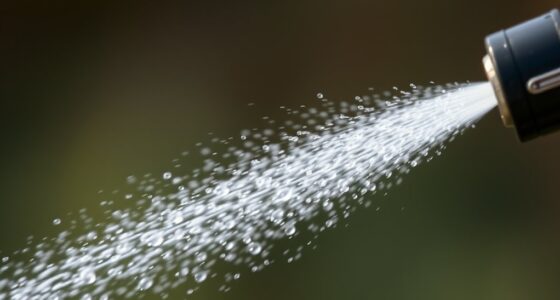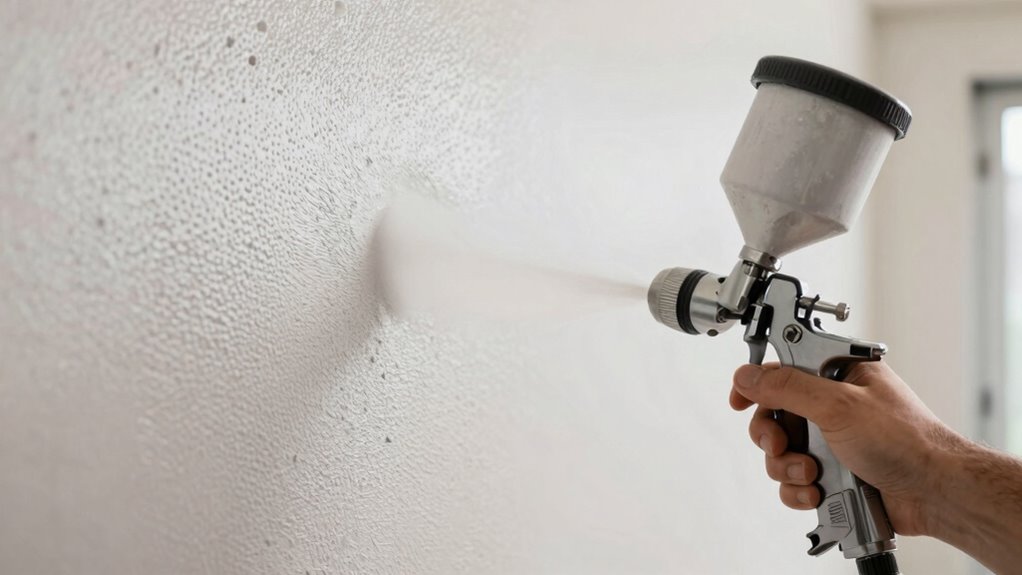
To spray textured walls without leaving holidays, keep a steady hand, move the spray gun at a consistent speed, and maintain about 12 inches from the surface. Overlap each pass slightly and use multiple light coats instead of one heavy layer. Regularly check your spray pattern and pause to adjust as needed. Proper equipment maintenance and surface prep are essential. If you follow these tips closely, you’ll achieve a smooth, uniform texture—there’s more to master for perfect results.
Prime for Young Adults — start your free trial
Fast free delivery, streaming and member deals for eligible 18–24 year olds.
As an affiliate, we earn on qualifying purchases.
Key Takeaways
- Maintain a consistent spray distance of about 12 inches from the wall to ensure even texture.
- Overlap each pass slightly to prevent streaks and achieve uniform coverage.
- Use multiple light coats instead of one heavy coat to reduce drips and holidays.
- Keep a steady hand and move the spray gun at a consistent speed throughout application.
- Regularly check and adjust equipment settings to maintain a uniform spray pattern and texture.
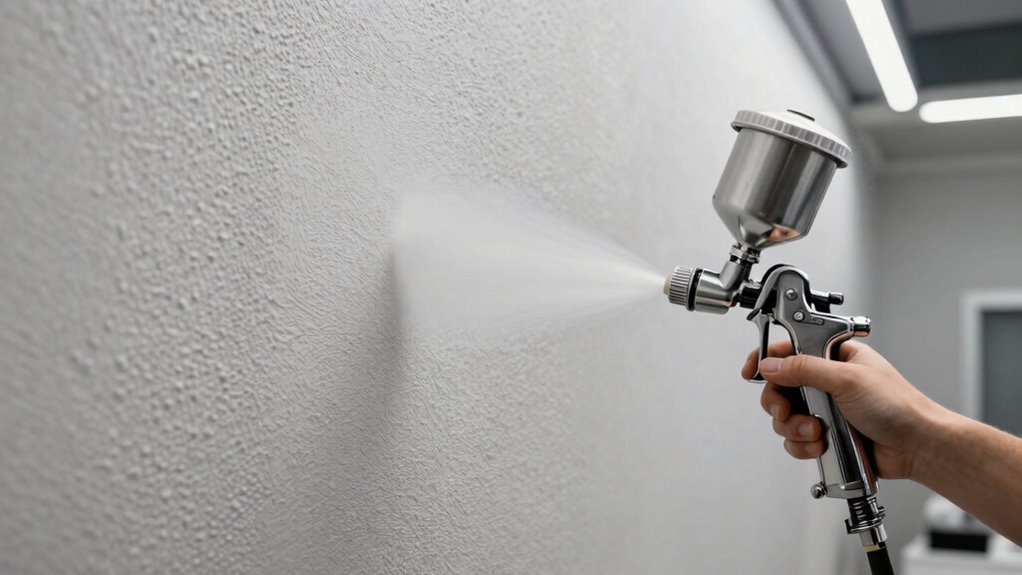
Spraying textured walls can transform a plain room into a visually interesting space, but it requires proper preparation and technique. The first step is wall preparation. You want to guarantee the surface is clean, dry, and free of dust, grease, or peeling paint. Use a scraper or sanding block to smooth out any rough patches or bumps, and fill in holes or cracks with spackle. Once the surface is even, apply painter’s tape along edges, trim, and fixtures to protect them from overspray. Cover the floor and furniture with drop cloths or plastic sheeting. Taking the time to prep your walls properly prevents imperfections from showing through the texture and helps achieve a uniform finish. Additionally, understanding the importance of proper surface preparation can greatly influence the final appearance of your textured walls.
Proper wall prep ensures a smooth, even textured finish and prevents imperfections from showing through.
Next, focus on equipment maintenance. The spray gun and compressor should be clean and in good working order before you begin. Check the nozzle for clogs or damage, and clear or replace it if necessary. Make sure your compressor is properly lubricated and that the air pressure is set according to the texture manufacturer’s instructions. Regularly cleaning your spray equipment during the job prevents clogs and ensures consistent spray patterns. After finishing, thoroughly clean the spray gun, hoses, and filters to prevent residual texture material from drying inside, which could cause blockages on your next project. Proper equipment maintenance not only prolongs the lifespan of your tools but also guarantees a smooth, even application of textured material. Additionally, using quality spray tips can help achieve a more professional finish and reduce the likelihood of holidays.
When you’re ready to spray, keep a steady hand and move the gun at a consistent speed. Start spraying slightly off the wall, then move into the area to avoid buildup and drips. Maintain a uniform distance from the wall—usually about 12 inches—so that the texture is even. Overlap each pass slightly with the previous one to prevent streaks or holidays, which are patches where the texture doesn’t adhere properly. If you notice holidays, pause and adjust your technique or equipment settings. It’s better to do multiple light coats than one heavy one, as this minimizes the risk of drips and uneven texture. Keep an eye on your spray pattern throughout the job, and don’t rush; patience ensures a high-quality finish. Understanding proper seed preservation techniques can also help in maintaining the quality of your tools and supplies for future projects. By keeping your equipment in optimal condition, you ensure consistent results and reduce the chances of holidays or imperfections. Proper technique consistency is key to achieving a professional-looking textured wall.
As an affiliate, we earn on qualifying purchases.
Frequently Asked Questions
What Is the Best Type of Spray Gun for Textured Walls?
The best spray gun for textured walls is a hopper-style or airless sprayer, as they offer better control and coverage. You should consider models with adjustable spray pressure to manage texture consistency and avoid drips. Additionally, choose a spray gun compatible with various color options, allowing you to achieve your desired finish. A versatile, powerful sprayer helps you create even textures without leaving holidays or uneven spots.
How Do I Prevent Overspray During Spraying?
To prevent overspray, start with proper surface preparation and guarantee your paint consistency is right—thick enough to avoid drips but thin enough to spray smoothly. Hold the spray gun at a consistent distance, typically 12-18 inches, and keep a steady, overlapping motion. Use masking tape and drop cloths to protect surrounding areas. Adjust your spray pressure accordingly, and practice on a scrap surface to refine your technique.
Can I Mix Different Textures for a Custom Finish?
Yes, you can mix different textures for a custom finish. To achieve this, focus on texture blending by combining various spray tips or applying different techniques in specific areas. This allows you to customize your finish and create unique patterns. Keep in mind, practicing on a scrap surface first helps you control the blend and avoid uneven results. With patience, you’ll craft a truly personalized, textured wall that stands out.
How Do I Clean the Sprayer After Use?
To clean your sprayer after use, start by rinsing it with water or the appropriate solvent, depending on your paint type. Follow the cleaning procedures recommended by the manufacturer to prevent clogs and guarantee peak equipment maintenance. Disassemble the parts, scrub any residual paint, and thoroughly rinse all components. Regular cleaning helps maintain your sprayer’s performance, extends its lifespan, and ensures it’s ready for your next project.
What Safety Gear Should I Wear When Spraying Textured Walls?
Think of spraying textured walls as armor in a battle—you need proper safety gear. Wear a protective mask to guard your lungs from airborne particles and safety gloves to shield your hands from splatters. This gear acts like a shield, ensuring your health stays protected while you work. Don’t skip these essentials; they’re your first line of defense against the mess and potential hazards of spraying textured walls.
Conclusion
With a steady hand and patience as your guide, you’ll transform your walls into a smooth, seamless canvas. Think of your spray gun as a gentle brush that dances across the surface, leaving behind a flawless finish without a single holiday. As you finish, step back and admire your work—like a painter admiring a masterpiece, knowing every stroke was deliberate. Now, your walls stand proud, whispering tales of your careful touch and dedication.
Fall yard work Picks
leaf blowers
As an affiliate, we earn on qualifying purchases.