
To spray stucco and adobe walls effectively, start by preparing a consistent, workable mixture and strain it to remove lumps. Adjust your spray equipment with proper pressure and nozzle size, maintaining a steady distance from the wall. Apply in thin, overlapping coats, keeping movements smooth and controlled. For porous surfaces like adobe, pre-wet or add bonding agents to improve adhesion. Proper prep and technique guarantee a durable finish—keep exploring to master every step for professional results.

Get business pricing on tools and workshop supplies
- Business-only prices and quantity discounts
- Tax-exempt purchasing
- Multiple users, one account, clear invoices
Key Takeaways
- Prepare the stucco or adobe mixture to a consistent, workable texture and strain to prevent clogs.
- Adjust spray pressure, nozzle size, and maintain 12-18 inch distance for even coverage.
- Apply multiple thin coats with steady movement, ensuring proper surface prep and pre-wetting porous surfaces.
- Keep the wall surface clean and dampen if needed, and address any missed spots after initial drying.
- Regularly monitor equipment, clear blockages, and use proper technique for durable, professional finishes.
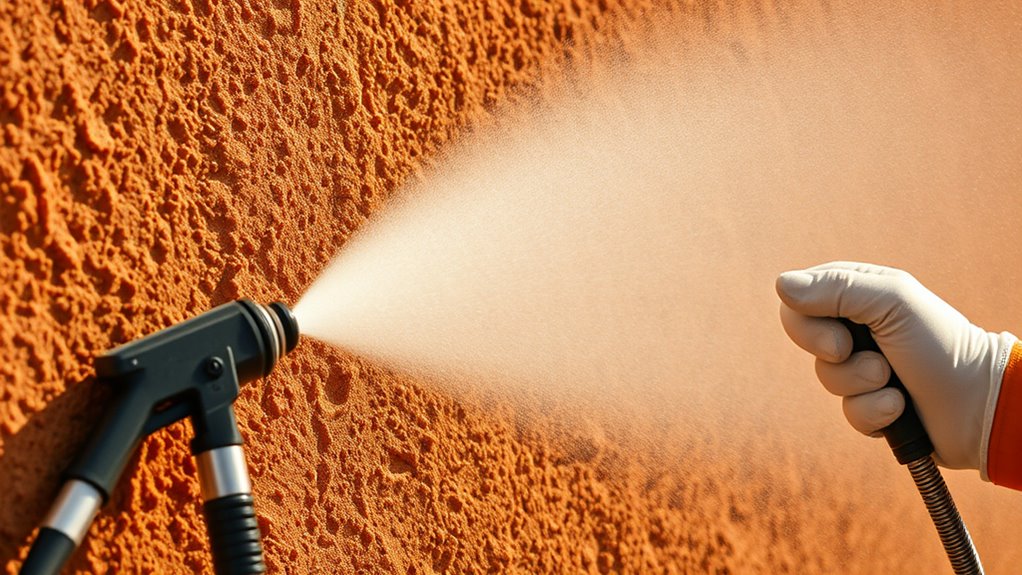
Have you ever wondered how professionals achieve a smooth, durable finish on stucco and adobe walls? The secret lies in mastering application techniques and ensuring proper material preparation. When you’re about to spray stucco or adobe, the first step is to focus on preparing your materials thoroughly. This means mixing your stucco or adobe mixture to the right consistency—neither too thick nor too runny. If the mixture is too thick, it can clog your sprayer and lead to uneven coverage; if it’s too thin, it might not adhere properly or could run down the wall. Use clean water and follow the manufacturer’s instructions to achieve a uniform, workable consistency. Straining the mixture through a fine mesh is also a good idea to remove any lumps or debris that could clog your equipment later.
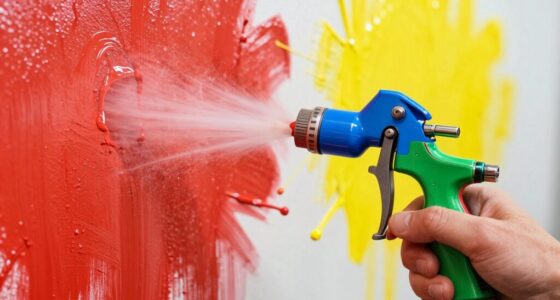
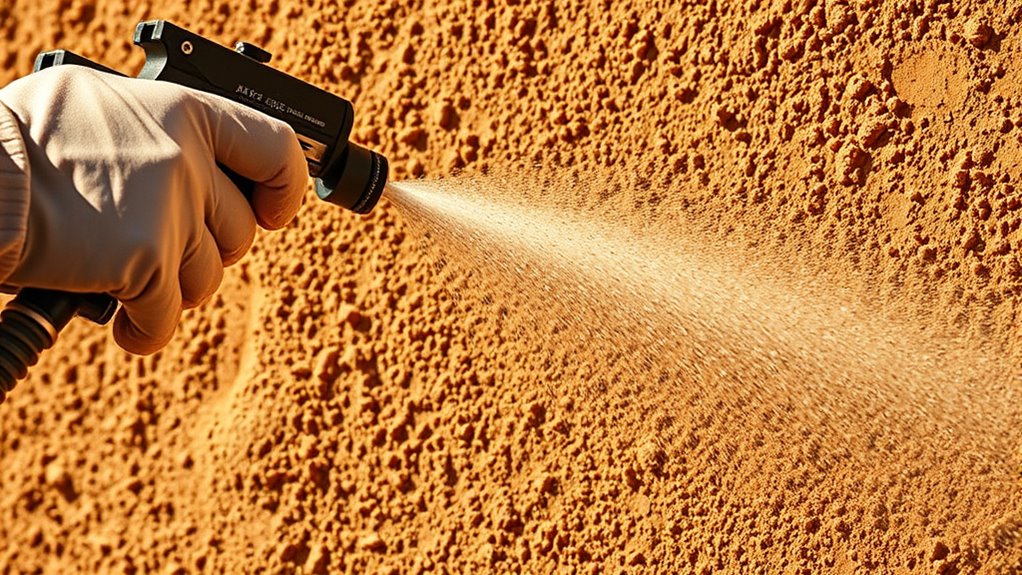
Once your material is properly prepared, the application techniques come into play. Spray equipment needs to be set up correctly to deliver a consistent, even coat. Adjust the pressure and nozzle size based on the type of finish you want and the texture of the wall surface. Hold the sprayer about 12 to 18 inches from the wall, maintaining a steady, perpendicular angle. Keep your movements smooth and overlapping each pass slightly to avoid streaks and ensure complete coverage. Remember, applying in multiple thin coats generally produces a better finish than trying to do it all at once. This approach helps prevent drips and sagging, especially on vertical surfaces. Additionally, understanding the importance of proper maintenance can extend the lifespan of your sprayer and improve overall results.
Set spray pressure, hold 12-18 inches from wall, and apply multiple thin coats for best results.
It’s also essential to consider the wall’s surface condition before spraying. Clean and dampen the wall if necessary, to improve adhesion and reduce dust or loose particles that could compromise the finish. For adobe walls, which are often porous, you might need to pre-wet the surface or use a bonding agent to help the stucco adhere better. During application, maintain a consistent distance and speed to keep the spray pattern uniform. If you notice any missed spots or uneven patches, wait for the first coat to dry slightly before applying additional layers. This patience ensures a smoother, more durable finish.
Throughout the process, you need to monitor your equipment and mixture regularly. Replenish the material and clear blockages as needed to maintain steady application. By paying close attention to application techniques and material preparation, you’ll achieve a professional-looking stucco or adobe wall that stands the test of time. The key is patience, precision, and understanding how each step impacts the final result, giving your project a polished, lasting appearance.
As an affiliate, we earn on qualifying purchases.
Frequently Asked Questions
How Long Does Spray-Applied Stucco Typically Last?
Spray-applied stucco typically lasts 50 to 80 years, depending on durability factors like climate, quality of application, and materials used. To guarantee it stays in good shape, follow maintenance tips such as inspecting for cracks, cleaning regularly, and addressing minor damage promptly. Proper sealing and timely repairs can markedly extend its lifespan, helping your stucco wall look great and perform well for decades.
Can Spray Stucco Be Applied on Existing Adobe Walls?
Yes, you can apply spray stucco on existing adobe walls, but proper Adobe restoration techniques are essential to guarantee durability. You should evaluate the adobe’s condition first, then prepare the surface by cleaning and repairing any damage. Using a high-quality spray stucco designed for exterior use will enhance stucco durability and help protect your adobe walls from weather and wear. Consult a professional for best results and long-lasting protection.
What Are the Environmental Impacts of Spraying Stucco?
You might wonder about the environmental impact of spraying stucco. It can produce dust, VOC emissions, and waste, impacting air and water quality. To minimize these effects, opt for eco-friendly solutions like low-VOC or natural stuccos. By choosing sustainable materials and proper application methods, you help reduce pollution and conserve resources, ensuring your project stays environmentally responsible while achieving a durable, attractive finish on your walls.
Is Special Equipment Necessary for Spraying Adobe Walls?
Yes, you need special equipment for spraying adobe walls. Proper equipment requirements include a hopper gun or spray rig designed for thicker, earthen materials. You should also use appropriate application techniques, such as maintaining consistent pressure and proper nozzle size, to guarantee even coverage and adhesion. Using the right tools helps you achieve a smooth, durable finish while minimizing waste and ensuring the integrity of the adobe walls.
How Does Spray Stucco Compare to Traditional Hand-Applied Methods?
Spray stucco offers a faster, more uniform finish compared to traditional hand-applied methods, giving you more texture options to match your style. It can be cost-effective since it covers large areas quickly, reducing labor time. However, you might need special equipment and skill to achieve the desired look. While traditional methods provide more control, spray stucco‘s efficiency makes it ideal for large projects and consistent textures.
Conclusion
So, after all that effort, you might think spraying stucco and adobe walls is straightforward. Ironically, the very simplicity can hide the challenges, like uneven textures or missed spots. But don’t worry—once you master the spray gun, you’ll realize it’s almost too easy, and that’s when mistakes happen. So enjoy the process, stay patient, and remember: sometimes, the easiest method is the trickiest to perfect. Happy spraying!
Fall yard work Picks
leaf blowers
As an affiliate, we earn on qualifying purchases.