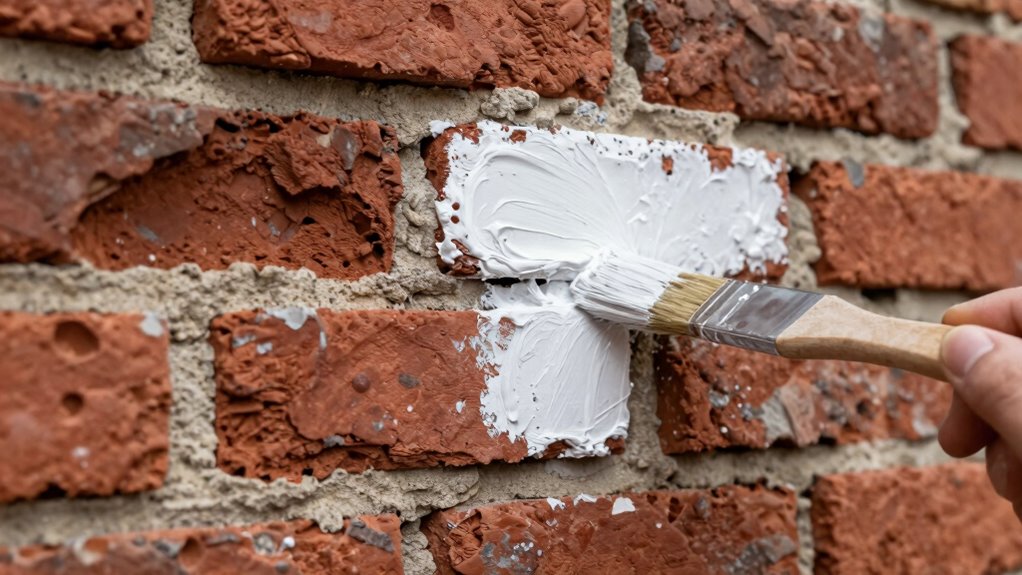

To get paint into every crevice in brick and masonry, start by thoroughly cleaning and drying the surface, removing dirt and loose debris. Use a high-quality brush to work paint into cracks, corners, and textured areas, applying in long, controlled strokes from top to bottom. For large flat surfaces, a roller works well, but always follow up with detailed brushing for hard-to-reach spots. Learn more about techniques to guarantee complete coverage and long-lasting results.

Get business pricing on tools and workshop supplies
- Business-only prices and quantity discounts
- Tax-exempt purchasing
- Multiple users, one account, clear invoices
Key Takeaways
- Use a high-quality stiff-bristled brush to work paint into cracks and textured areas thoroughly.
- Apply primer and paint with a combination of brushes and rollers, emphasizing detailed sections afterward.
- Work from top to bottom to prevent drips and ensure even coverage in crevices.
- Press the brush firmly into corners and textured surfaces to ensure paint penetrates deep.
- Follow a systematic, methodical approach, addressing all nooks and crannies for complete coverage.
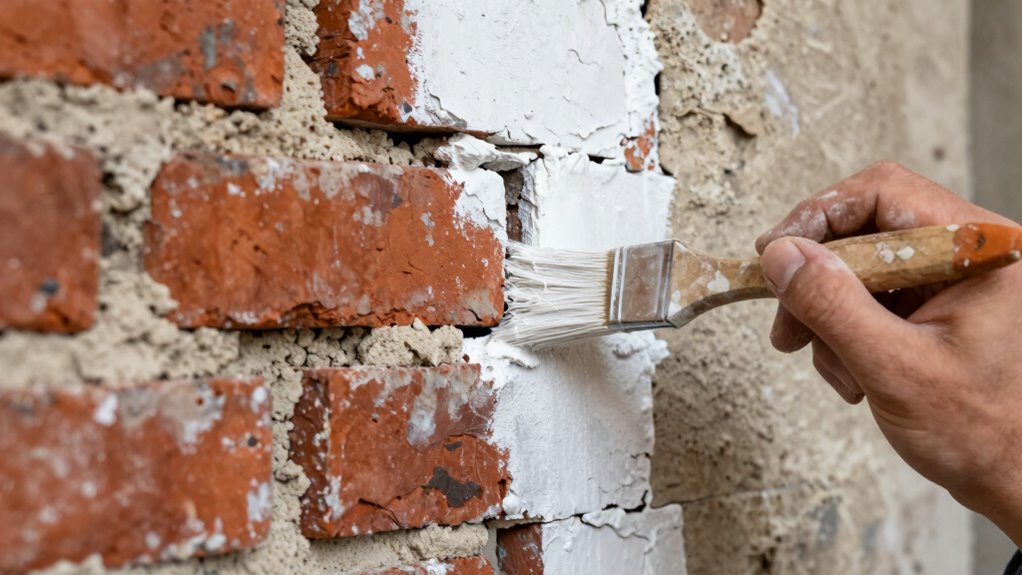
Have you ever wondered why brick and masonry buildings stand the test of time? It’s because their surfaces require careful preparation before you can apply paint that truly lasts. When tackling brick and masonry, you need to focus on effective brushing techniques and priming methods to ensure the paint penetrates every crevice. These steps are essential to achieve a smooth, durable finish that withstands weather and aging.
Your first priority is to clean the surface thoroughly. Remove dirt, efflorescence, and loose mortar with a stiff-bristled brush or a pressure washer, depending on the condition of the surface. Once the surface is clean and dry, you can move on to priming. Using the right priming methods helps seal pores and provides a uniform base for the paint. For masonry, a specialized masonry primer is best because it adheres well to rough surfaces and offers excellent stain blocking. Applying a primer correctly means using a brush or roller to work it into the textured surface, making sure it reaches all the nooks and crannies. Don’t rush; a thin, even coat is sufficient—multiple coats may be necessary for porous surfaces to ensure complete coverage.
Thorough cleaning and proper priming are key for durable masonry paint finishes.
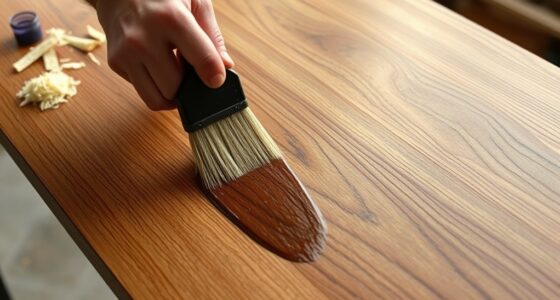
When it comes to brushing techniques, your goal is to get paint into every crevice without leaving drips or missed spots. Use a high-quality stiff-bristled brush for detailed work around mortar joints and textured areas. Work the paint into cracks, corners, and uneven surfaces by using long, consistent strokes and pressing the brush into the surface. For large, flat areas, a roller can help, but always follow up with a brush to address the intricate parts of the brickwork. It’s important to work systematically, starting from the top and moving downward, to prevent drips and ensure uniform coverage. Incorporating proper priming methods enhances the paint’s adhesion and durability, especially on porous surfaces prone to efflorescence and staining.
Priming methods also include choosing the right primer type and application technique. For example, if you’re working with previously painted surfaces or repairs, a bonding primer might be necessary to ensure adhesion. Always follow the manufacturer’s instructions regarding drying times and number of coats. Remember, proper priming not only enhances paint adhesion but also prevents issues like peeling and efflorescence down the line.
As an affiliate, we earn on qualifying purchases.
Frequently Asked Questions
What Types of Paint Are Best for Brick and Masonry Surfaces?
For brick and masonry, you should choose high-quality latex or acrylic paints. These types offer excellent color retention and weather resistance, making them ideal for outdoor surfaces exposed to the elements. They adhere well to textured surfaces and can be easily cleaned. Opt for paints specifically formulated for masonry to guarantee durability and long-lasting color, especially in areas with harsh weather conditions.
How Long Should I Wait Between Coats of Paint?
Patience is your best friend here. You should wait about 4 to 6 hours between coats, but always check the paint’s drying time on the label, as it can vary. Proper surface preparation helps make certain of even coverage and quicker drying. Rushing this step might lead to uneven results or peeling later, so give each coat enough time to dry thoroughly before applying the next.
Can I Use a Spray Gun for Painting Brick and Masonry?
Yes, you can use a spray gun for painting brick and masonry. The spray gun advantages include faster application and a smooth, even finish. Before you start, make certain proper brick surface preparation by cleaning and priming the surface thoroughly. This helps the paint adhere well and reduces overspray. Using a spray gun makes it easier to reach into crevices and textured areas, giving your brickwork a professional look.
How Do I Prevent Paint From Peeling or Cracking Over Time?
A stitch in time saves nine, so start with proper surface preparation to prevent paint from peeling or cracking over time. Clean the brick thoroughly, remove loose debris, and fix any cracks. Use a high-quality primer to enhance paint adhesion, and choose a durable, breathable paint suited for masonry. Proper application, including multiple thin coats, guarantees your finish stays intact longer, giving you peace of mind.
Are There Environmentally Friendly Paint Options for Masonry?
Yes, there are eco-friendly coatings for masonry that you can choose. Look for paints with sustainable pigments and low or zero volatile organic compounds (VOCs). These options help reduce environmental impact while providing good adhesion and durability. By selecting environmentally friendly paint, you guarantee your masonry surfaces stay vibrant and protected without harming the planet. Always check product labels for certifications like Green Seal or EcoLabel to confirm their sustainability claims.
Conclusion
Now that you know how to get paint into every crevice of brick and masonry, your project will breathe new life into your home. Think of it as revealing the secret to revealing the true character beneath the rough exterior. With patience and the right tools, you’ll transform those stubborn surfaces into a masterpiece. Embrace the process, and watch your space become a stunning demonstration to your dedication—like a phoenix rising from the ashes, ready to shine anew.
Fall yard work Picks
leaf blowers
As an affiliate, we earn on qualifying purchases.