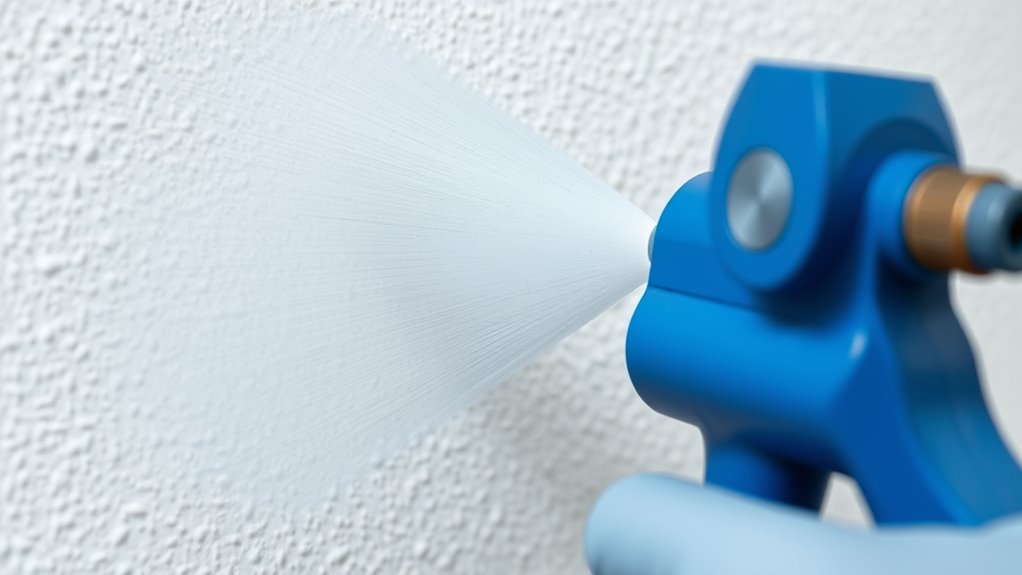

To spray corners, edges, and tight spots without runs, use smaller spray tips or detail brushes for better control. Keep a steady hand, maintain a consistent distance of 6-12 inches, and move slowly with slight overlap. Apply multiple thin coats instead of one heavy coat, and feather edges to prevent buildup. Practicing proper technique and making small adjustments will help you achieve smooth results—exploring these tips further will elevate your finishing skills even more.
Key Takeaways
- Use smaller spray tips or detail brushes for increased control in tight areas.
- Maintain a steady, consistent distance of 6-12 inches from the surface.
- Apply multiple thin coats with slow, controlled movements to prevent runs.
- Feather edges and pause at corners to ensure even coverage and avoid buildup.
- Combine spraying with manual touch-ups for precise finishing in challenging spots.
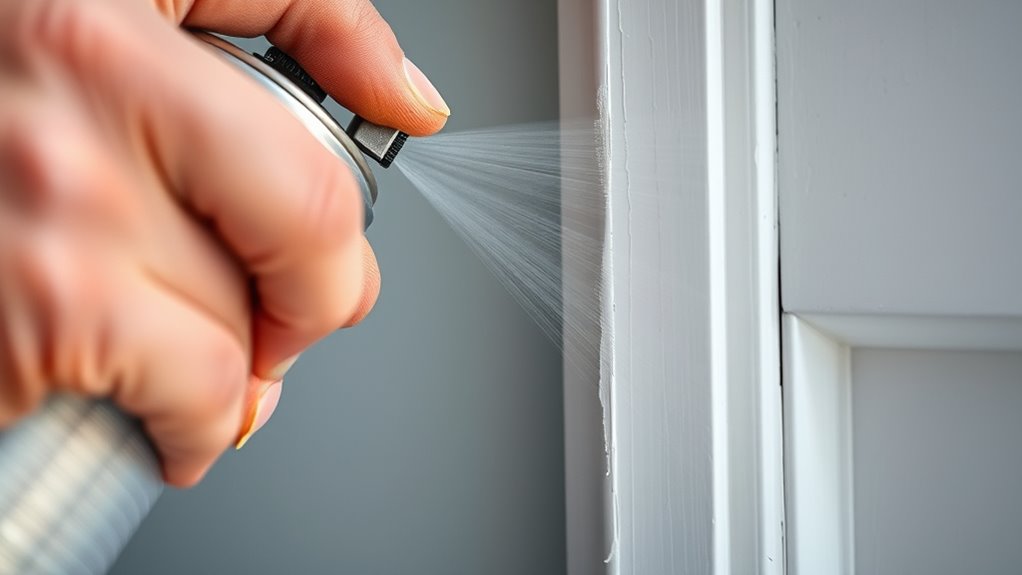
When spraying corners, edges, and tight spots, precision is essential to guarantee even coverage without wasting material. These areas are often tricky because they demand careful control to avoid drips, runs, or missed spots. To achieve professional results, you need to adjust your technique and equipment to suit these confined spaces. Start by choosing the right tool—smaller spray tips or detail brushes can give you better control. Using a smaller nozzle allows you to focus the spray exactly where you want it, helping you avoid overspray and drips. Before you begin, test your spray pattern on a scrap piece or a hidden area to ensure your pressure and distance are set correctly. This initial test helps prevent surprises when working on the actual surface.
As you approach corners and edges, slow down your movement. Rapid strokes often lead to uneven coverage and can cause paint to pool or run. Maintain a consistent distance from the surface—generally about 6 to 12 inches—depending on your equipment and paint type. Keep your hand steady and move smoothly, overlapping each pass slightly to ensure seamless coverage. When working in tight spots, it’s tempting to get close, but staying at a controlled distance helps prevent over-application. If necessary, use a detail brush to fill in small gaps or tricky spots that your spray gun can’t easily reach. This combination of spray and hand-finishing gives you the precision needed for a clean, professional look.
To avoid runs and drips, apply multiple thin coats instead of a single heavy one. Light coats dry faster and reduce the risk of uneven texture. Keep an eye on your work as you go; if you notice pooling or thick spots forming, gently back off or feather the edges with a brush. When spraying near edges or corners, use a technique called “feathering,” where you slightly pull back the spray at the end of each pass to prevent buildup. It’s also helpful to maintain a steady speed—pausing briefly at corners can help you control the spray and avoid excess material. Additionally, understanding the importance of proper equipment adjustments can significantly improve your control and results.
Finally, patience is key. Rushing through corners or tight spots often results in mistakes that are hard to fix later. Take your time, use controlled movements, and don’t be afraid to apply multiple light coats. With practice and attention to detail, you’ll master spraying corners, edges, and tight spots without runs, achieving a smooth, professional finish that enhances your project’s overall quality.
Frequently Asked Questions
What Types of Spray Equipment Are Best for Detailed Corners?
You should use a detail sprayer or a small, fine-tip spray gun for detailed corners. These tools give you precise control, allowing you to target tight spots without overspray. Look for equipment with adjustable nozzles or smaller spray tips, which help you work neatly and avoid runs. Using a steady hand and a light touch, you can achieve smooth, clean finishes even in tricky, confined areas.
How Do I Prevent Paint Drips When Spraying Tight Spots?
Did you know that improper technique causes over 60% of paint drips? To prevent drips when spraying tight spots, use a light, consistent spray and keep your nozzle at a steady distance. Move swiftly but carefully, avoiding over-application. Taping edges helps control overspray. Practice on scrap before your project, and don’t rush—patience is key to achieving a smooth, drip-free finish in those tricky areas.
Can I Use Masking Tape for Edges and Corners?
Yes, you can use masking tape for edges and corners. It helps create clean, sharp lines and prevents overspray on adjacent surfaces. Before spraying, make sure the tape is pressed down firmly to avoid paint bleeding. Use painter’s tape designed for delicate surfaces if needed. Remove the tape carefully while the paint is still slightly tacky to guarantee crisp edges and avoid smudging or peeling.
What’s the Ideal Spray Distance for Precision Work?
Think of your spray gun as a magic wand, and the ideal distance is about 6 to 12 inches from your target. Keep it steady like a camera lens to make certain of even coverage and avoid drips. If you’re working on detailed corners or tight spots, lean closer—around 6 inches. For broader areas, stand back a bit. Maintaining this distance gives you control, precision, and a flawless finish.
How Do I Clean Spray Equipment After Working on Tight Areas?
You should clean your spray equipment immediately after working on tight areas to prevent paint buildup and clogs. First, empty any remaining paint and rinse the container with clean water or solvent, depending on your paint type. Use a brush or spray tip cleaner to scrub nozzles and filters thoroughly. Run clean water or solvent through the system to flush out residue. Dry all parts completely before storage to maintain equipment performance.
Conclusion
Just like a skilled archer hitting the bullseye in tight spots, your careful spray technique guarantees flawless coverage in corners, edges, and tight spots. With patience and precision, you become the master of your own painting story, turning a tricky task into a smooth adventure. Remember, every well-placed spray is a victory, and soon you’ll be painting with the confidence of a seasoned artist. Keep practicing, and your work will always shine with professional perfection.