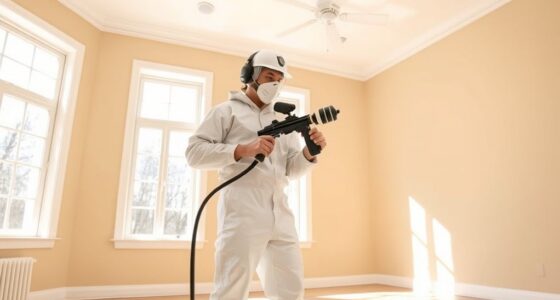
When spraying drywall primer in new construction, you should prepare the area by protecting surfaces, guarantee your equipment is clean and well-maintained, and mix or thin the primer properly according to instructions. Keep your spray gun steady at 12-18 inches from the wall, overlap each pass, and control the pressure for even coverage. After finishing, clean your tools thoroughly to keep everything in top shape. For in-depth tips and techniques, keep exploring the details ahead.
Key Takeaways
- Prepare the workspace by covering surfaces and ensuring proper ventilation before spraying drywall primer.
- Inspect and maintain spray equipment, checking for clogs and proper function to ensure smooth application.
- Mix and thin primer according to manufacturer instructions for even coverage and equipment compatibility.
- Hold the spray gun 12-18 inches from the drywall, overlapping passes by about 50% for uniform results.
- Clean equipment thoroughly after spraying to prevent clogs and ensure optimal performance for future projects.

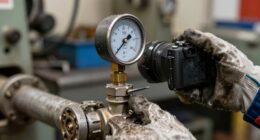
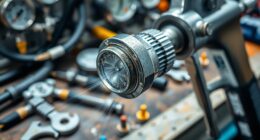
Are you considering spraying drywall primer to achieve a smooth, even finish? If so, understanding priming techniques and maintaining your equipment properly can make all the difference. Proper priming techniques involve more than just spraying the primer; they require attention to detail to ensure a professional-looking result. Start by preparing your workspace—covering floors and furniture, and ensuring good ventilation. Before you begin, inspect your spray equipment thoroughly. Clean all parts to remove dust, old paint, or debris that could clog the nozzles. Regular equipment maintenance isn’t just about cleanliness; it also involves checking for wear and tear, lubricating moving parts, and ensuring the spray tips are in good condition. Well-maintained equipment delivers a consistent spray pattern, which is *essential* for achieving an even coat of primer.
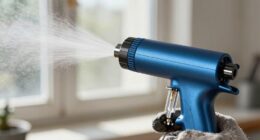
When applying the primer, hold the spray gun at a steady distance—usually about 12 to 18 inches from the wall. Keep your hand moving smoothly and consistently across the surface. Avoid stopping in the middle of a section, as this can cause uneven streaks or blotches. If you notice drips or thick spots, back off slightly or reduce the spray pressure. Using the right pressure settings on your sprayer helps control the amount of primer applied, preventing oversaturation or runs. To keep your spray pattern uniform, maintain a consistent speed and overlap each pass by about 50%. This overlapping ensures no gaps or thin spots are left behind.
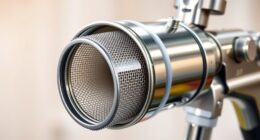
Priming techniques also include proper mixing of your primer before spraying. Always stir or shake your primer thoroughly to ensure uniform consistency, especially if it’s been sitting for a while. Thinning the primer, if necessary, should be done precisely according to the manufacturer’s instructions, as improper thinning can clog your equipment or cause uneven coverage. During the process, periodically check and clean the spray tip to prevent clogs or uneven spray patterns. After completing your work, clean your equipment immediately. Proper equipment maintenance after each use prolongs the life of your sprayer and guarantees it performs *best* on future projects.
Frequently Asked Questions
What Safety Precautions Are Necessary During Spraying?
You should always wear protective gear like masks, goggles, and gloves to prevent inhalation of fumes and contact with skin. Make sure your ventilation setup is properly working to disperse fumes and maintain good air quality. Keep the area well-ventilated, and avoid spraying in confined spaces. Follow safety guidelines closely, and stay alert for any signs of discomfort or exposure, stopping work if needed.
How Long Does the Primer Take to Dry?
Think of primer curing as a gentle sunrise—patience is key. Typically, drywall primer takes about 1 to 2 hours to dry, but full curing may take up to 24 hours depending on humidity and temperature. During this time, it’s vital to avoid touching or disturbing the surface. Proper drying time ensures the primer bonds well, providing a smooth foundation for your paint and lasting durability.
Can I Use a Different Primer Type With the Spray Gun?
You can use a different primer type with your spray gun, but you need to verify primer compatibility first. Different primers have varied viscosities and properties that might require adjusting your spray gun settings, like pressure and nozzle size. Always test a small amount first to ensure proper spray pattern and coverage. Making these adjustments helps achieve a smooth finish and prevents issues like streaking or uneven coating.
What Maintenance Is Required for Spraying Equipment?
You need to perform regular maintenance on your spraying equipment to guarantee peak performance. Start by checking and calibrating the equipment regularly to maintain accurate spray patterns and material flow. Inspect nozzle selection to prevent clogs and ensure proper atomization. Clean all components thoroughly after each use, including filters and hoses, and replace worn parts promptly. Proper maintenance keeps your sprayer functioning efficiently and extends its lifespan, saving you time and money.
How Do Temperature and Humidity Affect Spraying Drywall Primer?
Did you know that temperature effects can change drying time by up to 50%? When spraying drywall primer, high humidity can cause the primer to take longer to dry and may lead to uneven coverage. Conversely, low humidity speeds up drying but can cause inconsistent application. Keep an eye on temperature and humidity considerations to guarantee a smooth, professional finish, and always spray within the recommended environmental ranges.
Conclusion
Spraying drywall primer can save you time and guarantee a smooth finish, especially in large new construction projects. Did you know that using a sprayer can cover up to 1,000 square feet in just an hour? This efficiency not only speeds up your work but also results in a more even coat. So, next time you’re tackling drywall, give spraying a try—you might be surprised how much easier and faster it is to get professional-looking results.