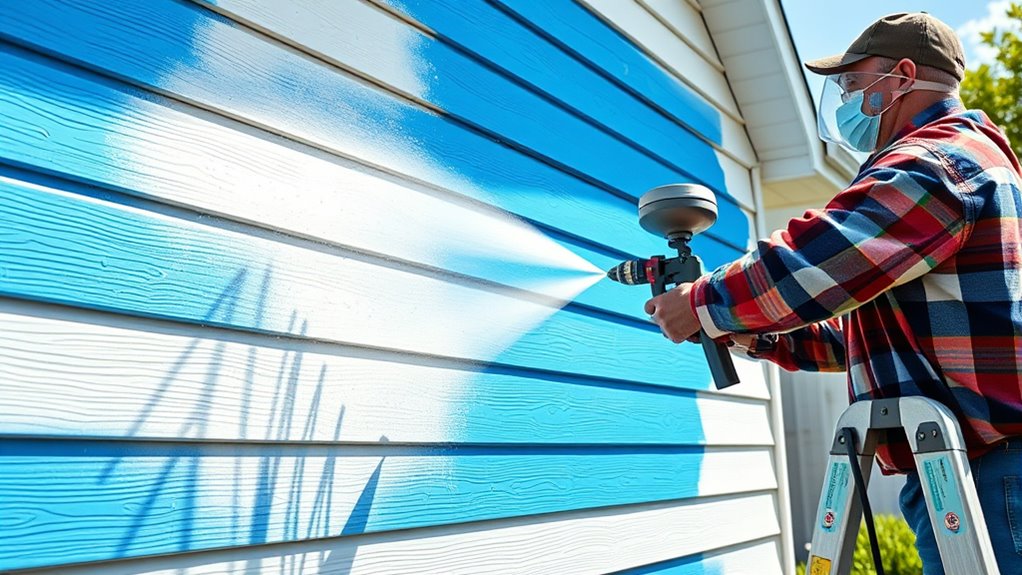
To spray exterior house siding effectively, start by choosing a high-quality sprayer with adjustable settings and test it on scrap material for even coverage. Clean and prep the surface, repairing any damage and masking areas like windows and trim. Maintain proper distance, use smooth, steady motions, and apply multiple thin coats for durability. Keep equipment clean and work under favorable weather conditions. Want to know detailed steps and expert tips? Keep exploring for more helpful guidance.
Key Takeaways
- Select high-quality, adjustable spray equipment and test on scrap siding for even coverage.
- Prepare surfaces thoroughly by cleaning, repairing, and masking non-painted areas to prevent overspray.
- Match and test paint color on a small section to ensure seamless blending with existing siding.
- Use steady, consistent motion, keep the spray 12-18 inches from siding, and apply multiple thin coats.
- Maintain equipment properly and work in favorable weather to achieve a smooth, professional finish.
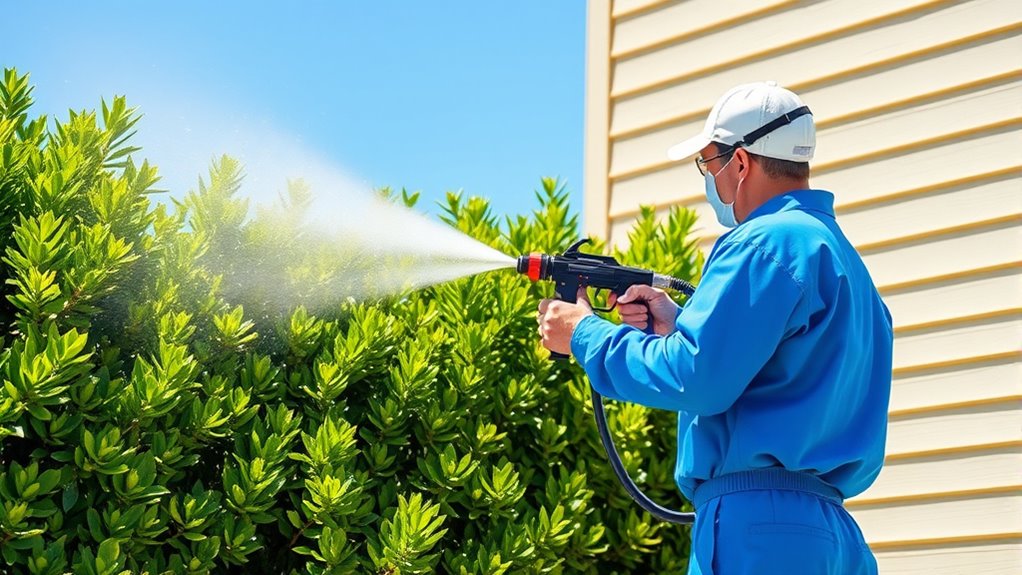
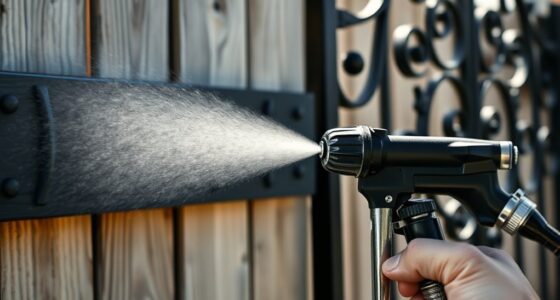
Spraying exterior house siding can be an efficient way to refresh your home’s appearance, but it requires proper technique to achieve a smooth, even finish. One of the most critical steps is selecting the right spray equipment. You’ll want to choose a sprayer that offers adjustable settings, allowing you to control the flow and pattern of the paint. A high-quality pump sprayer with a wide spray fan will help you cover large areas quickly while maintaining an even coat. Make sure to test the equipment on a scrap piece of siding or an inconspicuous area first, to get a feel for the spray pattern and guarantee even coverage. Properly maintaining and cleaning your spray equipment before and after use will prevent clogging and assure consistent performance.
Choose a spray gun with adjustable settings and test on a scrap area for even coverage.
Color matching is another essential aspect of the spraying process. When repainting your siding, you need to confirm the new coat blends seamlessly with the existing color, especially if you’re touching up or repainting sections. Take a sample of your current siding or bring a color swatch to your local paint store for an accurate match. Using a color-matched paint will minimize noticeable differences and give your home a cohesive, polished look. If you’re going for a new color, consider testing it on a small section first to see how it looks in natural light. This step helps avoid costly mistakes and verify you’re satisfied with the final result.
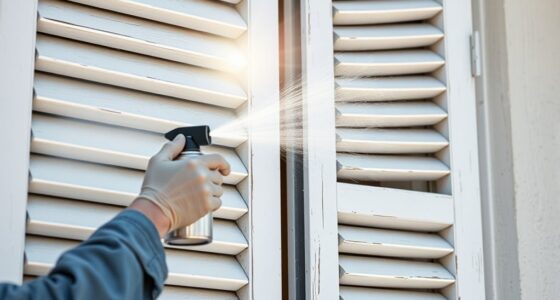
Before spraying, prepare the surface thoroughly. Clean the siding to remove dirt, dust, and cobwebs, and repair any damaged or loose sections. Mask off windows, trim, and other areas you don’t want to paint using painter’s tape and plastic sheeting. Proper surface preparation and masking will prevent overspray and drips, saving you time on cleanup. When ready to spray, hold the nozzle about 12 to 18 inches from the siding, moving steadily from side to side to maintain a consistent pattern. Keep your spray equipment perpendicular to the surface to avoid uneven coverage or streaks. Additionally, understanding how contrast ratio influences the perceived image quality can help you select a projector with the appropriate specifications for your home cinema setup.
Remember to work in favorable weather conditions—avoid windy, rainy, or overly hot days, as these can affect how the paint adheres and dries. Apply multiple thin coats rather than one thick coat, allowing adequate drying time between applications. This approach results in a more durable, professional-looking finish. With the right spray equipment, careful color matching, and proper preparation, spraying your house siding can be a straightforward project that dramatically boosts your home’s curb appeal.
Frequently Asked Questions
What Type of Spray Equipment Is Best for Exterior Siding?
You should use a high-quality airless sprayer for exterior siding, as it provides even coverage and efficient application. Focus on spray nozzle selection; a 311 or 515 tip works well for most sidings. Additionally, consider paint viscosity; thinning your paint according to manufacturer recommendations guarantees smooth spraying and prevents clogging. This combination helps you achieve a professional finish while making the process easier and quicker.
How Can I Prevent Overspray on Surrounding Areas?
Imagine you’re spray painting your house, and you want to avoid overspray on the garden. To prevent this, use proper masking techniques like covering plants and windows with plastic sheeting. Select a spray nozzle suitable for precise application, such as a narrow fan tip. Keep the spray at a consistent distance and start with a light coat. These steps help safeguard surrounding areas and ensure a clean, professional finish.
Is Spraying Suitable for All Types of Siding Materials?
Spraying isn’t suitable for all siding materials. You should check siding material compatibility first, as some surfaces like vinyl or aluminum may not tolerate spray application well. Additionally, consider paint adhesion concerns; if the coating doesn’t stick properly, you’ll need a compatible primer or alternative methods. Always test on a small area to ensure proper adhesion and avoid damage, customizing your approach based on your siding’s specific material.
How Long Should I Wait Before Painting After Spraying?
You should wait at least 24 to 48 hours after spraying before painting to guarantee proper drying time and ideal paint adhesion. Rushing the process can cause the paint to peel or not stick well. Keep the siding in a well-ventilated area, and check that the surface is completely dry and free of moisture. This waiting period helps your new paint last longer and look smoother.
What Safety Gear Is Recommended During Spraying?
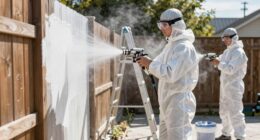
Think of safety gear as your shield against airborne villains. You should wear protective gloves to safeguard your skin and a respirator mask to prevent inhaling harmful fumes. Always verify your respirator fits snugly, like a glove on your hand. These essentials keep you safe while spraying, allowing you to focus on your project with confidence. Don’t forget, safety gear is your armor in this painting adventure.
Conclusion
Spraying your exterior house siding can transform your home faster than you’d believe, turning a dull facade into a stunning masterpiece. Just follow these simple steps, and you’ll achieve a flawless finish that lasts for years. Remember, patience and prep are your best friends in this process. With a little effort, you’ll make your house look so incredible, it’ll outshine even the most dazzling diamonds. Happy spraying!