
During indoor spraying, guarantee proper ventilation by increasing fresh air intake and using exhaust fans to direct airborne contaminants away from you. Always wear appropriate respiratory protection, like masks with chemical cartridges, and make sure they fit well. Set up your airflow system before starting, and continue ventilating afterward to clear fumes. Maintaining these measures helps protect your health and keeps the workspace safe—continue to learn how to optimize your safety practices.

Get business pricing on tools and workshop supplies
- Business-only prices and quantity discounts
- Tax-exempt purchasing
- Multiple users, one account, clear invoices
Key Takeaways
- Evaluate indoor airflow before spraying; increase fresh air intake and use exhaust fans to direct fumes away from occupants.
- Use properly fitted respirators with appropriate filters or cartridges for chemical or particulate protection during spraying.
- Set up ventilation systems, including opening windows and turning on exhaust fans, prior to and during spraying activities.
- Maintain continuous airflow to dilute airborne contaminants and monitor airflow patterns to ensure safe breathing zones.
- Ventilate the area after spraying, and verify workspace safety before re-entry, while ensuring protective gear remains properly worn.
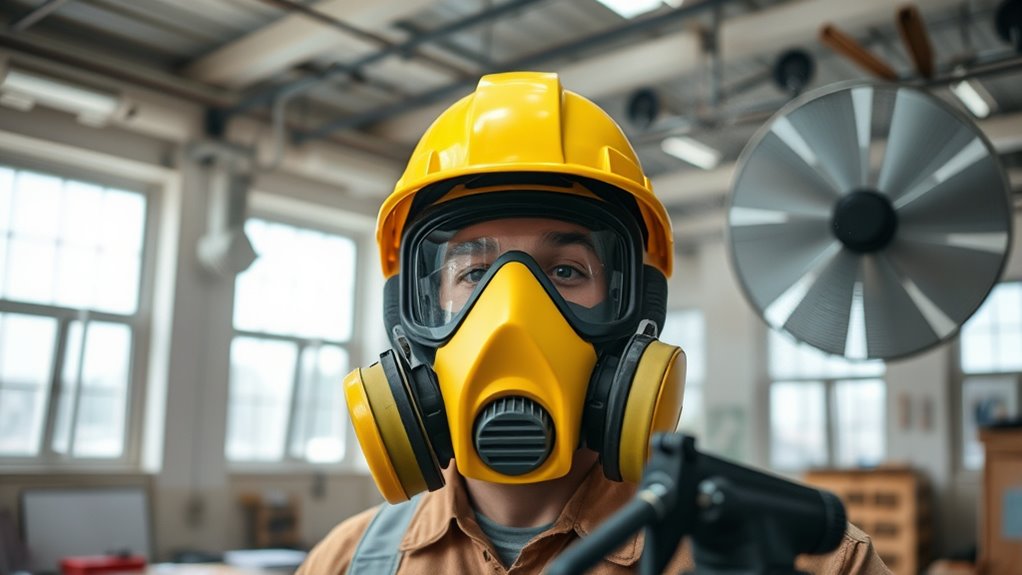
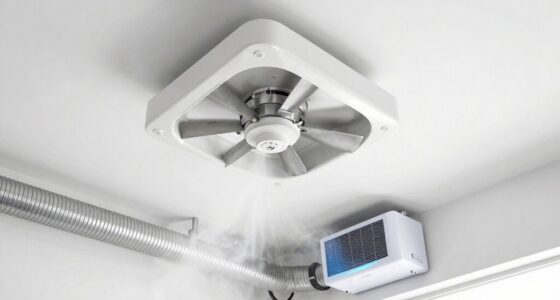
Effective ventilation and respiratory protection are essential for maintaining a safe and healthy work environment. When you’re involved in indoor spraying, controlling the airflow is critical to minimizing exposure to harmful fumes, dust, or chemicals. Proper airflow optimization ensures that airborne contaminants are swiftly removed from the workspace, reducing the risk of inhalation hazards. To achieve this, you need to assess the space carefully and adjust ventilation systems accordingly. This might mean increasing the intake of fresh air or using exhaust fans strategically placed to direct contaminated air away from workers. When airflow is optimized, it creates a continuous flow that dilutes airborne particles and prevents their accumulation, which is crucial during spraying activities.
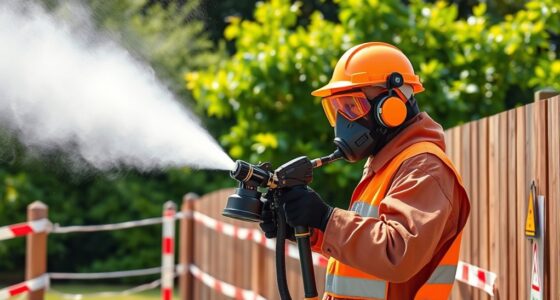
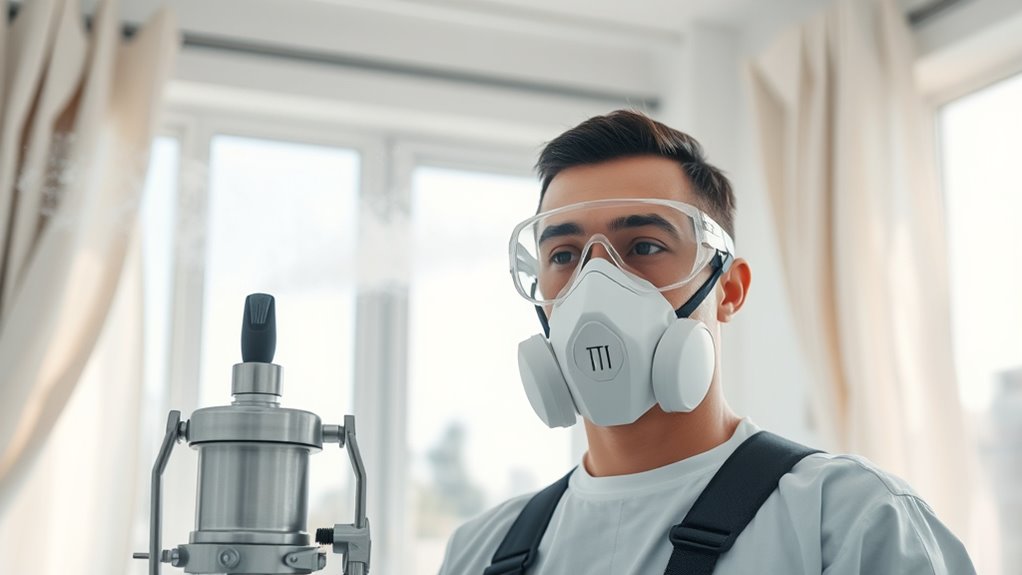
In addition to airflow adjustments, wearing appropriate protective equipment is non-negotiable. Respirators and masks designed specifically for chemical or particulate protection act as a critical barrier between you and potential hazards. The right protective equipment depends on the nature of the substances you’re spraying. For example, if you’re working with volatile organic compounds, a respirator with chemical cartridges provides essential filtration. Always ensure your protective gear fits well and is in good condition—ill-fitting masks can compromise safety by allowing contaminants to bypass filtration. Using protective equipment not only shields your respiratory system but also boosts confidence in handling hazardous materials safely.
Moreover, integrating ventilation and protective equipment creates a thorough safety approach. Before starting, set up your airflow system to maximize efficiency. Turn on exhaust fans, open windows if possible, and verify that airflow moves contaminants away from your breathing zone. Don’t forget to wear your respirator or mask correctly, sealing it properly to prevent leaks. Regularly check and replace filters or cartridges to maintain their effectiveness. During spraying, stay aware of airflow patterns and adjust your position if necessary, ensuring you’re always in the safest zone relative to airflow direction. After completing work, continue ventilating the area to clear residual fumes before entering.
respirator masks with chemical cartridges
As an affiliate, we earn on qualifying purchases.
As an affiliate, we earn on qualifying purchases.
Frequently Asked Questions
What Are the Long-Term Health Effects of Indoor Spraying Exposure?
Long-term exposure to indoor spraying can lead to chronic respiratory issues, like asthma or bronchitis, especially if you’re repeatedly exposed without proper protection. You might also develop chemical sensitivity, making you more reactive to everyday chemicals and fragrances. To protect your health, make certain of good ventilation and wear appropriate respiratory protection during spraying. Avoiding prolonged exposure reduces your risk of these long-term health effects.
How Often Should Ventilation Systems Be Maintained for Safety?
You should maintain your ventilation system every 3 to 6 months to guarantee safety. Regular air filter replacement is essential, as dirty filters reduce airflow and trap contaminants. Additionally, performing airflow measurement helps verify proper ventilation. Skipping maintenance can lead to 50% less effective air exchange, increasing health risks. Stay proactive to protect yourself and others from indoor spraying hazards by keeping your ventilation system well-maintained and functioning at its best.
Are There Specific Masks Recommended for Different Spray Chemicals?
Yes, you should choose mask types based on the specific spray chemicals you’re using. For example, use N95 respirators for particulates, but if you’re handling chemicals like solvents, opt for masks with chemical-resistant filters, such as half-face or full-face respirators with appropriate cartridges. Always check chemical compatibility to guarantee your mask provides proper protection. Properly fitting masks are essential for safety during indoor spraying.
Can Indoor Plants Help Improve Air Quality During Spraying?
Indoor plants can help improve air quality during spraying by acting as natural air purifiers. They absorb toxins and increase oxygen, creating a healthier environment. When you include indoor plants like snake plants or pothos, you support air purification, which can reduce airborne chemicals from spraying. Just remember, plants alone aren’t enough—combine them with proper ventilation and respiratory protection for ideal safety during spraying activities.
What Are the Signs of Improper Ventilation During Spraying?
A picture is worth a thousand words, so if you notice persistent chemical smells or lingering fumes after spraying, your ventilation isn’t working right. You might also feel headaches, dizziness, or breathe more heavily. Poor air quality and low ventilation efficiency can cause these signs. Keep an eye out for stuffy air, foggy windows, or a buildup of spray residues, which all signal ventilation issues needing quick attention.
Conclusion
Just like opening windows during a storm clears the air, proper ventilation and respiratory protection keep you safe during indoor spraying. Imagine a painter who ignored masks and ventilation—within hours, they felt dizzy and unwell. That’s why following safety measures isn’t just protocol; it’s your shield against unseen dangers. When you prioritize ventilation and wear protective gear, you’re not just following rules—you’re creating a safe environment where you can breathe easy and work confidently.
Halloween Picks
halloween
As an affiliate, we earn on qualifying purchases.