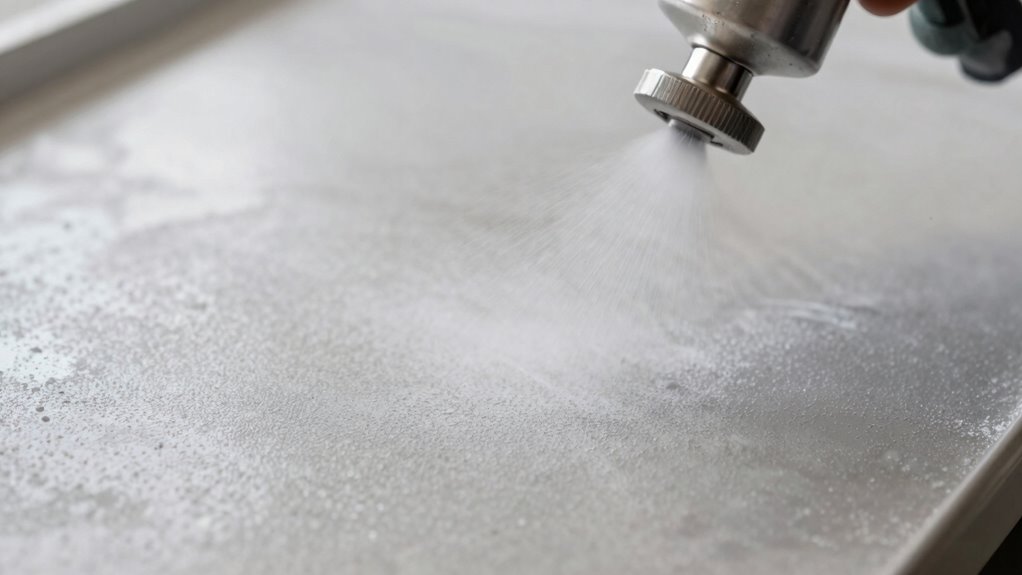
Overspray happens when tiny paint droplets drift beyond your target area, often caused by high spray pressure, poor equipment maintenance, or environmental factors like wind. Using the right spray gun settings, adjusting nozzle sizes, and maintaining proper distance from the surface can help minimize excess paint. Shielding the work area with drop cloths and controlling environmental conditions also play a big role. To learn more about effective techniques and tips, keep exploring how you can master overspray control.

Get business pricing on tools and workshop supplies
- Business-only prices and quantity discounts
- Tax-exempt purchasing
- Multiple users, one account, clear invoices
Key Takeaways
- Overspray occurs when tiny paint droplets drift beyond the target area due to high pressure or environmental factors.
- Using poorly maintained equipment or incorrect settings increases the likelihood of overspray.
- Maintaining a consistent distance and steady movement during application helps minimize overspray.
- External factors like wind or drafts can carry spray beyond the intended surface, causing overspray.
- Proper masking, shielding, and adjusting spray pressure reduce excess paint drift and overspray.
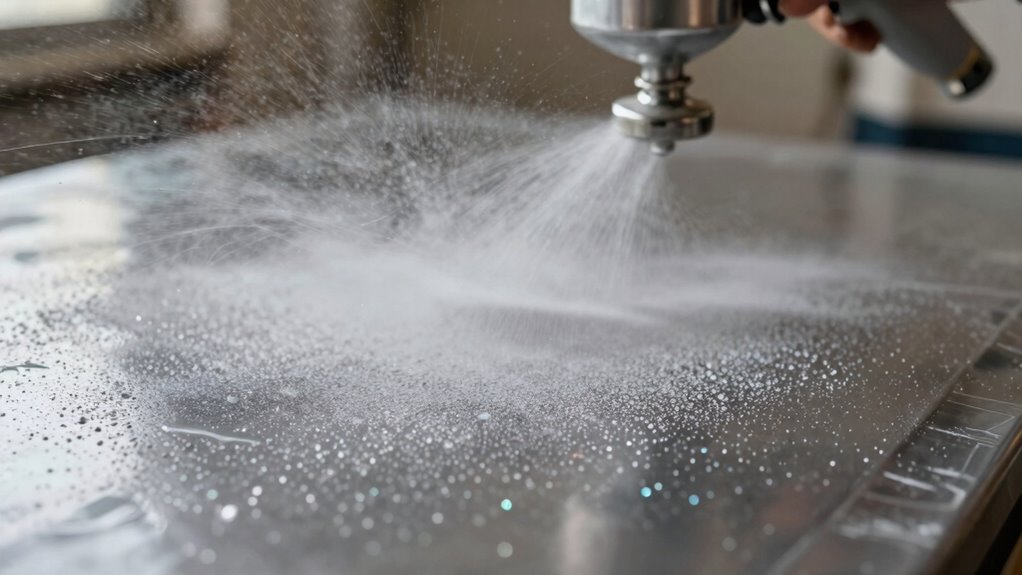
If you’ve ever painted a wall and noticed paint splatters outside your target area, you’ve encountered overspray. It’s a common issue that happens when tiny droplets of paint drift beyond where you want them. Overspray can ruin the clean look of your project and waste valuable paint. To minimize this, understanding what causes overspray is key, especially if you’re using a spray gun. One major factor is the condition of your equipment. When your spray gun isn’t properly maintained, it tends to produce inconsistent spray patterns, increasing the likelihood of overspray. Regular spray gun maintenance—cleaning nozzles, adjusting the fluid tip, and checking for worn parts—ensures the paint sprays smoothly and accurately. This not only reduces overspray but also improves paint adhesion, making your finish look professional and durable.
The way you set up your spray gun also plays a big role. If the pressure is too high, the paint particles travel farther than intended, leading to more overspray. Conversely, too low a pressure can cause uneven coverage and poor adhesion. Finding the right balance is essential. Keep in mind that the type of paint you use impacts overspray as well. Thinner paints are more prone to drifting, especially if applied with high pressure. Thicker paints may require thinning or different spray settings for the best results. Adjusting your technique—such as maintaining a consistent distance from the surface and moving at a steady pace—can help keep overspray in check. Additionally, environmental factors, like wind or drafts, also contribute to overspray, especially outdoors. When working outside, you should shield the project with drop cloths or use a controlled environment if possible. Proper masking of edges and surrounding areas can also limit paint from reaching unwanted spots. Furthermore, understanding the spray pattern created by different tips helps in controlling overspray more effectively. Choosing the right spray tip size helps control the spray pattern, reducing the chances of overspray. Larger tips tend to produce wider spray patterns, which can lead to more overspray if not carefully managed. Additionally, selecting the appropriate air pressure can significantly reduce the amount of overspray during application. Using the correct equipment settings tailored to the specific project can enhance control and minimize waste. Ensuring your paint has the proper viscosity and adjusting it as needed can further refine your results and prevent excess drift.
As an affiliate, we earn on qualifying purchases.
Frequently Asked Questions
Can Overspray Be Completely Eliminated?
Overspray can’t be completely eliminated, but you can minimize it considerably. By ensuring proper surface preparation and using high-quality paint and equipment, you improve paint adhesion and reduce excess paint that drifts where it shouldn’t. Applying painter’s tape and controlling spray distance also help. Remember, careful techniques and thorough surface prep are key to achieving a cleaner, more precise finish with less overspray.
Does Weather Impact Overspray Levels?
Weather conditions definitely impact overspray levels. Humidity, wind, and temperature can cause paint to behave unpredictably, increasing overspray. For example, high humidity or wind can push paint droplets beyond your target area. Additionally, weather influences paint consistency; if it’s too cold or damp, it may thicken or thin, leading to more overspray. To minimize this, choose ideal weather conditions and adjust your paint consistency accordingly.
Are There Specific Tools to Detect Overspray?
You can’t miss overspray with the right tools—air filtration systems and spray booths are your best allies. Specialized overspray detection tools, like laser-based sensors and visual monitoring systems, help you pinpoint tiny spray particles that escape. These tools give you real-time feedback, allowing you to adjust your techniques instantly. Investing in advanced detection guarantees you catch overspray early, saving you time, money, and the headache of cleanup.
How Long Does Overspray Typically Last?
Overspray usually lasts until the paint dries completely, which can take anywhere from a few hours to a day, depending on the type of paint and environmental conditions. During this drying period, you might notice surface contamination from loose overspray particles settling on nearby surfaces. To minimize long-term issues, clean surfaces promptly after painting and allow sufficient drying time, ensuring overspray doesn’t cause lasting damage or contamination.
Can Overspray Affect Indoor Painting Projects?
Yes, overspray can affect indoor painting projects. It can settle on surfaces, creating a messy finish, and even damage furniture or flooring. To minimize this, you should improve indoor ventilation to disperse airborne particles and guarantee thorough surface prep to protect areas from overspray. Using proper masking techniques and controlling your spray equipment also help prevent overspray from spreading, keeping your indoor space cleaner and your project looking professional.
Conclusion
Understanding overspray isn’t just about avoiding mess; it’s about mastering control over your work. By recognizing its causes and implementing simple strategies, you can turn a potential problem into a polished finish. Think of overspray as the ghost in the machine—elusive but manageable once you know its tricks. So, stay vigilant, apply your techniques thoughtfully, and watch your projects transform from chaos to craftsmanship. After all, isn’t the true art in how precisely you paint your success?
Fall Picks
fall essentials
As an affiliate, we earn on qualifying purchases.