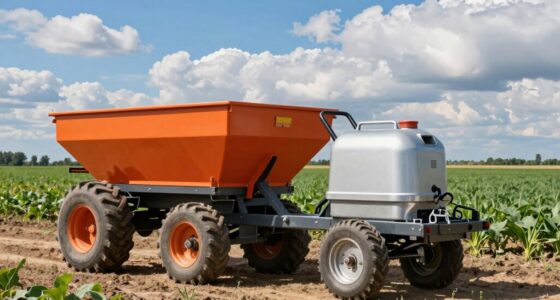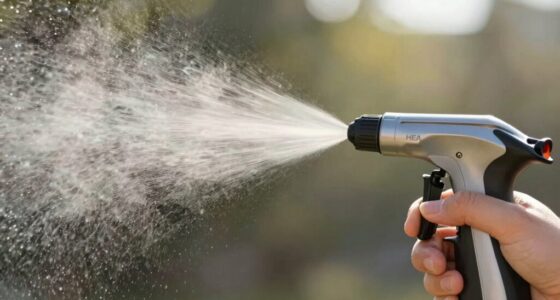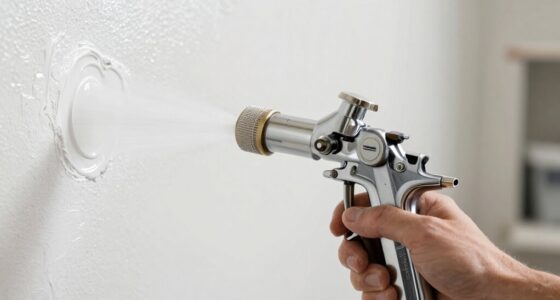
If you’re working on large-scale projects like farms, golf courses, or extensive landscapes, high GPM sprayers can save you time and effort. They’re perfect if you need rapid, uniform coverage of pesticides, fertilizers, or water. These sprayers are built for durability and efficiency, making them ideal for professionals like farmers, landscapers, or pest control specialists. Keep exploring to discover how the right equipment can boost your productivity and workflow.
Key Takeaways
- Large-scale projects like farms, golf courses, and expansive landscapes require high GPM sprayers for efficient coverage.
- Professionals such as landscapers and pest control technicians benefit from rapid application capabilities.
- High GPM sprayers are ideal when quick, uniform coverage of pesticides, fertilizers, or water is essential.
- They are suitable for tasks demanding high-volume applications with minimal operational time.
- Smaller plots or delicate crops may not require high GPM sprayers, as they could cause waste or damage.
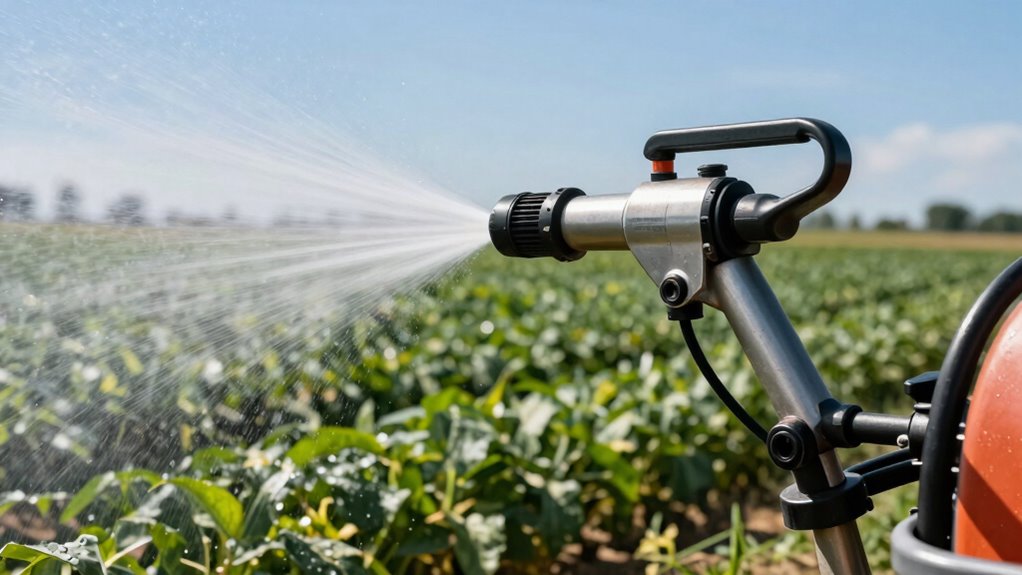
High-output sprayers are vital tools for efficiently covering large areas with minimal effort. When you’re working on extensive projects—whether in agriculture, pest control, or turf management—the right sprayer can drastically reduce your time and labor. With high gallons per minute (GPM) output, these sprayers deliver more liquid in less time, making them ideal for tasks that demand rapid, uniform coverage. But who truly benefits from a high GPM sprayer, and how do you determine if it’s the right fit for your needs?
If your priority is efficiency improvement, a high-output sprayer can be a game-changer. When you need to treat large fields, golf courses, or sprawling landscapes, slower sprayers simply can’t keep up. The increased flow allows you to cover more ground in less time, reducing the number of passes needed and cutting down on operational hours. This boost in productivity is especially valuable during tight schedules or peak seasons when time is of the essence. Additionally, high GPM models often integrate advanced features that streamline your workflow, such as adjustable flow rates and uniform spray patterns, further enhancing efficiency.
Equipment durability is another vital factor to consider. High-output sprayers are built to withstand demanding conditions, often featuring robust materials like stainless steel or reinforced plastics that resist corrosion, wear, and chemical damage. When you invest in a durable sprayer, you guarantee it can handle frequent use, high pressures, and harsh environmental conditions without breaking down or requiring constant repairs. This resilience translates into lower long-term costs and less downtime, keeping your operation running smoothly. Moreover, well-constructed equipment maintains consistent performance over time, so you can rely on it to deliver the same quality of application, whether you’re spraying pesticides, fertilizers, or water. Proper maintenance also plays a crucial role in extending the lifespan of high-output sprayers and ensuring optimal performance. Understanding flow rate specifications helps in selecting the most suitable sprayer for your particular application, ensuring you match capacity with your operational needs. It’s also important to consider the environmental impact of your spraying practices to promote sustainability and biodiversity conservation.
Additionally, selecting the right nozzle type can further optimize spray coverage and efficiency, making sure you get the most out of your high GPM sprayer. However, it’s indispensable to match the sprayer’s capacity to your specific needs. If you’re managing small plots or delicate crops that require careful, precise application, a high GPM sprayer might be excessive and lead to waste or oversaturation. Conversely, if you’re working on large-scale projects where speed and coverage are paramount, investing in a high-output model makes perfect sense. Remember, the goal is to find a balance: a sprayer that offers the efficiency improvement you need without sacrificing equipment durability or causing unnecessary complexity in your workflow.
In the end, high-output sprayers are invaluable for those who need to maximize productivity on big jobs. By choosing equipment that combines high GPM with rugged construction, you guarantee your investment pays off through faster application times and long-lasting service. Whether you’re a professional landscaper, farmer, or pest control technician, understanding your specific requirements will help you determine if a high GPM sprayer is right for you.
As an affiliate, we earn on qualifying purchases.
Frequently Asked Questions
What Maintenance Is Required for High-Output Sprayers?
You need to regularly maintain your high-output sprayer by checking sprayer calibration to guarantee accurate application rates. Also, inspect nozzle compatibility to prevent clogs and uneven spray patterns. Clean filters and nozzles after each use, and lubricate moving parts to avoid wear. Proper maintenance keeps your sprayer functioning efficiently, extends its lifespan, and ensures you get the right coverage every time.
Are High GPM Sprayers Suitable for Residential Use?
High GPM sprayers aren’t typically suitable for residential use, as they can compromise landscaping efficiency and may not be chemically compatible with household plants. You might find them more useful for large-scale commercial or agricultural tasks. Using a sprayer with appropriate GPM guarantees safe, effective chemical application, preventing damage to your garden while making the process more manageable. Always match your sprayer’s GPM with your specific landscaping needs.
How Do I Choose the Right GPM for My Project?
To choose the right GPM for your project, consider your specific needs and the sprayer’s efficiency. If you’re working on large areas or tough surfaces, a higher GPM can save time, but it might use more water. For smaller jobs or water conservation, opt for a lower GPM to reduce water waste. Balance your project requirements with sprayer efficiency to guarantee effective coverage without unnecessary water use.
What Safety Precautions Should I Take With High-Output Sprayers?
Think of using a high-output sprayer like handling a fire hose—you need safety gear like goggles, gloves, and masks to protect yourself. Always wear appropriate safety gear, and familiarize yourself with emergency procedures before starting. Keep a fire extinguisher nearby and guarantee proper ventilation. By taking these precautions, you prevent accidents and stay safe while managing high GPM equipment effectively.
Can High GPM Sprayers Be Used for Delicate Plants?
Yes, high GPM sprayers can be used for delicate plants if you prioritize plant sensitivity and gentle spraying. You should adjust the pressure and nozzle to reduce force, making certain you don’t damage tender foliage. Using a lower GPM setting and a fine spray tip helps distribute the liquid evenly without harming delicate plants. Always test on a small area first to prevent unintended damage and ensure proper care.
Conclusion
So, now you know who truly benefits from high GPM sprayers. If you’re tackling large, tough jobs or need faster coverage, these tools can be game-changers. But if your projects are smaller or more delicate, a lower GPM might do just fine. Think about your needs—are you ready to power through your tasks or prefer a gentler touch? Either way, choosing the right sprayer makes all the difference!