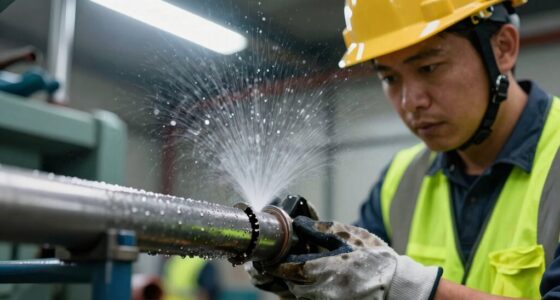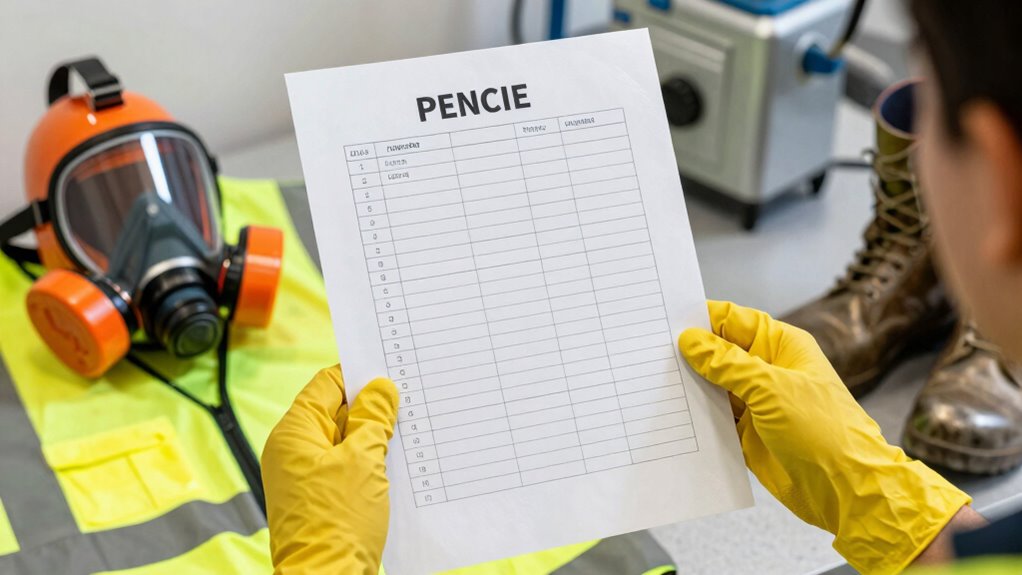

Before starting spraying tasks, perform a quick PPE pre-job scan to guarantee your gear fits well, is intact, and ready for use. Check that your protective clothing fully covers your skin without tears, and verify your respirator fits snugly with clean, undamaged filters appropriate for the chemicals. Inspect gloves and masks for damage, and keep spare gear nearby. Doing this ensures your safety and minimizes exposure risks. Keep going to discover more tips for a thorough PPE check.
Key Takeaways
- Verify full coverage and integrity of protective clothing, checking for tears or damage before use.
- Ensure respirators fit snugly, filters are appropriate, and no cracks or expiration issues exist.
- Conduct a quick inspection of PPE for damage, adjusting for proper fit and comfort.
- Confirm all gear is correctly positioned, secured, and spare PPE is available nearby.
- Follow safety standards by double-checking PPE condition and readiness before starting spraying tasks.
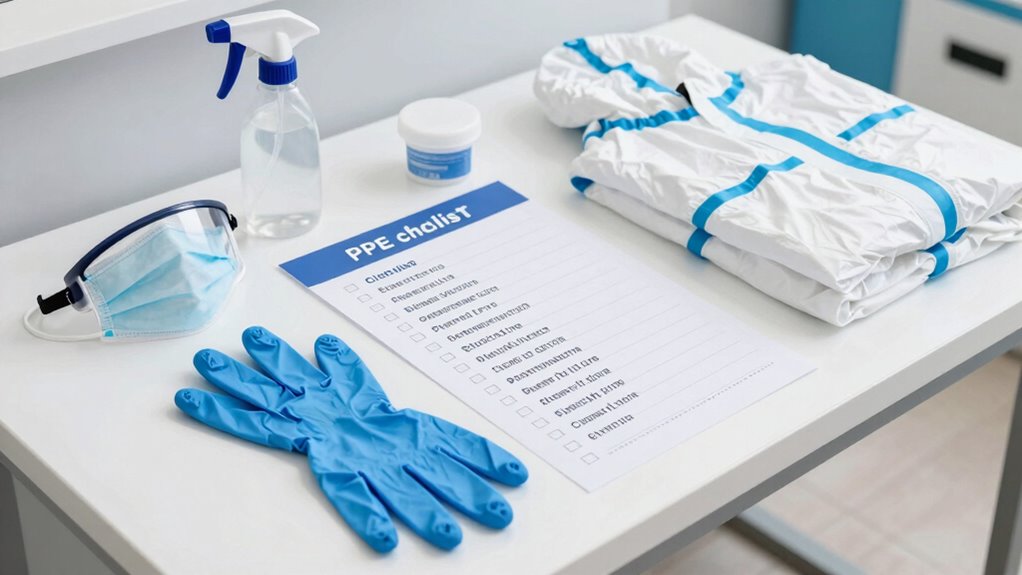
Are you prepared to spray safely? Before you start, it’s vital to ensure you have all the proper personal protective equipment (PPE) in place. Your PPE checklist isn’t just a formality—it’s your first line of defense against potential hazards. The moment you step into the spraying zone, your protective clothing should be fully secured. This isn’t the time to cut corners or assume that regular work attire will suffice. Instead, put on a well-fitting suit or coveralls designed to shield your skin from chemicals, dust, or debris. Make certain that your protective clothing covers as much skin as possible, with no loose or torn areas that could expose you to hazardous materials. Remember, the goal is to create a barrier between you and the substances you’re handling.
Equally important is your respiratory gear. Proper respiratory protection is essential because inhaling hazardous fumes, vapors, or dust can have immediate and long-term health effects. Before you begin spraying, double-check that your respirator fits snugly over your nose and mouth, creating a good seal. If you’re using a mask with filters, verify that the filters are appropriate for the chemicals you’re working with and that they are in good condition—no cracks, tears, or expired filters. If the task involves particularly toxic or airborne particles, consider using an air-purifying respirator or even supplied-air systems for added safety. Never compromise on respiratory gear; it’s your primary safeguard against inhalation hazards.
Ensure your respirator fits snugly and filters are in good condition to protect against hazardous fumes and dust.
Prior to starting, inspect your protective clothing and respiratory gear for any signs of damage. Torn gloves, cracked face masks, or worn-out filters are red flags that demand replacement before you proceed. Wearing damaged gear can give you a false sense of security and expose you to harmful substances. Fit and comfort also matter—if your PPE is uncomfortable or doesn’t fit properly, you might be tempted to adjust or remove it, which increases risk. Take a moment to ensure everything is correctly positioned and secure. This simple step saves you from potential exposure and ensures you can focus on your task without distraction.
In addition, always keep spare protective clothing and respiratory filters nearby, so you’re ready to replace them if needed. A quick pre-job scan of your PPE setup guarantees you’re fully protected and minimizes the chance of accidents. It’s also beneficial to be aware of modern safety standards to ensure your gear meets current requirements. Remember, safety doesn’t happen by chance—it’s the result of careful preparation and attention to detail. Taking these few moments before you start spraying can make all the difference in keeping you safe and healthy throughout your workday.
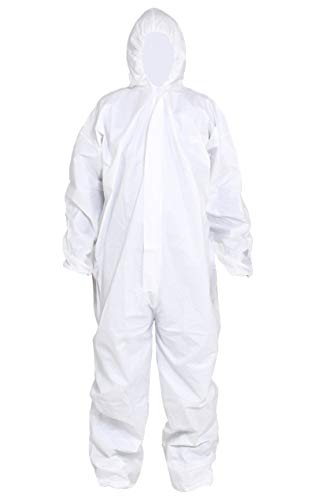
SYINE Pack of 5 Large Disposable Protective Coverall with Hood, Elastic Cuff for Spray Painting Cleaning Work,Breathable & Durable
- Durable and Lightweight: 65g/m² high-density, tear-resistant material
- Breathable Material: No-woven laminated fabric for airflow
- Full Protection: Barrier against particles and fluids
As an affiliate, we earn on qualifying purchases.
As an affiliate, we earn on qualifying purchases.
Frequently Asked Questions
How Often Should PPE Be Inspected Before Spraying?
You should inspect your PPE before every spraying job to guarantee it’s in proper condition. Regular ppe maintenance and daily inspection frequency help identify any damage or wear that could compromise safety. Check for tears, cracks, or deterioration, and replace damaged gear immediately. Consistently inspecting your PPE before each use keeps you protected and ensures compliance with safety standards, reducing the risk of accidents during spraying operations.
Are There Specific PPE Requirements for Different Spraying Substances?
You need to tailor PPE to the spraying substance you’re handling, as different chemicals demand specific gear for protection. Always check for chemical resistance to verify your PPE stands up to the substance, and store it properly to maintain its integrity. Think of it as not putting all your eggs in one basket; proper storage and the right PPE reduce risks and keep you safe on the job.
What Should I Do if PPE Gets Damaged During Spraying?
If your PPE gets damaged during spraying, take immediate action by stopping work to assess the damage. Remove the compromised PPE carefully and replace it with undamaged gear before continuing. Damaged PPE can expose you to hazards, so don’t overlook it. Always follow your company’s safety protocols, report the damage to supervisors, and ensure you’re fully protected before resuming spraying to maintain safety standards.
Can PPE Be Reused or Does It Need Frequent Replacement?
Like a trusty steed, PPE durability varies, but generally, you can reuse it if it remains undamaged. Follow the reuse guidelines closely—inspect for tears, cracks, or wear, and guarantee proper cleaning. If PPE shows signs of damage or degradation, it’s time for a replacement. Reusing damaged gear jeopardizes your safety, so when in doubt, replace rather than risk it. Always prioritize your safety first.
How Do I Properly Dispose of Contaminated PPE?
You should properly dispose of contaminated PPE by carefully removing it to avoid spreading hazards, then placing it in designated biohazard or disposal containers. Always follow your company’s safety protocols and local regulations for proper disposal. Never reuse contaminated PPE unless specifically designed for decontamination. After disposal, wash your hands thoroughly to prevent contamination. Proper disposal of contaminated PPE is essential to protect yourself and others from potential hazards.
Conclusion
Think of your PPE checklist as your trusted compass on a spraying journey. Just as a sailor checks their gear before setting sail, you gear up to navigate safely through every spray. Stay vigilant, stay protected, and let your checklist be the steady rudder guiding you past hazards. With each item in place, you’re not just preparing—you’re steering confidently toward a safe, successful job, charting a course where safety always leads the way.