Piston pumps use a reciprocating piston to move fluids, offering high pressure and flow rates but needing more maintenance due to complex parts. Diaphragm pumps employ a flexible diaphragm, making them easier to maintain and ideal for corrosive or hazardous fluids. Your choice depends on what you need—power and durability or simplicity and chemical compatibility. If you want to understand the differences better, keep exploring the key factors that influence pump selection.

Get business pricing on tools and workshop supplies
- Business-only prices and quantity discounts
- Tax-exempt purchasing
- Multiple users, one account, clear invoices
Key Takeaways
- Piston pumps use a reciprocating piston for high pressure and flow, while diaphragm pumps use a flexible membrane for sealed fluid displacement.
- Piston pumps require more maintenance due to complex parts, whereas diaphragm pumps are simpler and easier to maintain.
- Piston pumps handle thick, abrasive, or high-temperature fluids, while diaphragm pumps are ideal for corrosive or hazardous materials.
- Piston pumps are suited for applications needing high pressure and flow rates; diaphragm pumps excel with delicate or toxic fluids.
- Proper pump selection depends on fluid type, maintenance capacity, and system requirements for optimal performance.

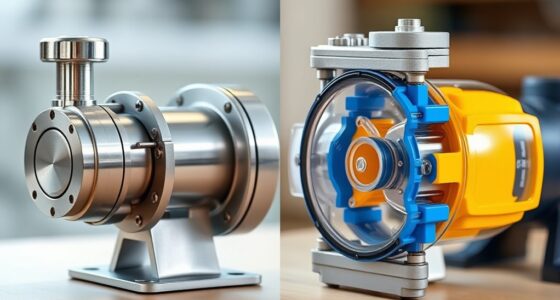
When choosing between piston and diaphragm pumps, understanding their fundamental differences is essential for selecting the right equipment for your application. Both types are positive displacement pumps, but they operate differently and are suited for different tasks. Piston pumps use a reciprocating piston to move fluid through a cylinder, providing high pressure and flow rates. Diaphragm pumps, on the other hand, employ a flexible diaphragm that moves back and forth, creating a sealed chamber that displaces fluid. Your decision depends on factors like pump maintenance needs and material compatibility, which are vital for long-term performance.
Choosing between piston and diaphragm pumps depends on maintenance needs and material compatibility for optimal long-term performance.
Piston pumps require more maintenance because of their complex moving parts. The piston, cylinder, and valves are subject to wear and tear, especially when handling abrasive or viscous fluids. Regular inspection and lubrication are necessary to prevent leaks or breakdowns. They are often preferred in applications where high pressure and flow are needed, but you should be prepared for the upkeep involved. Diaphragm pumps tend to be easier to maintain since they have fewer moving parts and a sealed design that minimizes leaks. Their diaphragms can be replaced without disassembling the entire pump, making routine maintenance simpler and less costly. This ease of maintenance makes diaphragm pumps a good choice for long-term use in corrosive or sensitive environments. Understanding pump material compatibility is key to ensuring that the pump will withstand your specific operational conditions.
Material compatibility is another key factor. Piston pumps are typically suited for handling a wide range of fluids, including thick, abrasive, or high-temperature liquids, provided the materials of the piston and cylinder are compatible. However, they can be limited by the wear caused by aggressive chemicals or solids in the fluid. Diaphragm pumps excel when dealing with corrosive or hazardous materials because their flexible diaphragms and sealed chambers prevent leaks and contamination. The diaphragm material can be chosen based on the chemical compatibility with your fluid, making these pumps versatile for various industries, such as chemical processing or pharmaceutical applications. Additionally, understanding pump design can influence the longevity and efficiency of your chosen pump. Moreover, selecting the right pump involves considering application-specific requirements, which can greatly impact performance and maintenance needs. Properly assessing fluid properties can help prevent premature wear and operational issues, further extending the lifespan of your pump. Considering pumping system integration can also ensure that the pump functions seamlessly within your overall system, optimizing performance and reducing potential issues.
piston pump for high pressure applications
As an affiliate, we earn on qualifying purchases.
As an affiliate, we earn on qualifying purchases.
Frequently Asked Questions
What Are the Maintenance Costs for Piston and Diaphragm Pumps?
You’ll find that piston pumps often have higher maintenance costs due to their lubrication requirements, which need regular checking and oil changes. Diaphragm pumps generally cost less to maintain, with fewer lubrication needs. When considering noise level, piston pumps tend to be louder, potentially increasing maintenance or replacement costs over time. Overall, diaphragm pumps usually offer lower ongoing costs, especially if noise and lubrication are major concerns.
Which Pump Type Is More Environmentally Friendly?
You’ll find diaphragm pumps more environmentally friendly because they have a lower environmental impact and promote sustainability. They typically use less energy and produce fewer emissions, making them a better choice for eco-conscious applications. In a sustainability comparison, piston pumps often consume more power and generate more waste. So, if reducing environmental impact is your goal, diaphragm pumps are the more environmentally friendly option to evaluate.
How Do Temperature Variations Affect Each Pump’s Performance?
Did you know that temperature effects can cause pump efficiency to drop by up to 30%? When temperatures fluctuate, piston pumps often handle high temperatures better due to their robust design, maintaining performance longer. Diaphragm pumps, however, can be more sensitive to extreme temperatures, which may cause materials to expand or contract, reducing efficiency. So, understanding how temperature impacts each pump helps you choose the right one for your environment.
Are Piston or Diaphragm Pumps Suitable for Corrosive Fluids?
You’ll find diaphragm pumps generally better suited for corrosive fluids because of their superior corrosion resistance and material compatibility. They often use flexible diaphragms made from materials like PTFE or rubber, which resist chemical attack. Piston pumps, on the other hand, can handle some corrosive fluids but require specialized, corrosion-resistant materials for their components. Always check the pump’s material compatibility to guarantee it suits your specific corrosive fluid needs.
What Are the Typical Applications for Each Pump Type?
You’ll find piston pumps often used in high-pressure applications like hydraulic systems or fuel injection, where pump efficiency is vital. They tend to be noisier but excel in handling viscous or corrosive fluids. Diaphragm pumps suit chemical processing and water treatment, offering quieter operation and excellent handling of corrosive or abrasive fluids. Their versatility and gentle pumping action make them ideal for sensitive or hazardous environments.
Conclusion
In the battle between piston and diaphragm pumps, think of them as two different tools in your toolbox—each perfect for specific jobs. Piston pumps are like powerful bulldozers, pushing large volumes with force, while diaphragm pumps are more like flexible stretchers, handling delicate or corrosive fluids with care. Choosing the right one is about matching their strengths to your needs, ensuring your system runs smoothly like a well-orchestrated symphony.
Fall Picks
fall essentials
As an affiliate, we earn on qualifying purchases.