To apply epoxy floor coatings with an airless sprayer, start by preparing the surface thoroughly, cleaning all dust and debris for good adhesion. Adjust your pressure and viscosity according to the epoxy manufacturer’s recommendations, and maintain a steady distance of 12-18 inches from the surface. Keep your strokes smooth with slight overlaps and watch your spray pattern to avoid drips or uneven coverage. Proper equipment setup and technique are key; if you want to master this process, there’s more to explore.
Key Takeaways
- Maintain a 12-18 inch distance and keep strokes steady with slight overlaps for even epoxy coverage.
- Check hoses and connections, and clean the spray tip thoroughly before starting to prevent clogs.
- Adjust spray pressure according to epoxy viscosity, avoiding overspray or uneven application.
- Monitor the spray pattern continuously, modifying technique or equipment settings to correct coverage issues.
- Properly prepare and clean the surface, ensuring it is free of dust and debris to improve adhesion and finish quality.

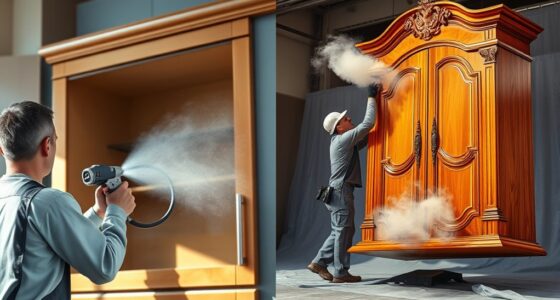
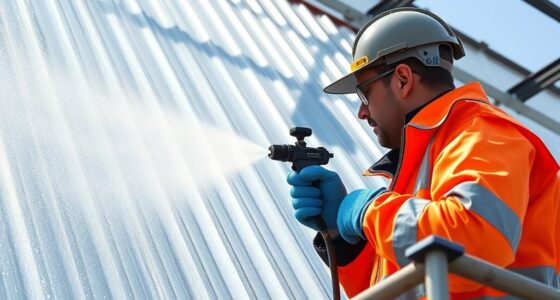
Applying epoxy floor coatings with an airless sprayer is an efficient way to achieve a smooth, professional finish on large surfaces. To get the best results, mastering spray techniques is essential. Start by holding the sprayer at a consistent distance—usually around 12 to 18 inches from the surface—to ensure even coverage. Keep your strokes steady and overlapping slightly with each pass. This approach minimizes streaks and uneven patches. Maintain a consistent speed; moving too fast can cause thin spots, while moving too slow might lead to drips or runs. Practice on a scrap piece if you’re new to the sprayer to develop a comfortable rhythm and understand how the coating flows from the nozzle. Proper equipment maintenance plays a crucial role in achieving a flawless finish. Before you begin, check all connections and hoses for leaks or blockages. Clean the spray tip thoroughly to prevent clogs, which can cause uneven spray patterns or uneven coating application. During the job, periodically flush the system with water or a compatible cleaning solution to clear out residual epoxy, especially if you’re switching colors or coatings. After finishing, dismantle the spray gun and clean all parts thoroughly. Use the manufacturer’s recommended cleaning agents to prevent damage and ensure the sprayer remains in prime condition for future projects. Regular maintenance not only prolongs your equipment’s lifespan but also guarantees consistent spray quality, reducing the likelihood of defects or rework. Additionally, understanding the importance of surface preparation can significantly impact the adhesion and durability of the epoxy coating. Another key aspect of spray techniques involves adjusting the pressure settings appropriately for the epoxy you’re applying. Too high pressure can cause overspray and excessive atomization, wasting material and creating a mess. Too low, and you risk uneven coverage or a blotchy surface. Fine-tuning your pressure settings based on the manufacturer’s recommendations and the viscosity of your epoxy will give you better control and a more uniform finish. Keep an eye on the spray pattern during application; if you notice uneven coverage or drips, adjust your technique or equipment settings accordingly.
Frequently Asked Questions
Can I Apply Epoxy Over Existing Floor Coatings?
Yes, you can apply epoxy over existing floor coatings if you guarantee good epoxy adhesion. Start with thorough surface preparation by cleaning, degreasing, and lightly sanding the old coating to create a rough surface. This helps the new epoxy bond properly. Make sure the existing coating is intact, well-adhered, and free of cracks or peeling. Proper surface prep is key to a successful, durable epoxy application over existing coatings.
What Safety Gear Is Essential During Spraying?
You should always wear personal protective equipment when spraying epoxy to stay safe. Think of it as your armor against fumes and splatters—gloves, goggles, respirators, and long sleeves are essential. Follow sprayer safety tips by ensuring proper ventilation and checking equipment before use. This gear keeps you protected from hazardous chemicals and helps you work confidently, preventing accidents and ensuring a smooth application process.
How Long Does the Epoxy Take to Cure Fully?
Epoxy typically takes about 72 hours to fully cure, but the drying time can vary depending on temperature and humidity. During epoxy curing, you should avoid foot traffic to prevent damaging the coating. Keep in mind that while it might feel dry sooner, the full curing process guarantees maximum durability. It’s best to follow manufacturer instructions for ideal results, allowing sufficient time for complete epoxy curing before using the floor.
Is It Possible to Customize Epoxy Color and Finish?
Did you know that over 80% of epoxy projects include custom colors? Yes, you can definitely customize epoxy color and finish to suit your style. You have a wide range of options, from matte to gloss, and a palette of vibrant or subtle hues. This flexibility allows you to create a truly personalized space, whether you prefer a sleek, modern look or a warm, textured finish.
How Do I Clean and Maintain the Sprayer Afterward?
You should clean your sprayer immediately after use to guarantee proper sprayer maintenance. Start by turning off the equipment and relieving pressure. Then, flush the system with the appropriate cleaning solution, such as mineral spirits or water, depending on your coating. Follow the cleaning procedures outlined in your sprayer’s manual, paying special attention to the nozzle and filters. Regular cleaning prevents clogs, extends equipment life, and ensures smooth, even coatings every time.
Conclusion
Now that you’ve mastered applying epoxy coatings with an airless sprayer, you’re like an artist painting a durable masterpiece. Your careful preparation and precise spraying are the brushstrokes that transform a plain floor into a resilient, glossy surface. Remember, patience and attention to detail are your best tools—think of them as the foundation of a sturdy building. With your newfound skills, you’re ready to turn any space into a long-lasting, beautiful showcase.