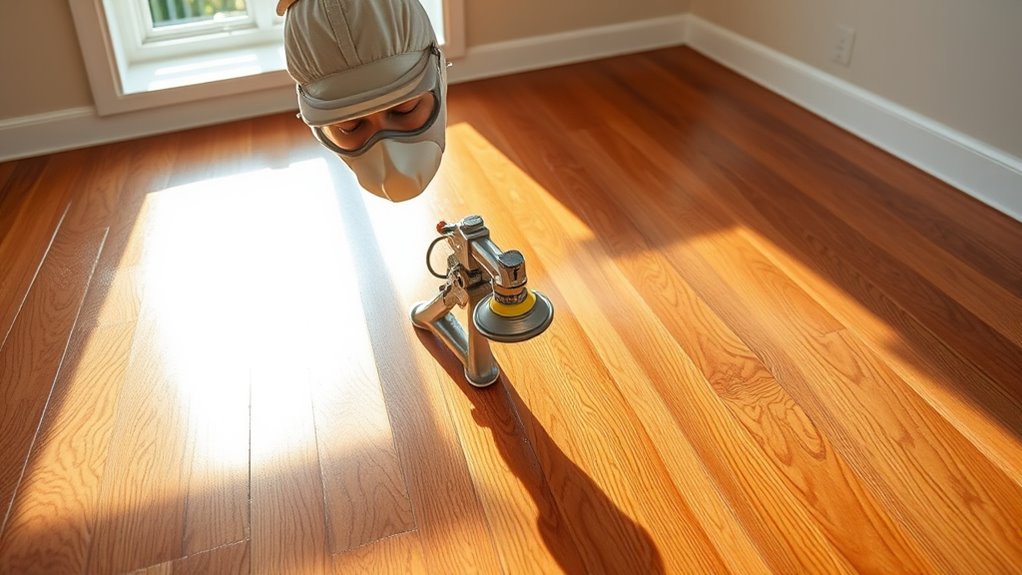
To apply stain to hardwood floors with an airless sprayer, start by preparing your workspace with plastic sheeting and masking off areas to protect surroundings. Wear safety gear, including goggles and a respirator, and make certain good ventilation. Practice your spray technique on scrap wood first. Use smooth, overlapping passes for even coverage, keeping the spray distance consistent. Afterward, clean your sprayer thoroughly. If you’re curious about additional tips, you’ll find plenty more helpful insights below.
Key Takeaways
- Prepare the workspace by masking edges, covering furniture, and ensuring good ventilation before spraying.
- Adjust spray pressure and maintain consistent distance for smooth, even stain application.
- Wear safety gear, including goggles, respirator, and gloves, to protect from fumes and overspray.
- Practice on scrap or hidden areas to perfect technique and prevent uneven coverage.
- Clean the sprayer thoroughly after use following manufacturer instructions to prevent clogs and ensure longevity.
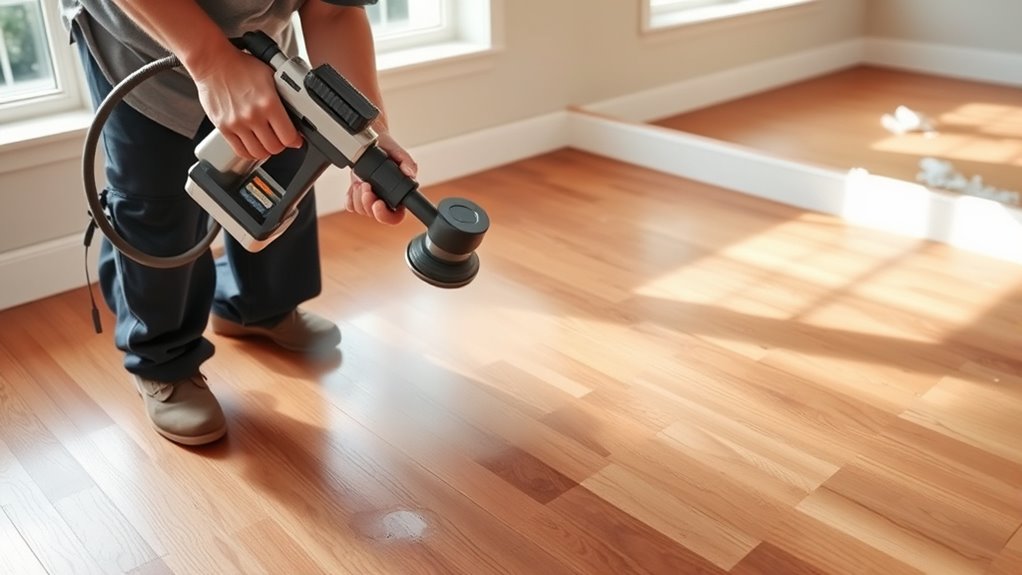
Staining hardwood floors is a straightforward process that can dramatically enhance the look of your space, but it requires careful preparation and attention to detail. Using an airless sprayer offers a fast and efficient way to apply stain evenly across large surfaces, but it’s essential to understand the techniques comparison and safety precautions involved. Before you start, ensure your workspace is well-ventilated and free of dust, as airborne particles can affect the finish quality. Properly masking off baseboards, outlets, and adjoining surfaces prevents unwanted stain coverage and keeps your project neat.
Proper prep and safety are key to achieving professional hardwood floor staining results.
When you choose to use an airless sprayer, you gain speed and consistency compared to traditional brushes or rollers. The spray gun atomizes the stain, allowing you to cover large areas swiftly and achieve a smooth, even coat. However, this technique comparison reveals that spray application can sometimes lead to overspray and uneven absorption if not done carefully. To minimize this, practice on a scrap piece of wood or hidden corner first, adjusting your spray pressure and distance to get a fine, even mist. Keep the sprayer moving steadily to avoid drips and blotches, and overlap each pass slightly to ensure uniform coverage.
Safety precautions are critical when operating an airless sprayer. The high pressure involved can cause the stain to spray unpredictably, so always wear protective gear such as goggles, a respirator mask, and gloves. The fumes from stain can be harmful if inhaled, especially in enclosed spaces, so ensure your workspace is well-ventilated or use a respirator designed for chemical fumes. Cover nearby furniture and flooring with plastic sheeting to catch overspray, and work in sections to maintain control and consistency. If you’re working in a tight or poorly ventilated area, consider using an air purifier to reduce airborne fumes.
Additionally, clean your sprayer thoroughly after use to prevent clogging and ensure it functions properly for future projects. Follow the manufacturer’s instructions regarding cleaning agents and drying times. Remember, safety isn’t just about protecting yourself during application; it also involves handling the stain properly to avoid skin contact and accidental ingestion. Keep all materials out of reach of children and pets. Being aware of the chemical composition of stains helps you select safer products and use them properly.
Applying stain with an airless sprayer can deliver professional-looking results quickly, but it demands respect for the equipment and adherence to safety precautions. Comparing techniques helps you choose the best method for your project, while taking safety seriously ensures a smooth, successful staining experience. With careful preparation and mindful application, you’ll achieve a stunning finish that elevates your hardwood floors to new levels of beauty.
Frequently Asked Questions
Can I Stain Hardwood Floors Outdoors With an Airless Sprayer?
Yes, you can stain hardwood floors outdoors with an airless sprayer, but you need to take into account outdoor staining and environmental factors. Make certain weather conditions are dry and mild, avoiding rain, high humidity, or strong sunlight, which can affect the stain’s absorption and drying. Protect surrounding areas from overspray, and apply the stain evenly. Proper preparation and timing help achieve a beautiful, durable finish that withstands outdoor elements.
What Safety Gear Is Recommended When Using an Airless Sprayer?
You should wear protective clothing and a respiratory mask when using an airless sprayer. Protective clothing, like long sleeves and gloves, keeps you safe from stain splatters and fumes. A respiratory mask helps prevent inhaling harmful vapors and fine particles. Make sure your gear fits properly and is rated for chemical fumes. Always work in a well-ventilated area to reduce health risks and guarantee safety during the staining process.
How Do I Prevent Over-Application of Stain With a Sprayer?
Applying stain with a sprayer is like painting with a gentle breeze—control is key. To prevent over-application, use proper nozzle selection for even spray, and adjust pressure settings accordingly. Keep a consistent distance from the floor, and apply thin, even coats following proper stain application techniques. Practice on scrap wood first, and always stay mindful of your spray pattern to avoid drips and uneven coverage.
Is It Necessary to Sand the Floor Before Staining?
Yes, you should sand the floor before staining to guarantee proper sanding preparation. Sanding opens the wood’s pores, helping the stain absorb evenly and beautifully. Without this step, the stain may look patchy or uneven, affecting your finish. Make sure to thoroughly sand the surface, removing old finish, dirt, and imperfections. This preparation creates a smooth, clean surface that enhances stain absorption and results in a professional-looking hardwood floor.
How Long Should I Wait Between Coats of Stain?
Think of staining as painting a masterpiece—you need patience. You should wait about 4 to 6 hours for the first coat to dry before applying a second. Check the dry time on your stain’s label, as it guides your recoating interval. Rushing too soon can cause uneven color or smudges. Give each coat ample time to dry thoroughly, ensuring a smooth, professional finish for your hardwood floors.
Conclusion
So, after all that effort, you might think staining hardwood floors with an airless sprayer is a breeze. Sure, it’s quick and easy—until you realize you’ve got a mess on your hands or uneven color. But hey, isn’t that part of the charm? It’s almost like the unexpected surprises make the project memorable. Just remember, a little patience and prep go a long way—because perfect results are definitely worth the minor chaos.