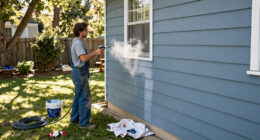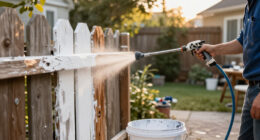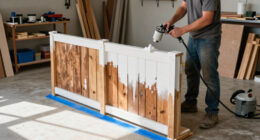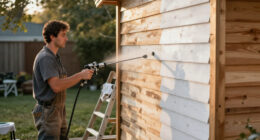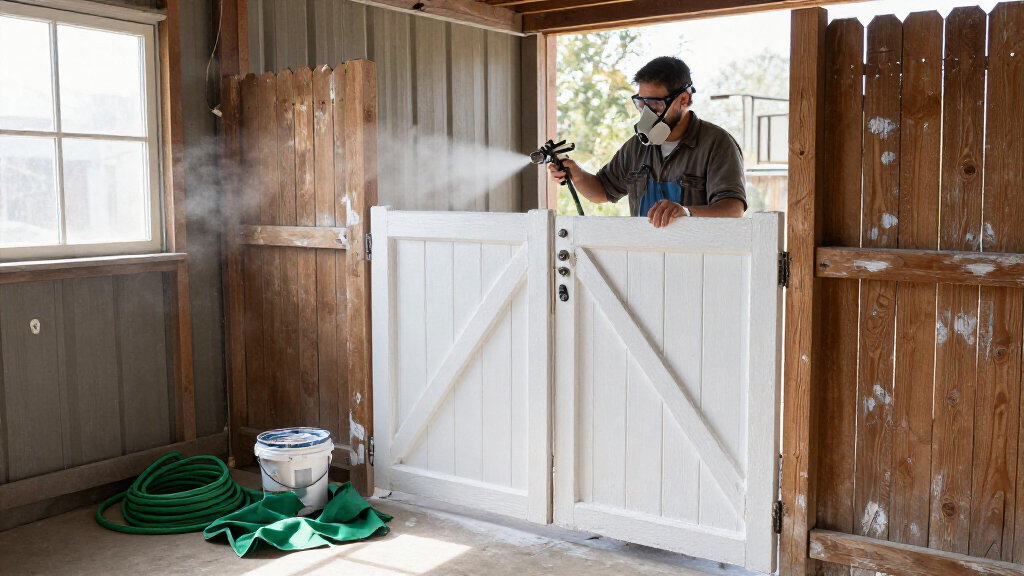

DIY buyers comparing airless paint sprayers are usually choosing between a compact handheld unit and a larger cart-style model. Both can apply paint quickly across broad surfaces, but their practical strengths differ: a handheld keeps setup, storage, and movement simple, while a cart model carries more paint and is better suited to long sessions around a house. The handheld is usually the sensible pick for occasional furniture, doors, fences, or a single room. Choose a cart-style sprayer when a project covers many walls, ceilings, or exterior surfaces and the time saved by fewer refills matters. The deciding question is less about which format is universally better and more about how much area you will spray at once.

Get business pricing on tools and workshop supplies
- Business-only prices and quantity discounts
- Tax-exempt purchasing
- Multiple users, one account, clear invoices

Graco Magnum X5 Airless Paint Sprayer
- ✔ Recommended project size: Up to 10 gallons
- ✔ Maximum pressure: 3000 PSI
- ✔ Maximum hose length: 75 feet

Graco Magnum Project Painter Plus Airless Paint Sprayer
- ✔ Model: 257025
- ✔ Recommended project size: Up to 5 gallons
- ✔ Pressure control: Fully adjustable

InoKraft NEO Airless Paint Sprayer Kit, 3000 PSI, 0.26 GPM
- ✔ Maximum pressure: 3000 PSI
- ✔ Maximum paint output: 0.26 GPM
- ✔ Weight: 10.1 pounds
At a Glance
| Criteria | Handheld airless paint sprayer | Cart-style airless paint sprayer | Winner |
|---|---|---|---|
| Best project size | Small to medium jobs | Medium to large jobs | Depends |
| Portability | Very portable; unit and paint move together | Wheels help on open ground; hose and gun must be moved | A |
| Paint capacity and refills | Smaller onboard supply; more interruptions | Larger supply or separate bucket; fewer refills | B |
| Sustained work | Best for shorter sessions | Better suited to extended spraying | B |
| Control and finish | Good with practice; lighter unit can be easier overhead | Steady performance; hose and gun add handling weight | Depends |
| Setup and cleanup | Quick to bring out, but paint passages still need thorough cleaning | More components and hose to clean | A |
| Storage and value | Lower entry cost and compact storage | Higher upfront cost and greater storage needs | A |
Graco Magnum X5 Airless Paint Sprayer
The X5 is the most capable fit in this group when our project stretches beyond a single room or a small furniture refresh. Its recommendation for projects up to 10 gallons gives it more headroom than the five-gallon Project Painter Plus and InoKraft NEO. That difference matters for siding, fences, decks, or several connected rooms, where stopping to change equipment or rethink the job size can interrupt a long painting session.Its adjustable pressure and flexible suction tube let us draw paint or stain directly from one- or five-gallon buckets, while support for up to 75 feet of hose can help reach elevated or awkward areas. The included hose is only 25 feet, however, so buyers who need the longer reach must source additional compatible hose. The X5 weighs 15 pounds, making it heavier than the 10.1-pound NEO; portability is a real tradeoff for its larger stated project capacity. Compared with the Project Painter Plus, the X5 is a better choice for more extensive work, while the Plus may be sufficient when our projects stay within five gallons. We should plan for careful masking and cleanup with any airless sprayer, and confirm that our chosen coating is suitable for the tip and application.
Pros:
- Recommended for projects up to 10 gallons.
- Supports hose lengths up to 75 feet for added reach.
- Adjustable pressure and flexible suction from one- or five-gallon buckets.
- Includes a metal spray gun, switch tip, storage fluid, and PowerFlush adapter.
Cons:
- The included hose is 25 feet, so extended reach requires a separately supplied hose.
- At 15 pounds, it is heavier than the InoKraft NEO.
- Its larger project capacity may be unnecessary for occasional small jobs.
Best for: DIYers tackling projects up to 10 gallons, such as fences, decks, siding, or multiple rooms, who value longer supported hose reach.
Not ideal for: Buyers with only small touch-up jobs, limited storage, or a strong preference for the lightest unit; the X5 is 15 pounds and includes a 25-foot hose.
Bottom line: We rank the X5 first for DIYers who need more project capacity and potential reach, provided they are comfortable with its weight and plan around the included 25-foot hose.
“We rank the X5 first for DIYers who need more project capacity and potential reach, provided they are comfortable with its weight and plan around the included 25-foot hose.”
Graco Magnum Project Painter Plus Airless Paint Sprayer
When our DIY list centers on household painting rather than a broad exterior job, the Project Painter Plus offers a useful balance of control and straightforward bucket-fed setup. Its fully adjustable pressure gives us a way to tailor the spray for different tasks, and its flexible suction tube draws directly from a one- or five-gallon bucket. The product is described as spraying paint or stain unthinned, a practical advantage when the coating permits it and we want to avoid adding a thinning step.Against the X5, the Plus is the more contained pick: its stated project guidance is up to five gallons, versus the X5’s 10-gallon recommendation and longer supported hose reach. That makes the X5 easier to justify for extensive siding or multiple large surfaces, but potentially more sprayer than we need for a smaller household project. The Plus also supports up to 50 feet of hose, yet comes with a 25-foot hose, so extra reach is not included. We should choose it for its adjustable control and intended scale, not assume it will eliminate prep or cleanup. Its supplied SG2 metal gun and TrueAirless tip help make the kit usable for painting, but buyers should still check the coating and surface requirements before starting.
Pros:
- Fully adjustable pressure suits a range of household painting tasks.
- Designed to spray paint or stain unthinned when the coating allows.
- Flexible suction tube draws from one- or five-gallon buckets.
- Supports up to 50 feet of hose for added reach.
Cons:
- Designed for projects up to five gallons.
- The included hose is 25 feet; longer hose must be supplied separately.
- The X5 offers a larger stated project capacity and greater supported hose reach.
Best for: Home DIYers painting rooms, ceilings, sheds, decks, or fences in projects that stay within the stated five-gallon scale.
Not ideal for: People planning jobs beyond five gallons or needing a long hose straight from the box; the included hose is 25 feet and the stated maximum is 50 feet.
Bottom line: We recommend the Project Painter Plus for adjustable, bucket-fed household work that stays within five gallons, while larger jobs point us toward the X5.
“We recommend the Project Painter Plus for adjustable, bucket-fed household work that stays within five gallons, while larger jobs point us toward the X5.”
InoKraft NEO Airless Paint Sprayer Kit, 3000 PSI, 0.26 GPM
The NEO stands apart through a combination of 10.1-pound weight and a broad starter bundle. It includes a 25-foot hose, a 12-inch tip extension, masking film and tape, a touch-up brush, and cleaning tools. For DIYers preparing to paint furniture, cabinets, or a room, those extras can reduce the need to gather as many accessories separately. The built-in storage for the gun, hose, tip, and wrench also gives the kit a more organized feel when it is put away between projects.Those conveniences do not make it the most capable choice for every job. Like the Project Painter Plus, it is intended for projects of about five gallons, while the X5 is recommended for up to 10 gallons and supports a longer hose. NEO’s stated compatibility covers latex paint, acrylic, stain, and primer, but it depends on the coating; some materials may need thinning. We should therefore verify the coating instructions rather than assume every product can be sprayed as supplied. Its Flush-Ease valve and included cleaning tools address cleanup, but cleanup still takes time after spraying. The NEO makes the most sense when lighter handling and a bundled setup matter more than maximum project capacity. Buyers focused on the broadest stated reach or larger exterior work should compare it with the X5.
Pros:
- Weighs 10.1 pounds, less than the 15-pound Graco X5.
- Includes masking supplies, touch-up brush, and cleaning tools.
- A 12-inch tip extension adds reach for some applications.
- Flush-Ease valve and onboard storage support cleanup and organization.
Cons:
- Project guidance is about five gallons, compared with the X5’s 10-gallon recommendation.
- Coating compatibility varies, and some materials may require thinning.
- The included 25-foot hose is shorter than the X5’s maximum supported length.
Best for: DIYers who prioritize a lighter unit and a ready-to-go accessory bundle for furniture, cabinets, walls, ceilings, or modest outdoor projects.
Not ideal for: Buyers planning projects beyond about five gallons, requiring the longest hose reach, or expecting every coating to spray without thinning.
Bottom line: We choose the NEO when lighter handling and included prep accessories matter most, with the condition that we verify coating compatibility before buying.
“We choose the NEO when lighter handling and included prep accessories matter most, with the condition that we verify coating compatibility before buying.”
As an Amazon Associate we earn from qualifying purchases.
Key Differences
The most meaningful difference is how each format handles time and paint volume. Handheld models keep the paint container attached to the sprayer, which makes them self-contained and easy to carry from one small work area to another. That convenience comes with a capacity limit: larger surfaces mean stopping to refill more often. A cart-style sprayer separates the pump from the gun and typically draws from a larger container, so it can keep going longer across a continuous project.
That advantage has a cost in handling and cleanup. The cart and hose take up space, and the user must manage the spray gun and hose around ladders, corners, and furniture. Both formats require masking and careful cleaning; airless overspray can travel beyond the immediate work surface. For an occasional DIYer with limited storage, a cart may be more machine than the job warrants. For a whole-house refresh or substantial exterior work, repeated refills and slower progress can make the handheld’s lower price a false economy.
Detailed Comparison
Best project size (major difference)
A handheld is a better match for a few doors, cabinets, a small deck, or one modest room. A cart-style unit makes more sense when the work spans multiple rooms, long fence runs, or broad exterior walls. This is a major, project-dependent difference: the larger the uninterrupted surface area, the more useful the cart’s capacity and sustained output become.
Portability (Handheld airless paint sprayer wins — moderate)
The handheld wins for moving between rooms, carrying up steps, and spraying isolated items because the pump, gun, and paint supply travel together. A cart rolls across open, level areas, but its hose must follow and can catch on obstacles. This is a moderate advantage for handhelds in cluttered or confined spaces; on a broad, clear worksite, the cart is easier to reposition than its size suggests.
Paint capacity and refills (Cart-style airless paint sprayer wins — major)
Cart-style sprayers generally draw from a larger container, so the user can cover more area before stopping. Handheld reservoirs are smaller by design, which keeps the unit compact but makes refilling part of a larger job. The gap is major on extensive work and minor on a chair or a few doors. Frequent pauses also mean more chances to spill paint or lose momentum.
Sustained work (Cart-style airless paint sprayer wins — moderate)
A cart-style sprayer is the stronger choice for long spraying sessions because its larger supply and pump setup suit continuous coverage. A handheld is convenient for brief bursts, but heat, fatigue, and refills can interrupt extended work; consult the manufacturer’s duty guidance for the particular model. The advantage is moderate for a weekend project and major when an entire exterior or several rooms must be sprayed.
Control and finish (minor difference)
Neither format guarantees a better finish: results depend on the tip, paint preparation, distance, motion, and practice. A handheld can be nimble on small objects and above shoulder height, though holding the paint-filled unit may tire the arm. A cart’s lighter gun can reduce the weight in hand, while its hose adds drag. This is a minor, user-dependent difference; practice on scrap material matters more than format.
Setup and cleanup (Handheld airless paint sprayer wins — moderate)
Handheld units usually take less effort to bring out and put away, so they are more appealing for jobs where setup time would otherwise discourage spraying. Cart units have more parts and a longer hose to flush and clean. The difference is moderate, particularly for occasional use. Neither is a shortcut around masking, protecting nearby surfaces, and following the cleaning instructions for the paint being used.
Storage and value (Handheld airless paint sprayer wins — moderate)
Handheld models usually cost less to buy and fit more easily on a shelf. Cart models ask for more money and storage space, but can repay that cost for people who regularly tackle large projects by cutting refill stops and speeding coverage. The difference is moderate: pay more for capacity and sustained use you expect to need, not for occasional small jobs that a handheld can finish comfortably.
Handheld airless paint sprayer: Pros and Cons
Pros:
- Compact and easy to store
- Convenient for short jobs and moving between small work areas
- Lower upfront cost
- Lightweight overall setup compared with a cart and hose
Cons:
- Small paint supply means more refills on large surfaces
- Holding the unit can fatigue the arm
- Less suited to long, continuous spraying sessions
Cart-style airless paint sprayer: Pros and Cons
Pros:
- Larger paint supply supports longer runs
- Better suited to extensive walls, fences, and exterior projects
- Spray gun is separate from the pump and paint container
- Can save time when a job would require repeated handheld refills
Cons:
- Costs more and takes more storage space
- Hose and gun require more handling around obstacles
- More components and hose to clean after use
Who Should Choose What
Choose Handheld airless paint sprayer if:
- You mainly spray furniture, doors, cabinets, or a small room.
- You have limited storage and want a sprayer that is quick to carry and set up.
- You spray occasionally and value a lower purchase price over faster coverage on large jobs.
Choose Cart-style airless paint sprayer if:
- You plan to spray several rooms, long fence sections, or broad exterior surfaces.
- You want fewer refill stops during a long session.
- You expect to use the sprayer for multiple substantial projects and can justify its price and storage needs.
Skip both if: Skip both if the job is a single small touch-up, the surface needs brush-level precision, or masking and cleanup would outweigh the time saved; a brush or roller may be simpler.
Value for Money
A handheld is usually the better value for an occasional DIYer. Its lower purchase cost and compact storage suit projects that are small enough to finish without constant refilling. Paying more for a cart-style sprayer is worthwhile when you have substantial coverage ahead or expect to use it repeatedly: the larger supply and ability to spray for longer can save time across those jobs. For a one-off small room, that extra capacity is unlikely to repay its cost. Compare the included tips, supported coatings, replacement parts, and the manufacturer’s guidance for each model before buying; format alone does not establish value.
Final Verdict
For most DIYers doing occasional, modest projects, choose a handheld airless sprayer. It is easier to store, carry, and set up, and its lower cost fits work measured in a few items or one small area. Choose a cart-style model if you are spraying several rooms, a long fence, or exterior walls and want to spend less time refilling. The biggest deciding factor is project scale: buy the cart for sustained coverage you will actually use, and keep the handheld for compact jobs where convenience matters more than capacity.
Frequently Asked Questions
Are handheld airless sprayers powerful enough for house walls?
They can handle some wall projects, depending on the model and coating, but small reservoirs mean more refills across a room or whole house. Check the manufacturer’s supported materials and project guidance. For several rooms, a cart-style sprayer is generally more convenient.
Does a cart-style sprayer give a better finish?
Not automatically. Finish quality depends on using a suitable tip, preparing and thinning paint as directed, maintaining a consistent distance and motion, and practicing first. A cart’s separate gun may feel lighter in hand, but it does not remove the need for technique.
Is an airless sprayer worth buying for one room?
A handheld can be worthwhile if the room has broad, unobstructed surfaces and you are comfortable masking and cleaning the machine. For a small room with many edges or trim details, a roller and brush may be faster overall.
Which type is easier to clean?
Handheld units are usually simpler to take apart and store, while cart models have a longer hose and more components to flush. Both need prompt cleaning according to the paint type and manufacturer instructions.