When you spray too fast, you risk uneven coverage, missed spots, and thin, patchy areas that require touch-ups. Moving too slow can cause over-application, drips, and material waste, leading to runs and pooling. Finding a steady, moderate speed helps guarantee a uniform finish and reduces the need for corrections. Mastering the right pace depends on your equipment and technique, and understanding these factors will help you achieve professional results every time. Keep going to learn more.

Get business pricing on tools and workshop supplies
- Business-only prices and quantity discounts
- Tax-exempt purchasing
- Multiple users, one account, clear invoices
Key Takeaways
- Moving too fast causes uneven coats and missed spots, while moving too slow results in drips and material waste.
- Maintaining a steady, moderate pace ensures uniform coverage and prevents patchiness or pooling.
- Proper equipment calibration helps achieve consistent spray patterns regardless of speed.
- Practicing with marked distances or timers helps develop a steady spray rhythm.
- Environmental factors like humidity and temperature influence optimal spray speed for best results.
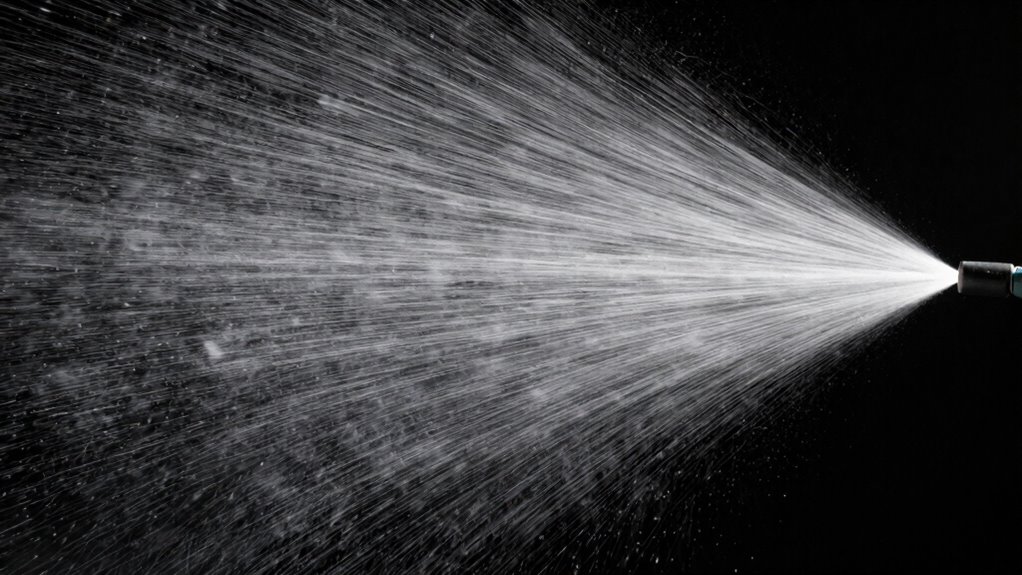
Have you ever wondered why your spraying jobs don’t turn out as smooth and even as you hoped? The key often lies in your spray speed. When you’re moving too fast, you risk sacrificing application consistency, which leads to uneven coats and missed spots. On the other hand, going too slow can cause over-application, drips, and waste of materials. Finding the right balance isn’t just about feel; it’s about understanding how your equipment and technique work together to deliver a uniform finish.
One of the most important aspects to factor in is equipment calibration. If your sprayer isn’t properly calibrated, your spray pattern might be inconsistent, regardless of your speed. Proper calibration ensures that your spray output matches the desired coverage, making it easier to maintain a steady pace. When your equipment is calibrated correctly, it becomes easier to control how much material is applied per pass and how evenly it’s distributed. Without calibration, even a perfect speed can produce uneven results, leading to frustration and wasted material. Additionally, understanding equipment calibration helps you troubleshoot issues that might arise during spraying, saving you time and resources.
Proper calibration ensures consistent spray patterns and even coverage, making your application smoother and more efficient.
Application consistency is critical for achieving professional results. When you spray at the right speed, you give your equipment enough time to lay down a uniform layer of finish or coating. Moving too quickly doesn’t give the sprayer enough time to deposit material evenly, and you end up with thin, patchy areas. Conversely, moving too slowly can cause the material to pool or run, creating an uneven surface that requires additional sanding or touch-up work. The goal is to maintain a steady, moderate pace that allows the spray pattern to overlap slightly with each pass, ensuring seamless coverage. Additionally, understanding equipment calibration helps you maintain a consistent spray pattern, which is essential for mastering your technique. It’s also helpful to be aware of environmental factors like humidity and temperature, which can influence spray quality and should be considered when adjusting your speed.
To improve your spraying technique, think about practicing with a consistent speed in a test area before tackling your main project. Use a stopwatch or mark your spray distance to help maintain a uniform rhythm. Remember, consistent speed combined with properly calibrated equipment results in a more uniform coat, reducing the need for additional coats or corrections later. It’s also helpful to periodically check your equipment during the job to confirm it’s functioning properly and that your spray pattern remains consistent. Regularly inspecting your equipment can also help identify any wear or clogging that might affect spray quality.
In the end, mastering the right spraying speed comes down to understanding your tools and paying close attention to how your technique influences the application. When your equipment is calibrated correctly and you focus on maintaining a steady, appropriate pace, you’ll achieve smoother, more even results with less effort and waste. The right speed isn’t just about speed itself; it’s about how that speed interacts with your equipment and technique to produce a flawless finish. Developing an awareness of spraying techniques through practice and observation will ultimately lead to more professional and satisfying results.
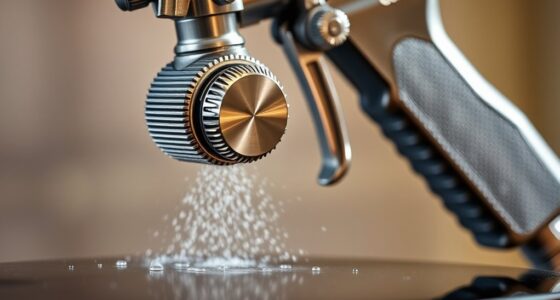
HVLP spray gun with adjustable speed
As an affiliate, we earn on qualifying purchases.
As an affiliate, we earn on qualifying purchases.
Frequently Asked Questions
How Does Spray Tip Size Affect Application Speed?
Your spray tip size directly impacts your application speed by influencing the spray pattern and nozzle clogging risk. A larger tip size produces a wider spray pattern, allowing you to cover more surface area quickly. However, it may clog more easily if debris is present. Conversely, a smaller tip size offers a finer spray, requiring slower application but reducing clogging chances. Choose the right size for your project to balance speed and efficiency.
Can Inconsistent Speed Cause Uneven Coating?
Inconsistent spraying speed can definitely cause uneven coating, affecting paint adhesion. When you vary your speed, you risk applying too much paint in some areas and too little in others, leading to poor surface coverage. Proper surface preparation and maintaining a steady, controlled speed guarantee uniform application. This consistency helps the paint adhere better, prevents drips or uneven textures, and results in a professional finish that lasts longer.
What Equipment Adjustments Are Needed for Different Spraying Speeds?
To adjust for different spraying speeds, you need to calibrate your equipment regularly, ensuring consistent flow and pressure. Use appropriate nozzle selection, choosing smaller nozzles for slower speeds to maintain even coverage, and larger ones for faster spraying to prevent overspray. Fine-tune your equipment settings based on these adjustments, and test on a small area first. Proper calibration and nozzle choice help you achieve a smooth, uniform coating regardless of your spraying speed.
How Does Ambient Temperature Influence Optimal Spraying Speed?
You might think temperature effects don’t matter much, but they profoundly influence your spraying speed. When it’s hot, spray efficiency drops if you go too fast because the spray may dry too quickly, reducing coverage. Conversely, in cooler temperatures, slowing down helps guarantee even application. Adjust your speed based on ambient temperature to maintain ideal spray efficiency, ensuring thorough coverage without waste or uneven results.
Is There a Recommended Speed for Spraying Different Materials?
You should adjust your spraying speed based on the material and surface preparation. For thicker or more viscous materials, move slower to ensure even coverage, while lighter materials require a faster pace. Always follow safety precautions, such as wearing protective gear, and verify the surface is properly prepared to prevent overspray or uneven application. Testing on a small area first helps find the ideal speed for each material, ensuring safety and quality results.
Conclusion
Remember, spraying at the right speed is like tending a delicate garden—you must nurture it just right. Too fast, and your efforts scatter like leaves in the wind, missing their mark. Too slow, and they wither beneath the weight of overcare. Find that perfect rhythm, like a gentle breeze guiding your hand, and watch your work flourish into a vibrant, thriving landscape. Balance is your secret, turning simple action into a masterpiece of precision.
Halloween Picks
halloween
As an affiliate, we earn on qualifying purchases.