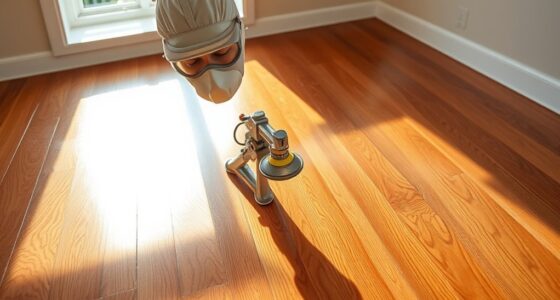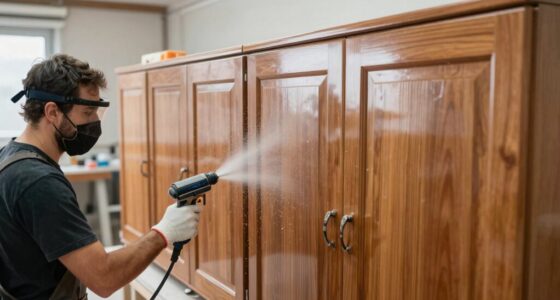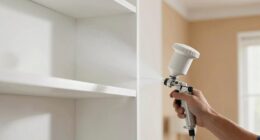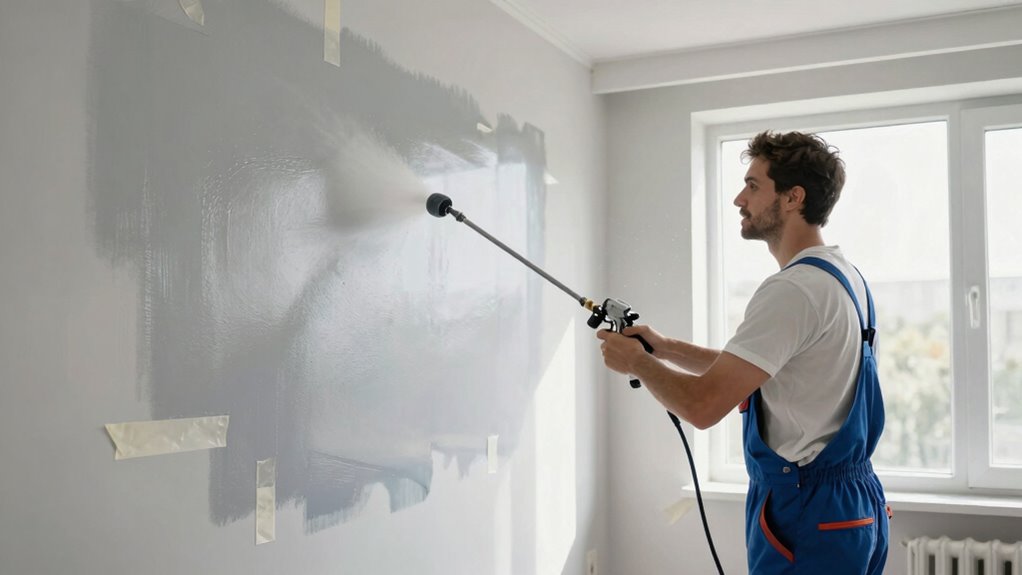

To handle stairwell walls with an airless sprayer, start by thoroughly cleaning and sanding the surfaces to guarantee smooth paint adhesion. Cover floors and trim with drop cloths, and tape off moldings and railings. Keep the sprayer at 12 to 18 inches from the wall, moving steadily in overlapping strokes for even coverage. Use a brush for edges and corners for a sharp finish. Following these steps will help you achieve professional results – more tips await if you continue.

Get tools and workshop supplies delivered free — and shop member deals
- Fast, free delivery on millions of items
- Access to Prime Big Deal Days deals on October 6–7
- Prime Video, Amazon Music and more included
Key Takeaways
- Prepare stairwell walls thoroughly by cleaning, sanding, and protecting surfaces before spraying.
- Use a lower pressure setting to avoid overspray and achieve controlled, even coverage on vertical surfaces.
- Keep the sprayer tip 12-18 inches from the wall, moving steadily with overlapping strokes for uniform application.
- Use a high-quality brush for edges, corners, and trim to ensure sharp lines and precise detail.
- Work systematically from top to bottom, maintaining consistent movement to prevent drips and uneven coverage.
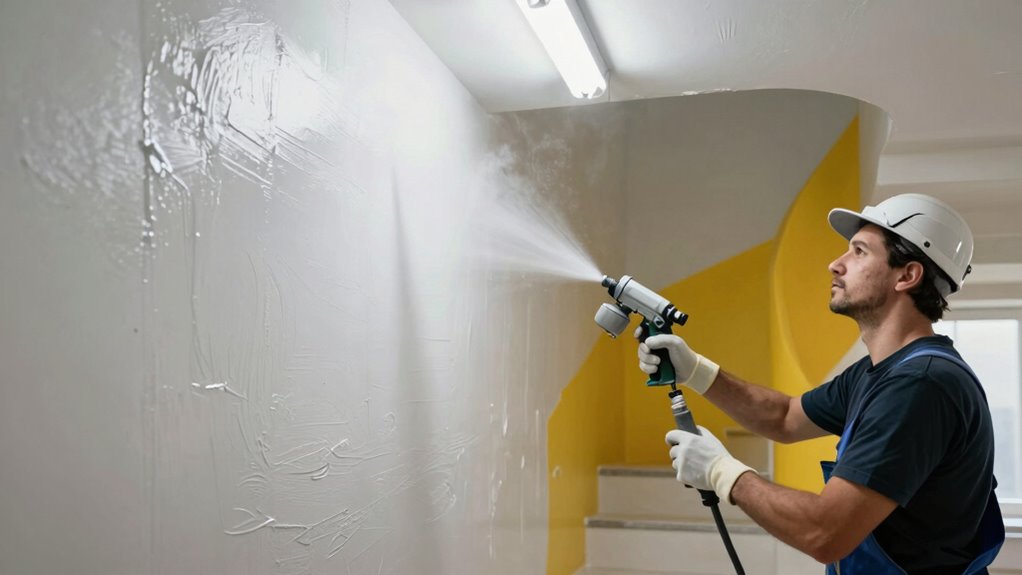
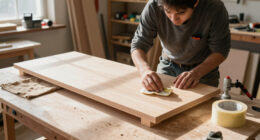
Painting stairwell walls with an airless sprayer can be efficient and achieve a smooth finish, but it requires careful preparation and technique. Before you start, surface preparation is essential. You want to verify the walls are free of dust, dirt, and grease. Scrape off any peeling paint, fill holes or cracks with spackle, and sand rough patches to create an even surface. A clean, smooth surface helps the paint spray evenly and reduces the chances of drips or uneven coverage. Cover floors and adjoining surfaces with drop cloths, and tape off moldings, banisters, and trim to protect them from overspray. Proper preparation saves time and makes your job look professional.
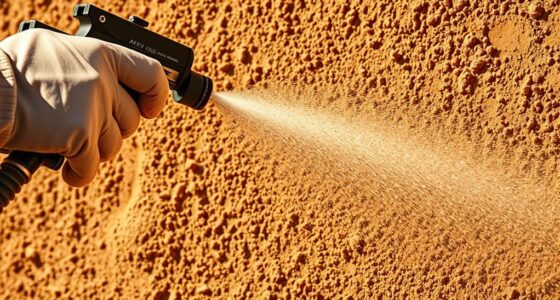
Once the surface is ready, focus on your spraying technique. An airless sprayer delivers paint quickly, but you need to control your movement and distance from the wall. Keep the spray tip at a consistent distance—about 12 to 18 inches—and move steadily across the wall in smooth, overlapping strokes. This overlap helps prevent streaks and ensures uniform coverage. Maintain a perpendicular angle to the surface to avoid uneven spray patterns. Practice on a scrap piece or inconspicuous area if possible, to get a feel for your sprayer’s flow rate and pressure settings. Consistent distance from the surface is key to achieving an even coat and avoiding paint buildup.
While the sprayer does most of the work, brush techniques can still be useful for cutting in edges, corners, or tricky spots where the spray might be less precise. Use a high-quality brush with stiff bristles to feather out paint along edges, blending seamlessly into sprayed areas. This hybrid approach ensures sharp lines and a neat finish, especially around trim and moldings. When using the sprayer, start in a corner or at the top of the wall, working your way down in vertical sections. Keep your wrist steady and don’t tilt the spray wand excessively to prevent paint buildup or runs. Also, avoid stopping mid-stroke; keep a continuous, fluid motion to maintain a consistent coat. Additionally, understanding surface preparation can significantly impact your spraying results. Properly preparing the surface not only improves finish quality but also enhances the overall efficiency of your painting process, reducing waste and cleanup time.
As an affiliate, we earn on qualifying purchases.
Frequently Asked Questions
How Do I Prevent Overspray on Stair Treads?
To prevent overspray on stair treads, start with thorough paint prep by masking the treads with painter’s tape and plastic sheeting. Use precise spray techniques by maintaining consistent distance and speed, and adjust the sprayer pressure to avoid excess paint. Keep the sprayer aimed directly at the wall, and avoid overshooting. These steps will help you control the spray, ensuring clean edges and minimal overspray on your stair treads.
What Safety Gear Is Essential When Spraying Stairwell Walls?
Think of your safety gear as your armor in a battlefield. You should wear protective clothing to shield your skin from paint splatters and a respirator mask to guard your lungs against fumes and overspray. These essentials keep you safe from airborne particles and skin irritation. Never underestimate the importance of proper gear—it’s your first line of defense when spraying stairwell walls with an airless sprayer.
How Do I Clean the Sprayer After Use?
After finishing, you should immediately clean your sprayer to guarantee proper sprayer maintenance and paint compatibility. First, turn off the sprayer and release any remaining pressure. Then, flush the system with the appropriate cleaning solution—water for latex paints or a solvent for oil-based paints. Use the cleaning tool to clear out nozzles and filters. Rinse thoroughly, and store your sprayer in a clean, dry place to keep it ready for next use.
What Type of Paint Is Best for Stairwell Walls?
Imagine your stairwell walls transformed with a smooth, flawless finish. You should opt for high-quality latex or acrylic paint, which offers durability and easy cleanup. Consider light, neutral colors that brighten the space, or bold shades for a statement. Finish options like eggshell or satin work best—they hide imperfections while providing a subtle sheen. Your choice of color and finish will create a welcoming, stylish stairwell that lasts.
How Do I Handle High or Difficult-To-Reach Areas?
To handle high or difficult-to-reach areas, you should use extension poles with your airless sprayer to improve reach and control. Make certain proper ventilation techniques to prevent paint fumes from building up, which also helps paint adhesion. Keep your spray consistent and at the right distance to avoid drips or uneven coats. Take your time, and always test on a small area first to ensure best results in tricky spots.
Conclusion
Just as Da Vinci brought life to his masterpieces with careful brushstrokes, you can transform your stairwell walls with an airless sprayer. Embrace the process, stay steady, and let your effort be a proof of your patience and skill. Soon, your stairwell will stand as a masterpiece of smooth, flawless paint—evidence that even the most intimidating projects can turn into works of art with the right approach. Keep going; your masterpiece awaits.
Halloween Picks
halloween
As an affiliate, we earn on qualifying purchases.