To spray interior walls effectively, start by thoroughly prepping the room—covering floors and furniture, opening windows, and clearing the space. Use smooth, overlapping passes while maintaining a steady distance from walls, adjusting your sprayer settings for consistent application. Keep the spray moving to prevent drips and ensure even coverage. For a flawless finish, combine proper technique with detailed brush work for touch-ups. Continue exploring these steps for best results.
Key Takeaways
- Thoroughly cover floors, furniture, and fixtures to prevent overspray and facilitate easy movement.
- Open windows and use fans to ensure proper ventilation during spraying.
- Maintain a consistent spray distance of 12-18 inches for even coverage.
- Use smooth, overlapping passes and steady movement for a professional finish.
- Prepare paint to a milk-like consistency and test spray on scrap before application.
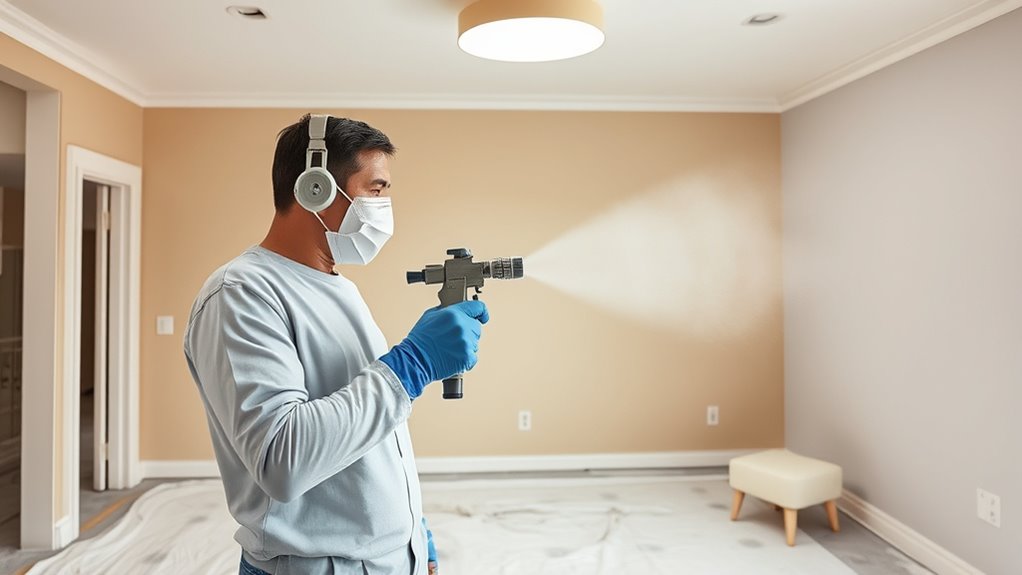
Are you considering spraying interior walls to save time and achieve a smooth, professional finish? If so, understanding the proper technique and preparation is essential. While spraying can be faster than brushing or rolling, it requires attention to detail, especially when it comes to brush techniques and paint consistency. Before you start, make sure your room is thoroughly prepared—covering floors, furniture, and fixtures to protect them from overspray. Ventilation is also necessary; open windows and use fans to help clear fumes and overspray during and after the job.
Proper preparation and technique are key to achieving professional results when spraying interior walls.
When it comes to applying paint, your brush techniques during prep and touch-ups can make a big difference in the final look. However, spraying is often preferred for large surfaces because it provides an even coat with fewer brush marks. To get the best results, focus on maintaining a consistent distance from the wall—usually about 12 to 18 inches—and use smooth, overlapping passes to avoid streaks or uneven coverage. Keep your gun moving steadily; pausing too long in one spot can lead to drips or uneven thickness.
Paint consistency plays a key role in achieving a flawless spray finish. If the paint is too thick, it can clog your sprayer and cause uneven spray patterns, resulting in a rougher surface. Conversely, if it’s too thin, you might not get adequate coverage, forcing multiple passes that could lead to drips and runs. Most sprayers work best with a paint consistency similar to milk—neither too thick nor too runny. Use a paint strainer to remove any lumps or debris that could clog your equipment. Adjust your sprayer’s pressure and nozzle settings to match the paint’s viscosity, testing on a scrap surface before proceeding to the walls.
Consistency in your spray technique and paint mixture will help you achieve a professional-looking finish. Keep your gun at a consistent distance from the wall, and move your hand steadily across the surface, avoiding starts and stops that can create uneven patches. If you notice uneven areas or drips, lightly sand those spots after they dry and re-spray if necessary. Patience and precision make all the difference, so take your time to get the technique right. Proper equipment maintenance and understanding your sprayer settings are also crucial for a smooth application. Spraying interior walls can be quick and effective, but it demands careful preparation, proper brush techniques for touch-ups, and maintaining the right paint consistency. Done correctly, you’ll find the process rewarding, with beautifully smooth walls that look professionally finished.
Frequently Asked Questions
What Safety Gear Is Essential for Spraying Interior Walls?
You need protective gear like a mask or respirator, goggles, and gloves to stay safe while spraying interior walls. Wearing a mask prevents inhaling fumes, while goggles protect your eyes. Gloves keep your skin protected from paint or chemicals. Also, guarantee proper ventilation tips are followed, like opening windows and using fans, to reduce fumes and improve air quality. Prioritize safety gear to make the process safer and more effective.
How Do I Choose the Right Type of Paint Sprayer?
Imagine a painter’s brush dancing smoothly across walls—your choice of sprayer sets that rhythm. For large surfaces, an airless sprayer delivers powerful, even coverage, while HVLP offers control with less overspray. Consider paint sprayer maintenance—ease of cleaning and durability matter. Choose based on project size, detail, and finish. With the right sprayer, you’ll turn walls into works of art, effortlessly blending precision and efficiency.
Can I Spray Walls Over Existing Wallpaper?
You can spray walls over existing wallpaper, but first, you need to remove any loose or peeling wallpaper and thoroughly clean the surface. Proper surface preparation is key to guarantee the paint adheres well. If the wallpaper is in poor condition or textured, consider stripping it entirely for a smoother finish. Skipping wallpaper removal may lead to uneven coverage or bubbling, so take the time to prep properly before spraying.
How Long Should I Wait Between Coats?
Think of waiting between coats like letting a river settle before crossing. You should wait about 2-4 hours, depending on paint thickness and drying time, to make certain each layer is firm. Rushing this step risks peeling or uneven finish. Trust the process, watch for surface dryness, and avoid applying the next coat too soon. Proper drying time guarantees a smooth, durable coat that lasts.
What Are Common Mistakes to Avoid During Spraying?
When spraying, avoid common mistakes like rushing the spray technique or using paint that’s too thick or too thin. Keep your spray distance consistent, move your gun smoothly, and maintain even pressure. Check the paint consistency before starting—if it’s too thick, it’ll clog the nozzle; too thin, it won’t cover well. Taking these precautions helps you achieve a professional finish and prevents drips or uneven coats.
Conclusion
As you finish spraying your walls, it’s almost like the room was waiting for this moment all along. The fresh coat of paint not only transforms the space but also reveals how a simple project can unexpectedly change your mood. Now, as you step back and admire your work, you realize that with just the right prep and spray, you’ve created a room that feels brand new—almost as if it was meant to be this way all along.