
Spraying your fence with stain or paint each has pros and cons. Stain offers a natural look, penetrates wood, and is eco-friendlier, but it may need more frequent reapplication. Paint provides a smooth, opaque finish that lasts longer and hides imperfections, yet it can be harder to apply evenly and is often less eco-friendly. Understanding these differences helps you choose the best option for your eco-conscious maintenance. Keep exploring to discover which method suits your needs best.
Key Takeaways
- Spraying with stain provides a natural look and penetrates wood, while paint offers a uniform, opaque finish.
- Stains are typically eco-friendlier with lower VOC levels, making them better for the environment.
- Spray application for stain requires careful control for thin coats, whereas paint may need multiple layers for coverage.
- Stains generally dry faster and require less cleanup, reducing environmental impact compared to paint.
- Proper technique minimizes overspray and environmental harm, making both options more eco-conscious when used correctly.
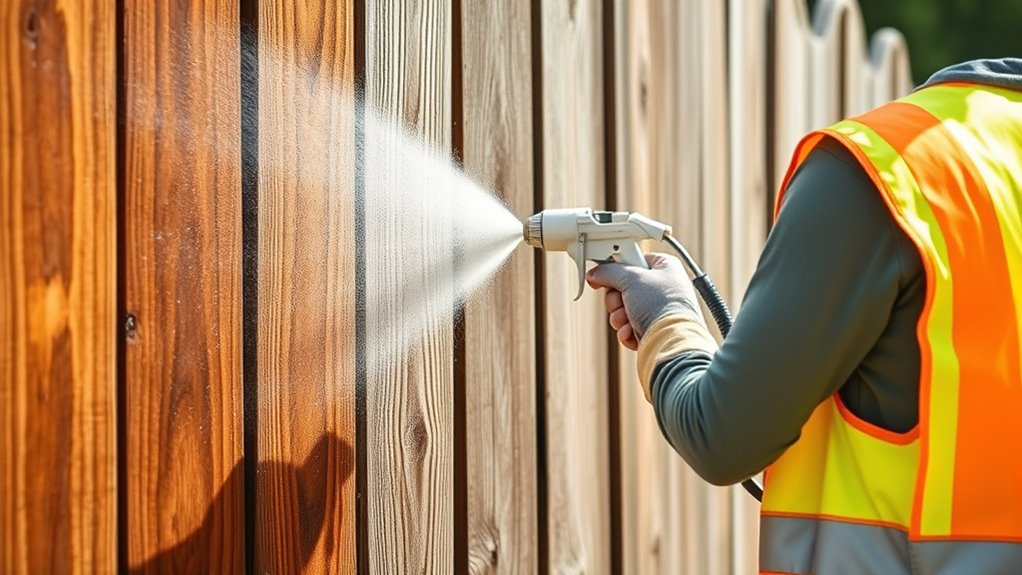
When deciding how to refresh your fence, you might consider spraying it with stain or paint, but understanding the differences can help you make the best choice. One key factor to take into account is application techniques. Spraying is a quick and efficient way to cover large surface areas, which makes it popular for both stain and paint. However, each requires a slightly different approach. When applying stain, you want a thin, even coat that penetrates the wood to enhance its natural texture. Using a sprayer, you should hold the nozzle at a consistent distance and move steadily to avoid drips or uneven coverage. For paint, the goal is a smooth, opaque finish, so multiple light coats are often best. A sprayer can help achieve that with minimal brush strokes, but you need to be precise to prevent overspray and drips. Proper masking and protective gear are essential regardless of the product you choose, to avoid messes and protect surrounding areas.
In addition to application techniques, the environmental impact plays a significant role in your decision. Stains, especially those labeled as eco-friendly or low-VOC (volatile organic compounds), tend to have a smaller environmental footprint because they emit fewer harmful fumes during application and curing. They also typically contain natural oils or water-based formulas that are less toxic to plants, animals, and humans. Paints, on the other hand, often contain higher VOC levels, which can contribute to air pollution and pose health risks if inhaled during application. The disposal process for paint leftovers and brushes is also more complicated, requiring careful handling to prevent environmental contamination. If sustainability is a priority, choosing a stain with environmentally friendly ingredients can make a noticeable difference.
Another aspect to ponder is how the application techniques influence environmental impact. Spraying can produce overspray and airborne particles, which might drift into nearby plants or water sources if not managed carefully. Proper masking, using low-pressure sprayers, and working in calm weather can mitigate these issues. Paints, with their thicker consistency, tend to produce less airborne waste but may require more cleanup and disposal effort. Overall, if you’re concerned about environmental impact, stains generally offer a greener option, especially when applied correctly with proper techniques. They allow you to refresh your fence effectively while minimizing harm to the environment. Choosing the right application method and product will ensure your fence looks great and aligns with your eco-conscious values.
Frequently Asked Questions
How Long Does Each Finish Typically Last Before Needing Reapplication?
Stains typically last 3 to 5 years, while paint can last 5 to 10 years before reapplication. Your durability comparison shows paint generally needs less frequent maintenance, but stains are easier to touch up. You should expect to reapply stain more often, especially in harsh weather, while paint offers longer-lasting protection. Keep in mind, proper surface prep and application can extend each finish’s lifespan.
Can Spraying Fences Cause Environmental Concerns or Health Risks?
Imagine you’re back in the days of the steam engine—spraying fences can pose environmental impact and health hazards today. When you spray stain or paint, fumes and overspray may release volatile organic compounds (VOCs), affecting air quality and nearby plants. Proper precautions, like wearing masks and using eco-friendly products, help diminish these risks. Always make sure good ventilation and dispose of leftover materials responsibly to protect both your health and the environment.
Which Method Offers Better UV Protection for Fences?
You’ll find that paint generally offers better UV protection for fences, helping to prevent fading and sun damage over time. It also provides a more durable finish, resisting peeling and cracking more effectively. Stain, on the other hand, penetrates the wood and offers some UV resistance, but it typically doesn’t last as long or protect as well against UV rays, making paint the better choice for long-term UV protection and finish durability.
Is Special Equipment Required for Spraying Fences With Stain or Paint?
Yes, you need special application equipment for spraying fences with stain or paint, like a sprayer suited for the product’s viscosity. Make certain to wear proper safety gear, including goggles, masks, and gloves, to protect yourself from fumes and overspray. Using the right equipment and safety gear guarantees a smooth application and keeps you safe during the process. Always follow manufacturer instructions for best results.
How Do Costs Compare Between Staining and Painting Fences?
You’ll find that staining your fence generally costs less than painting, especially if you do it yourself, thanks to cheaper materials and simpler application. Paint may require more prep work and higher-quality supplies, increasing expenses. When considering a budget, weigh the cost comparison alongside the longevity and maintenance needs of each option. Staining often offers a more affordable, low-maintenance choice, making it ideal if budget considerations are a priority.
Conclusion
Choosing between spraying your fence with stain or paint isn’t just about color—it’s about durability versus renewal. Stain offers a natural, breathable finish that enhances wood’s character, but may need frequent touch-ups. Paint provides a solid, vibrant barrier, yet can peel over time. While stain keeps the wood feeling authentic, paint can mask imperfections. Your decision depends on whether you value a fresh look or long-term protection—sometimes, what you gain is balanced by what you might lose.