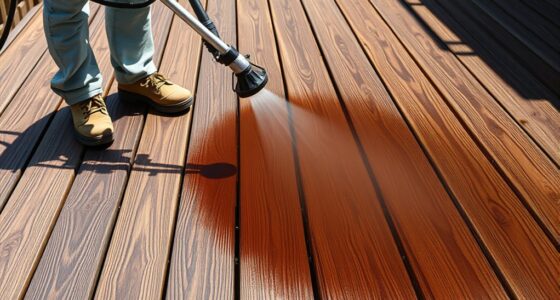
To stain and seal your deck with an airless sprayer, start by preparing the surface and choosing the right weather conditions—aim for 50-85°F with low humidity. Maintain consistent distance and steady motion while spraying, overlapping each pass for even coverage. Use a brush for touch-ups and detailed areas, especially after spraying. Proper technique and timing help guarantee a smooth, durable finish. Keep learning how to perfect your process for professional results.
Key Takeaways
- Maintain a consistent 12-inch distance and overlap passes for even spray coverage.
- Prepare the surface thoroughly, cleaning and sanding before spraying to ensure proper adhesion.
- Use high-quality stain and sealant, applying in stable weather conditions between 50-85°F.
- Follow up with brushing to address missed spots, edges, and detailed areas for a professional finish.
- Avoid spraying in high wind or humid weather to prevent uneven drying and debris contamination.

Staining and sealing your deck is vital for protecting it from weather damage and keeping it looking its best. When you’re using an airless sprayer, understanding proper brush techniques can make all the difference in achieving a smooth, even finish. While the sprayer covers large areas quickly, there are spots—like corners and edges—where a brush becomes invaluable. Use a high-quality brush to carefully work around railings, post caps, and tight corners, making certain no area is missed. Dip the brush lightly and apply the stain or sealant with long, controlled strokes, blending each pass to avoid streaks. This approach helps you maintain control and prevents drips or uneven coverage, especially in tricky spots.
Weather considerations play an imperative role in your staining and sealing process. Ideally, you want to work on days with mild temperatures—generally between 50 and 85 degrees Fahrenheit—and low humidity. Excessive heat can cause the stain to dry too quickly, which may lead to lap marks or uneven coloring, while cold or humid conditions can prolong drying times and compromise adhesion. Wind is another factor to reflect on; strong gusts can blow debris onto your wet surface or cause the stain to dry unevenly. To guarantee ideal results, check the weather forecast before starting, and plan your project for a stretch of weather that’s stable and dry.
When using an airless sprayer, it’s important to keep consistent distance from the deck surface—usually about 12 inches—to avoid over-application or missed spots. Move the sprayer steadily in a side-to-side motion, overlapping each pass slightly to maintain uniform coverage. After spraying, you’ll want to go back with a brush to touch up any missed areas or thin spots, especially around edges and detailed sections. If you notice drips or pooling, use your brush to smooth out the excess before it dries, ensuring a clean, professional finish.
Frequently Asked Questions
How Long Should I Wait Before Walking on the Deck After Staining?
You should wait at least 24 to 48 hours before walking on your stained deck. During this drying time, avoid foot traffic to prevent smudges and damage. Keep in mind that the exact drying time depends on the stain type, weather conditions, and humidity levels. It’s best to verify the manufacturer’s recommendations and confirm the stain is completely dry before you start using your deck again.
Can I Stain or Seal in Direct Sunlight or During Rain?
Attempting to stain or seal in direct sunlight or rain is like trying to paint a masterpiece in a hurricane. You should avoid these weather conditions because they ruin your finish and make sprayer cleanup a nightmare. Check weather forecasts before you start, and verify your sprayer is well-maintained to prevent clogs. Ideal conditions are dry, overcast days with low wind, giving your project a flawless, long-lasting result.
What Safety Gear Is Recommended When Using an Airless Sprayer?
When using an airless sprayer, you should always wear personal protective equipment like gloves, goggles, and a respirator to avoid exposure to harmful fumes and overspray. Guarantee proper equipment maintenance by checking hoses, filters, and nozzles before use. This keeps the sprayer functioning safely and efficiently. Remember, safety gear and regular maintenance protect you from accidents and ensure a smooth, successful staining or sealing project.
How Do I Prevent Over-Application or Drips With an Airless Sprayer?
Imagine guiding a gentle stream over your deck’s surface. To prevent over-application or drips, use proper spray techniques like maintaining a consistent distance and speed. Keep the spray gun moving smoothly in overlapping passes, and adjust the pressure as needed. This drip prevention approach guarantees even coverage without excess, helping you achieve a professional finish. Practice on a scrap area first to master your technique before working on the deck.
Is It Necessary to Sand or Prep the Deck Surface Before Staining?
Yes, you should sand or prep the deck surface before staining. Start with thorough deck cleaning to remove dirt, mold, and old stain. Then, lightly sand rough areas or peeling paint to make certain a smooth surface. Proper surface preparation helps the stain adhere evenly and last longer. Skipping these steps can lead to uneven coverage, drips, and premature wear, so take the time to prepare your deck properly for the best results.
Conclusion
Staining and sealing your deck with an airless sprayer is like nurturing a garden—you’ll see the beauty flourish when you invest the time and effort. I once watched a neighbor transform his weathered deck into a vibrant gathering spot in just a weekend, and it reminded me that good maintenance is the root of lasting charm. With the right tools and a bit of patience, your deck can stand proud and inviting for years to come.