Choosing between an airless sprayer and HVLP depends on your project size and finish quality. If you’re tackling large areas quickly, an airless sprayer is the better choice for efficiency, but it creates more overspray and textured finishes. For detailed work with a fine, smooth finish, HVLP provides precision and minimal mess. Keep exploring to discover which option suits your project best and how to get the best results.
Key Takeaways
- Choose an airless sprayer for fast coverage on large, flat surfaces like exteriors and fences.
- Opt for HVLP for detailed, high-quality finishes on furniture, cabinets, and intricate trim.
- Use airless for efficiency in big projects; select HVLP for precision and minimal overspray.
- Consider surface type and desired finish: smooth and refined with HVLP, textured with airless.
- Match sprayer choice to project scope and finish quality needs for optimal results.

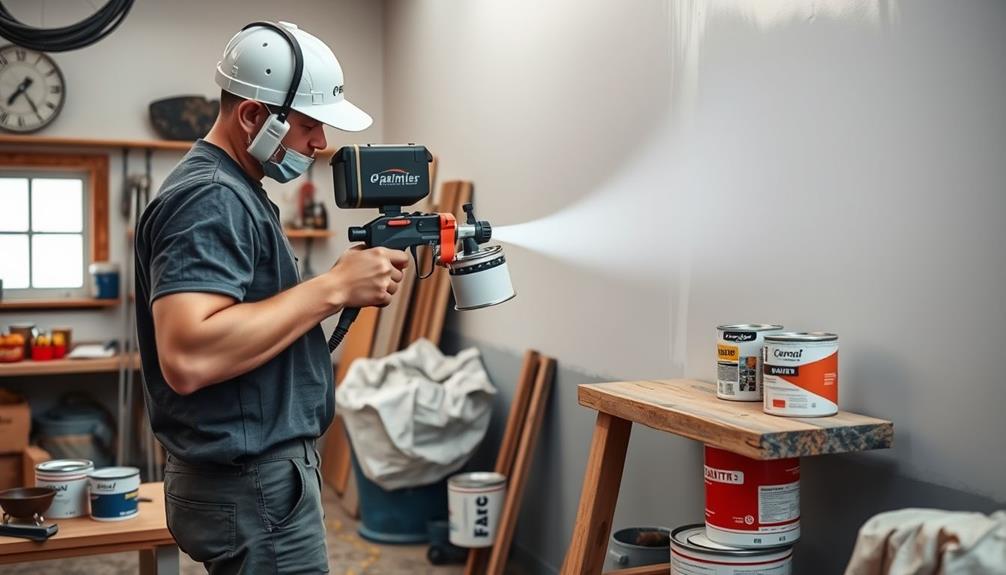
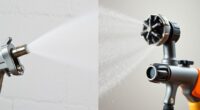
When choosing the right paint sprayer for your project, understanding the differences between airless sprayers and HVLP systems is essential. These tools vary considerably in how they deliver paint, affecting both the finish you get and how quickly you can complete your work. Airless sprayers use high pressure to atomize paint directly from the tip, which results in a smooth, even coat but can sometimes create a slightly textured finish. This can be ideal if you’re aiming for a professional, uniform look on larger surfaces. The application speed of airless sprayers is impressive—they can cover large areas quickly, making them perfect for projects like exteriors, fences, or expansive walls. If you’re short on time and need a fast, efficient application, an airless sprayer is often the better choice because it can spray large volumes of paint rapidly without sacrificing quality.
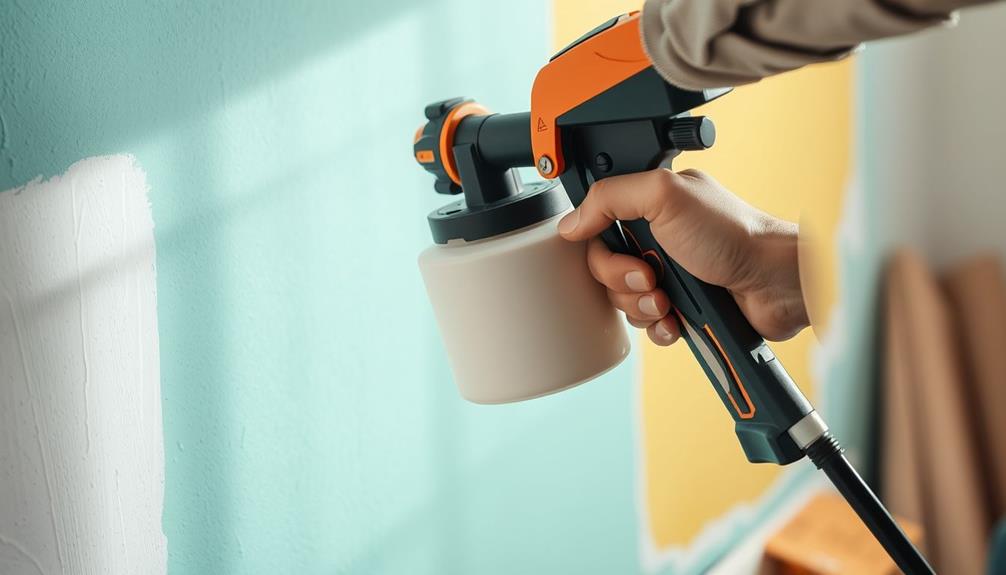
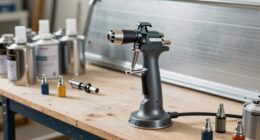
On the other hand, HVLP (High Volume Low Pressure) sprayers operate at lower pressure, using a high volume of air to atomize paint, which typically results in a finer, more detailed finish. This makes HVLP ideal for projects requiring precision, such as furniture, cabinets, or intricate trim. Because it produces a softer spray pattern, you’re less likely to see overspray or paint mist in the air, which means less cleanup and a cleaner work environment. While HVLP sprayers generally have a slower application speed compared to airless models, they excel at delivering a high-quality paint finish. If your priority is achieving a smooth, professional look with minimal overspray, then an HVLP system is your best bet. Additionally, understanding paint atomization and its impact on finish quality can help you choose the most suitable sprayer for your needs.
Both sprayers have their strengths and limitations, so your choice depends on the scope and detail level of your project. If speed is your main concern and you’re working on large, flat surfaces, an airless sprayer will save you time and effort. However, if you want meticulous control and a flawless finish on smaller, detailed projects, an HVLP system provides the precision you need. Consider the type of surface, your desired paint finish, and how quickly you want to complete the job. With this understanding, you can select the right sprayer to match your skills, project requirements, and finishing expectations.
Frequently Asked Questions
Can Both Sprayers Handle Outdoor or Exterior Painting Projects?
Yes, both sprayers can handle outdoor or exterior painting projects. Airless sprayers are excellent for large surfaces because they provide high pressure, ensuring better exterior durability and surface adhesion. HVLP sprayers are suitable for detailed exterior work, offering control and a smooth finish. Choose based on your project size; both can deliver strong exterior durability and good surface adhesion when used properly.
Which Sprayer Type Is More Suitable for Detailed or Fine Finishes?
If you want a more precise finish, HVLP sprayers are your best bet, offering 35% better control over fine details. They excel in precision control, making them ideal for detailed or intricate projects. The finish quality with HVLP is smoother and more refined, perfect for furniture, cabinetry, or delicate surfaces. So, if detailed, high-quality finishes matter most, choose HVLP for superior results.
Do Airless and HVLP Sprayers Require Different Safety Precautions?
You do need different safety precautions depending on whether you’re using an airless or HVLP sprayer. Always wear protective gear like masks, goggles, and gloves to shield yourself from overspray and fumes. Make certain proper ventilation requirements are met to prevent inhaling harmful particles. Airless sprayers produce higher pressure, so be extra cautious with safety gear, while HVLP sprayers generally require less intense precautions but still demand safety measures.
How Do Maintenance and Cleaning Differ Between the Two Sprayer Types?
They say “an ounce of prevention is worth a pound of cure,” and that’s true for sprayer maintenance. For airless sprayers, cleaning procedures are more intensive and require frequent maintenance, especially after heavy use. HVLP sprayers need less frequent cleaning, with simpler procedures. Regularly check and clean nozzles, filters, and hoses to keep both in top shape. Proper maintenance minimizes downtime and extends your equipment’s lifespan.
Are There Specific Paint Types Better Suited for Each Sprayer?
You’ll find that airless sprayers excel with thicker paints like latex or oil-based paints, providing strong paint adhesion and efficient coverage. HVLP sprayers work better with thinner, water-based paints, ensuring good paint flow and minimizing overspray. Always check solvent compatibility to prevent damage. If your project involves diverse paint types, consider your sprayer’s ability to handle different viscosities and compatibility for the best results.
Conclusion
Choosing between an airless sprayer and HVLP depends on your project needs. Did you know that airless sprayers can cover up to 1,500 square feet per hour, making them perfect for large jobs? If you prioritize speed and coverage, an airless might be your best bet. But if you want precision and less overspray, HVLP is ideal. Consider your project size and finish quality to decide which sprayer fits you best.