
Straining paint before spraying is vital for a smooth, flawless finish. It helps remove lumps, dried paint, and debris that can cause clogs or uneven coverage. By filtering your paint, you guarantee consistent flow and protect your equipment from damage. Skipping this step risks messy spray patterns and costly repairs. Want to know the best techniques to keep your project flowing smoothly? Keep going to learn essential tips for clean, professional results.
Key Takeaways
- Straining removes debris and lumps, preventing equipment clogs and ensuring a smooth spray pattern.
- It promotes consistent paint flow, resulting in an even, professional finish.
- Filtering reduces the risk of blockages that can damage spray equipment and delay the project.
- Properly strained paint minimizes cleanup time and the need for rework due to uneven coverage.
- It helps maintain uniform paint texture, enhancing overall project quality and durability.

Before you begin spraying paint, it’s crucial to strain it first to guarantee a smooth, even finish. When your paint has a consistent texture, it flows better through the sprayer, reducing the chances of uneven coverage or drips. Properly strained paint ensures a uniform paint consistency, which is vital for professional-looking results. If you skip this step, you risk introducing lumps, dried paint chunks, or debris into your spray equipment, which can cause significant issues during application. These impurities can clog your spray tips or filters, interrupting your work and possibly damaging your equipment.
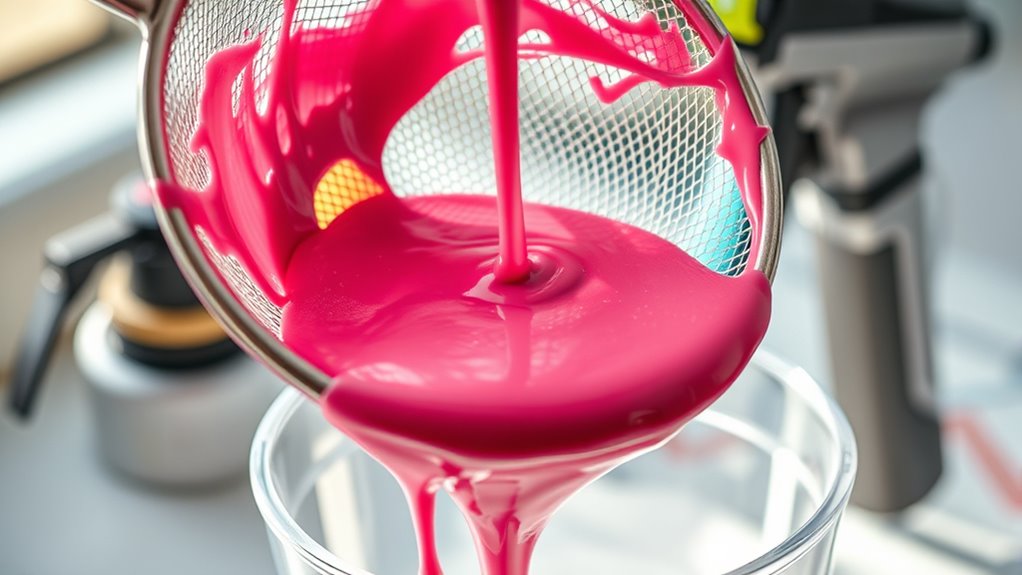
Straining paint is a simple yet essential step that saves you from headaches later. When you pour paint through a fine mesh strainer or a paint filter, you remove any larger particles that could cause blockages. This process helps maintain a steady, smooth spray pattern and prevents interruptions in your project. It’s especially important if you’re working with older or previously opened paint, which might contain settled solids or dried bits that could clog your sprayer. By ensuring the paint’s consistency is free of debris, you’ll enjoy a more efficient spraying experience and achieve a cleaner, more professional finish.
Using the right equipment for straining is equally important. A fine mesh strainer or a paint filter designed specifically for this purpose makes all the difference. When you pour paint through these filters, you catch unwanted particles and ensure only the liquid paint passes through. This reduces the risk of equipment clogging and minimizes cleanup time. Keep in mind that if you notice the paint has a thicker or uneven texture, it’s best to strain it before loading it into your sprayer. This step allows you to catch any lumps or sediments, which could otherwise cause uneven spray patterns or blockages. Additionally, selecting high-quality filters can further improve the filtration process and protect your equipment from damage.
Frequently Asked Questions
Can I Reuse Paint After Straining It?
Yes, you can reuse paint after straining it. Straining improves paint consistency by removing lumps and debris, ensuring a smooth spray. Just make sure the strainer is durable enough to handle the paint’s thickness without clogging or tearing. Once strained, store the paint properly, and if it maintains a good consistency, you can confidently reuse it for additional coats or touch-ups.
What Type of Strainer Is Best for Paint?
Did you know that using the right paint filter can reduce clogged spray tips by up to 80%? For best results, choose a fine strain mesh or a high-quality paint filter designed for spraying. These filters catch debris and lumps, ensuring smooth application. Select a reusable paint filter with a fine mesh, as it provides excellent filtration and is cost-effective. Always clean your filter thoroughly after use to maintain peak performance.
How Often Should I Strain Paint During a Project?
You should strain your paint before spraying each time you refill the container to maintain proper paint consistency and prevent clogs. Regularly check and clean your strainer during the project, especially if you’re working with thick or older paint, to guarantee it remains effective. Proper strainer maintenance helps keep your spray job smooth and consistent, saving you time and effort while achieving professional results.
Does Straining Paint Affect Its Color or Finish?
You might worry that straining paint will alter its color or finish, but it actually helps maintain consistent paint quality. Straining removes lumps and debris, ensuring better paint consistency and preserving color accuracy. It prevents uneven application and blotchiness, resulting in a smoother, professional finish. So, straining doesn’t negatively impact your paint’s appearance; instead, it enhances the overall quality, giving you a flawless, uniform spray.
Is Straining Paint Necessary for All Spray Projects?
You don’t always need to strain paint for spray projects, but it’s highly recommended if you want consistent paint flow and a smooth finish. Straining removes debris and lumps, preventing clogs and uneven spray patterns. Check your paint’s consistency first; if it’s thick or has settled, strain removal becomes essential. Doing this guarantees your spray job looks professional and minimizes issues during application, saving you time and effort.
Conclusion
Now that you understand the importance of straining paint before spraying, imagine the unexpected surprises that could ruin your project if you skip this step. A clogged spray tip or uneven finish might seem minor, but they can turn your perfect job into a frustrating mess. Don’t let that happen to you. Take the extra moment to strain your paint—you never know what hidden debris might be lurking, waiting to cause chaos just when you least expect it.